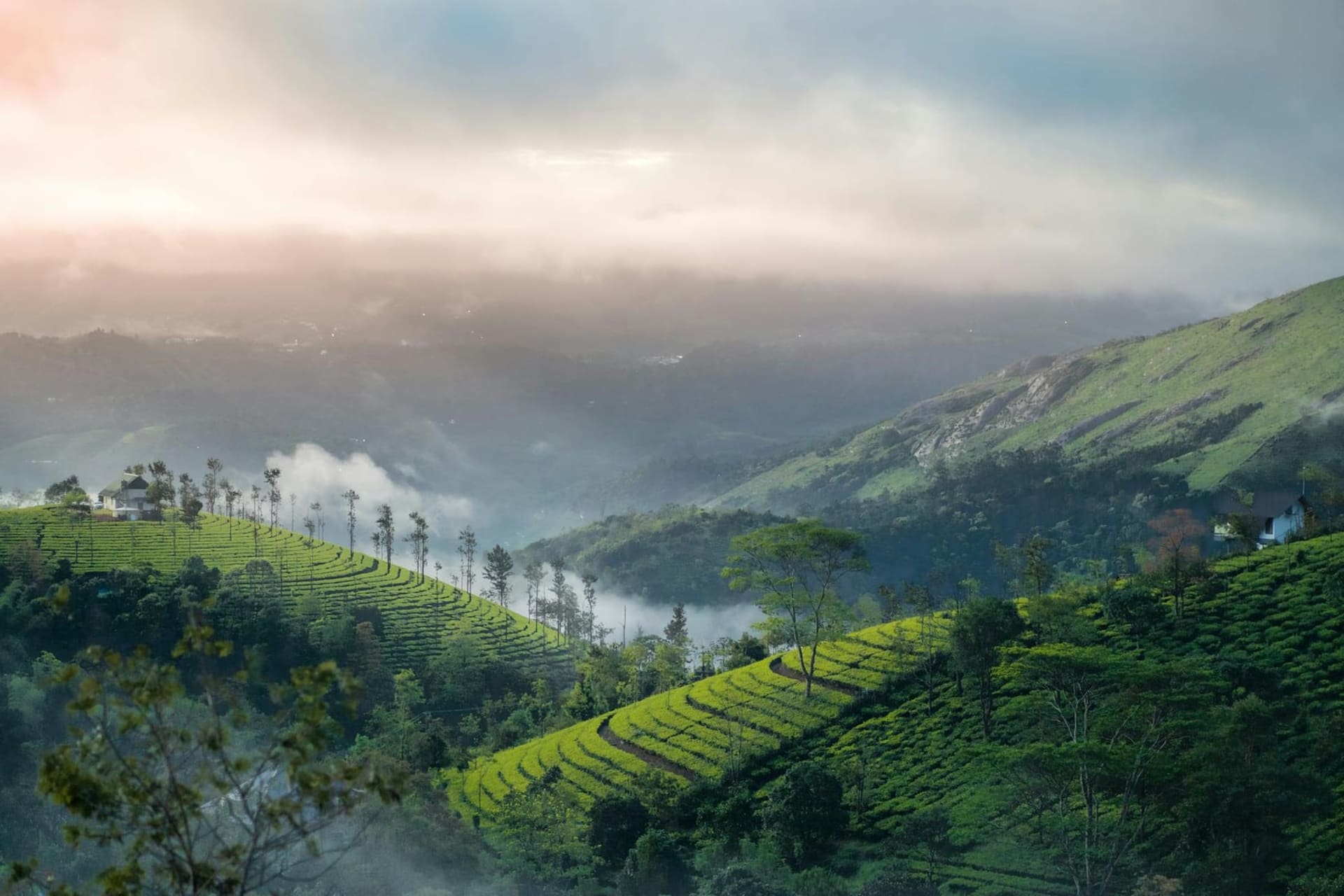
Rolling meadows and pine forests in the Kerala highlands above Kottayam, without Munnar's traffic and tea-shop queues.
Most people take the mountain road toward Munnar and never look at the map again. I had done the same twice before Lia pointed to a different fork above Kottayam and said, simply, “what about this one.” That was how we ended up in Vagamon, and why I have not been back to Munnar since.
The Plateau Above the Cloud Line
The road climbs out of the rubber and cardamom groves near Pala and keeps climbing until the air changes. It gets damp, then cold, then the mist rolls across the windshield in slow waves and you stop being able to see more than forty meters ahead. Then the road levels off and the forest opens and you are on the Vagamon plateau — a series of long, tilted meadows that look more like the Scottish Highlands than anything I expected to find in Kerala.
The grass is short and vivid, the kind of green that only happens where rain is constant and the soil never fully dries. Pine trees planted by the Forest Department decades ago stand in dark rows along the ridgelines, their smell sharp and out of place, like someone dropped a piece of Scandinavia here by accident. In the morning, before the mist burns off, the whole plateau is a single white silence. Even the birds wait.
Kurisumala and the Cheese No One Mentions
The one thing I did not expect was the monastery. Kurisumala Ashram sits on a hill above the meadows, a Cistercian community founded in the 1950s, and for reasons I still do not entirely understand, the monks make cheese. Good cheese — a firm, slightly salted cow’s milk variety they sell near the gate in small wax-wrapped rounds. Lia bought four. We ate two of them that afternoon sitting on a rock above the valley with nothing but grass and cloud in every direction, and it remains one of the more quietly perfect meals I have eaten in India.
The ashram itself receives visitors for retreat, but even passing through the gate in the afternoon feels like crossing into a different frequency. The monks move slowly. The bells are real bells. Nobody is taking photographs.
How to Be There
Vagamon town itself — the short strip near the KSRTC bus stand with its tea shops and provision stores — gives nothing away. The destination is not the town but the meadows above it, particularly around Thangalpara and the paragliding hill that sees a handful of operators on clear days. Walk away from the road and the land opens up immediately. No entrance fee, no queue, no map needed.
When to go: October through February, after the monsoon clears and before the summer haze returns — the light is low and golden in the mornings and the mist comes back each evening like clockwork.