Srinagar
"To sleep on a houseboat in Srinagar is to understand why every emperor wanted this valley for himself."
Saffron fields, Mughal gardens, and hand-carved shikaras on Dal Lake in the Valley of Kashmir.
The first thing I noticed arriving at Dal Lake was not the water — it was the silence. After the chaos of the Jammu highway and the long climb through the Banihal Pass, the lake opened up like a held breath. Shikaras were already moving across the pewter surface at six in the morning, their wooden oars dipping without sound, the boatmen standing the way they always have.
Life on the Water
Our houseboat was moored near the Nagin Lake causeway, away from the more touristed ghats along Boulevard Road. The owner, a man named Bashir, had inherited the boat from his grandfather and could point out which cedar panels were original. Every morning he sent his son across in a small shikara loaded with kangri charcoal, fresh bread from the Hazratbal bakery, and a thermos of noon chai — the salty pink tea that took me three days to stop comparing to anything I already knew and simply accept. Lia fell in love with it immediately, which I found both admirable and slightly irritating.
The lake is its own city. Floating vegetable gardens — rad — drift between houseboats, tended by families who’ve farmed water for generations. I spent one afternoon following a lotus-root seller as he poled his shikara through the channels near Sona Lanka, unable to explain why I couldn’t stop watching the way he navigated without looking.
The Mughal Geometry
On land, Srinagar moves at a different register. The Mughal emperors built their pleasure gardens — Shalimar Bagh, Nishat Bagh, Chashme Shahi — along the eastern shore, and even now they have a quality of mathematical calm that feels almost aggressive in its beauty. Nishat is the grandest: twelve terraces stepping down to the lake, each planted according to the Persian charbagh grid, the central water channel running cold off Zabarwan. I went early, before the tour groups, and had twenty minutes alone with the chinars before the gates fully opened.
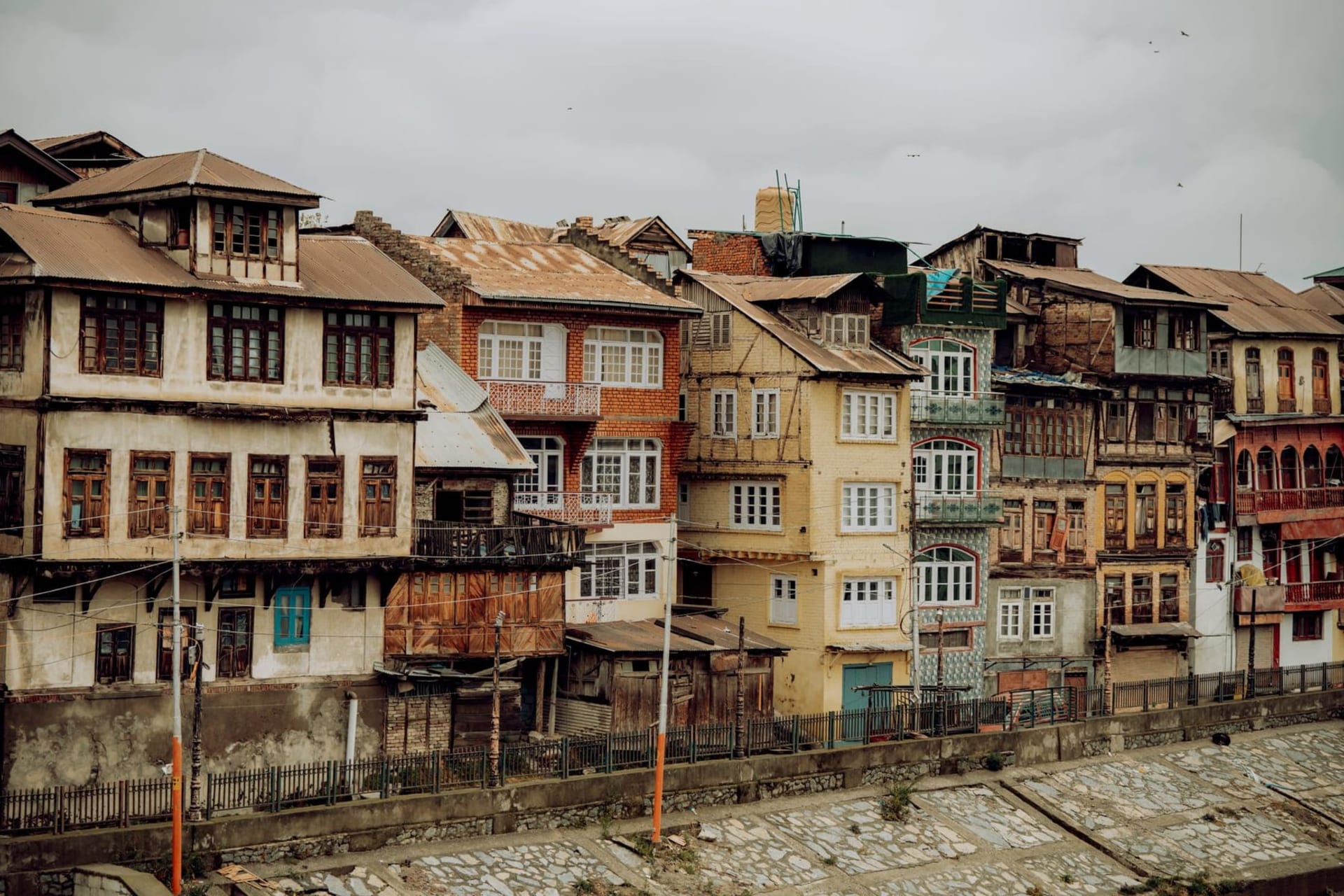
The old city around Nowhatta and Maharaj Gunj is something else entirely — carved wooden mosques, the 14th-century Shah Hamdan shrine with its papier-mache ceiling, spice shops on Bohri Kadal bridge where saffron from Pampore is sold in folded paper packets smaller than a matchbook. I bought two. They cost more than my lunch.
The unexpected thing was a carpet workshop a local sent me to off Residency Road. I had gone to refuse politely and ended up staying two hours watching a teenage girl tie knots at a speed that made the pattern appear to grow out of nothing.
When to go: April through June for spring bloom and mild temperatures, or September and October when the chinar trees turn amber and the tourists thin. Avoid the July–August peak crowd if the houseboat experience matters to you.