Chennai
"Chennai doesn't perform for visitors. It just keeps being Chennai, at full volume, and lets you catch up."
Tamil Nadu's vast, humid capital, where classical temples, a film industry, and the world's longest urban beach share the same coastline without much ceremony.
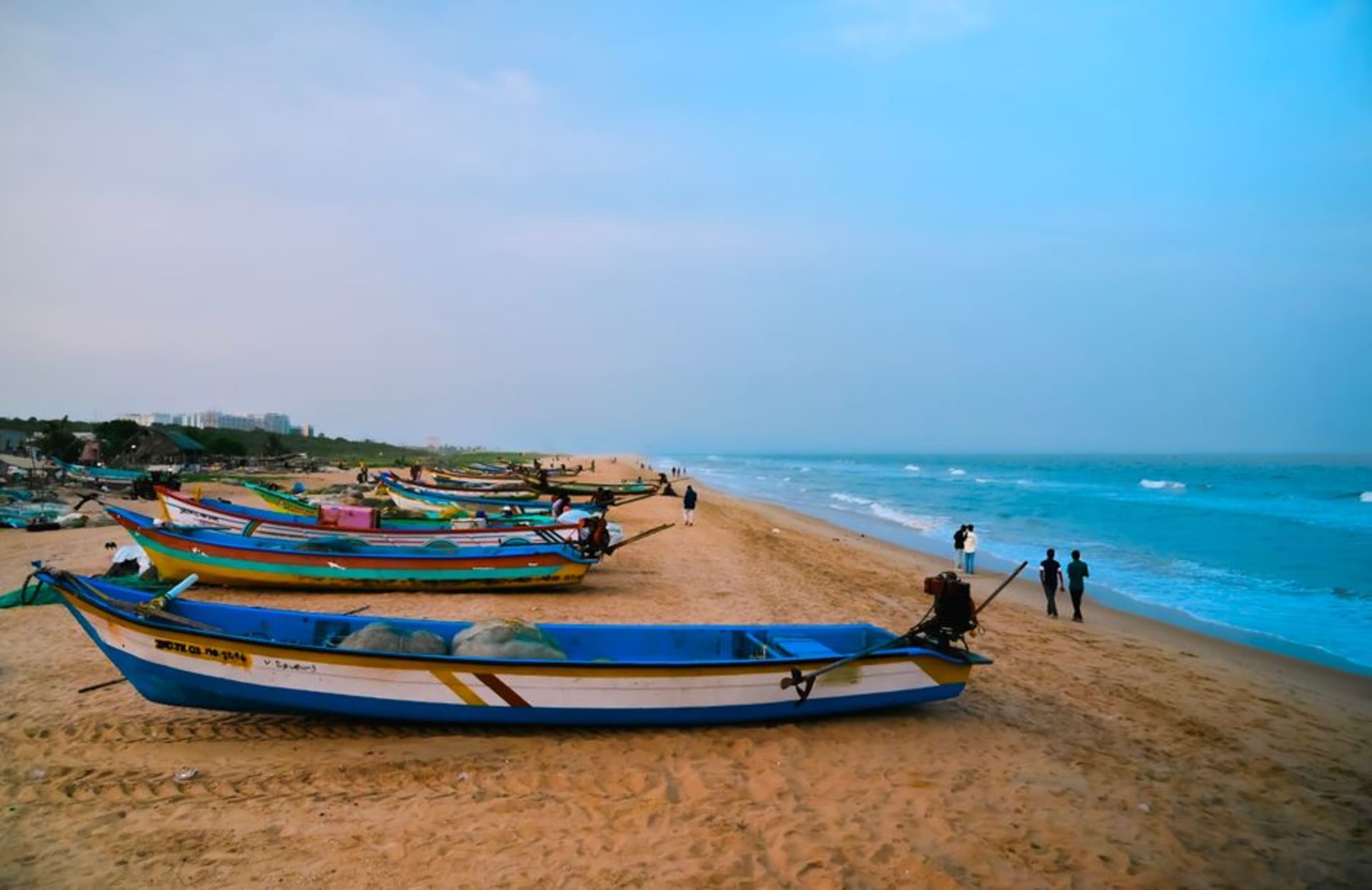
I arrived in Chennai in the thick heat of late afternoon and went straight to Marina Beach because everyone told me to, and everyone was right for reasons I hadn’t expected. At over twelve kilometers, it’s often cited as one of the longest urban beaches in the world, and at sunset it fills with an entire city’s worth of ordinary life — kids flying kites, couples sharing bhel puri from paper cones, a man renting out binoculars for two rupees a look, fishing boats hauled up on the sand with nets drying beside them. Nobody was swimming; the undertow here is notoriously dangerous and everyone seemed to know it instinctively. They’d just come to be near the water, which is its own kind of ritual.
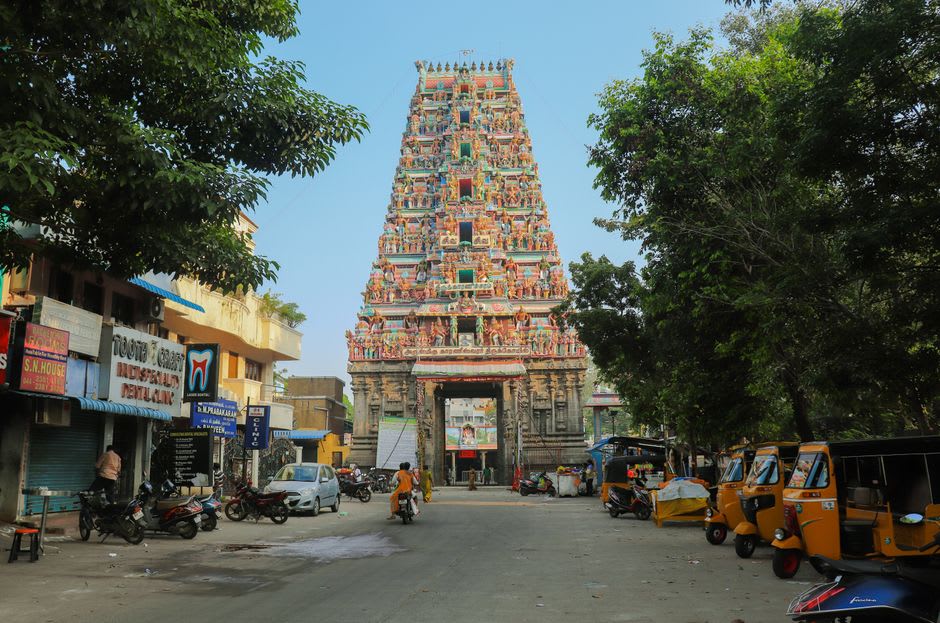
Chennai wears its history unevenly, and I liked that about it. Fort St. George, built by the British East India Company in 1644, still stands near the harbor as one of the first English fortifications in India, its museum a slightly dusty catalogue of the colonial administration that eventually grew into the entire Madras Presidency. A short auto-rickshaw ride away, Kapaleeshwarar Temple in Mylapore belongs to a completely different register of history — a Dravidian-style Shiva temple whose towering, brightly painted gopuram is covered floor to ceiling in sculpted deities, its current structure dating to the 7th century though the site itself is far older. I went in the early evening as oil lamps were being lit around the temple tank, and the smell of jasmine from the flower sellers outside the eastern gate followed me for the rest of the night.
Music, Cinema, and the City’s Two Industries
December in Chennai belongs to Carnatic music. The city hosts what’s known simply as “the Season” — a months-long festival of classical South Indian vocal and instrumental performances held across dozens of sabhas, cultural halls that have been running these concerts since the early twentieth century. I caught a morning vocal recital at one of the older sabhas near Mylapore, sitting on a mat among an audience of mostly elderly connoisseurs who murmured approval at ornamentation I couldn’t yet hear, and left with a much better sense of why this city considers itself the custodian of an entire art form.
Kollywood, the Tamil film industry, is Chennai’s other great export, and its presence is everywhere — hand-painted cutouts of film stars looming over traffic circles, fan clubs organizing milk-pouring rituals for a hero’s new release outside a cinema in T. Nagar. I ended up at a single-screen theater one evening, packed and rowdy, watching a Tamil action film I understood maybe forty percent of the dialogue in, and the crowd’s whistling and cheering at the hero’s entrance told me everything the subtitles didn’t.
When to go: December to February, when temperatures drop from brutal to merely warm and the Carnatic music season is in full swing. Avoid May and June, when Chennai’s heat becomes a genuine hazard rather than an inconvenience.