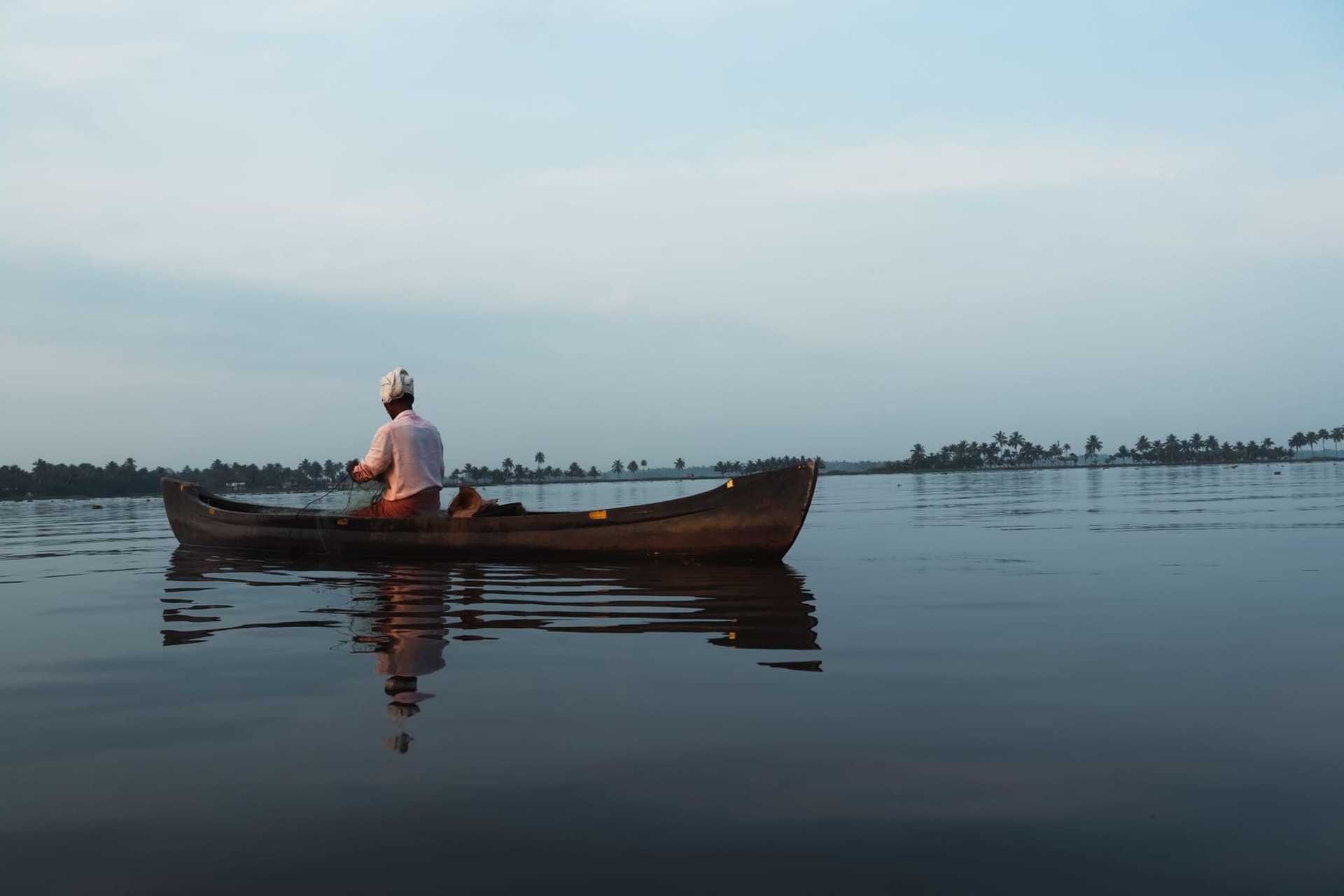
Alappuzha Backwaters
"The Kerala backwaters at dawn feel like the world before it was divided into roads and rivers."
Overnight on a converted rice boat through 900km of Kerala waterways, coconut palms at water level.
We boarded at Finishing Point — the old British name still stenciled on the jetty wall in Alappuzha — in the early afternoon, when the light turns the water the colour of beaten copper. The kettu vallam had been a working rice boat once, hauling grain through the network of canals that thread Kerala’s coast like stitching on old fabric. Now it carries people like us, the curious and the slow, who want to move at water speed through a landscape that has not hurried in centuries.
On the Water
The Vembanad Lake opens up without warning after the first tight canal, and the scale of it stops conversation. Lia leaned against the roof railing and didn’t say anything for a long time, which told me everything. Egrets stood in the shallows on legs thin as reeds. Women washed clothes on stone ghats at the waterline, slapping linen against rock in a rhythm that carried across the whole lake.
By evening, the cook — a compact, unhurried man named Rajan who ran the galley from a space roughly the size of a wardrobe — served karimeen pollichathu, pearl spot fish wrapped in banana leaf and roasted over a direct flame until the leaf chars and the flesh inside steams in its own oils. It tastes of the water it came from: brackish, faintly sweet, with black pepper and shallots that Rajan clearly did not measure. This is the dish Alappuzha claims as its own, and eating it at anchor while the sun dropped behind the palms made the claim feel entirely justified.
The Hour Before Dawn
I woke at five to the sound of nothing, which is its own kind of sound. The houseboat had anchored somewhere north of Kuttanad, the region they call the rice bowl of Kerala, where paddy fields sit below sea level behind mud embankments. I climbed onto the roof deck and stood in the dark.
What I did not expect was the mist. It lay flat on the water in long white strips, and the coconut palms emerged from it in silhouette, one after another, as if the world were assembling itself slowly in front of me. A country boat crossed fifty metres away — a man standing at the stern, poling in complete silence, already at work in a world I was only visiting. I had not expected to feel that distinction so sharply.
Getting On the Water
Most houseboats depart from the Finishing Point jetty on VCNB Road or from the Zila Court Ward area further along the canal. Negotiate directly with the boat operators rather than through hotel desks — the difference in price is real, and the boats are identical.
When to go: November through February brings the coolest, driest air, with low humidity and clear mornings ideal for being on the roof at dawn. Avoid the June–August monsoon period if you want calm water, though the flooded paddies in full rain carry a drama entirely their own.