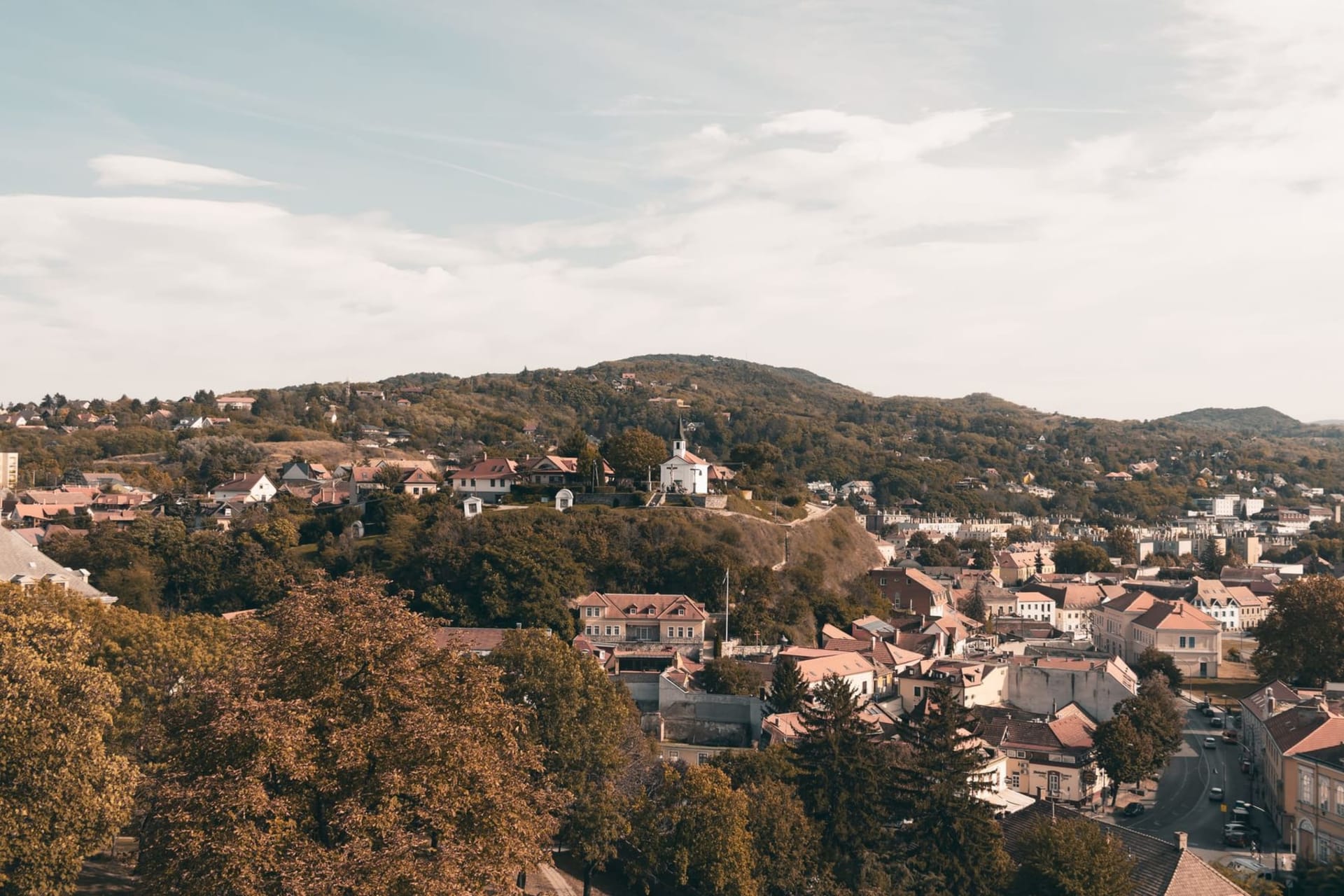
A UNESCO Palóc village of white-washed houses and a hilltop castle in the Northern Hungarian highlands, unchanged since 1700.
The bus from Pásztó drops you at the edge of the village and then there is nothing — no traffic, no signage in English, no coffee chain asserting itself between you and the sixteenth century. Hollókő begins with a smell: wood smoke and something herbal I couldn’t place, later identified by an old woman hanging laundry as dried marjoram hung under the eaves to keep insects from the linen.
Kossuth Lajos utca is the single street that counts. Its houses are built to a rule: whitewashed walls, carved wooden porches painted deep blue or ox-blood red, thatched or clay-tile roofs with such steep pitches they look like sleeping caps. The Palóc people who have lived here since before the Ottoman occupation developed this architecture as their own — compact, insular, slightly defiant. UNESCO listed the whole ensemble in 1987, which stopped nothing from changing because nothing had wanted to change in the first place.
The Castle and the Long Way Up
The Hollókő Castle sits above the village on a limestone spur, rebuilt after the Turks destroyed it in the seventeenth century and left alone since. I climbed the path alone in mid-morning while Lia stayed below at the village museum, drawn in by a woman demonstrating bobbin lace on a cushion the size of a dinner plate. The climb takes twenty minutes through beech forest; the view from the keep looks south over the Cserhát hills, a landscape of soft ridges and no visible infrastructure. The castle itself is half-ruin, half-restoration, with open staircases and arched windows framing sky where ceilings used to be. A hawk was riding the thermal above the northeast tower when I reached the top, which felt like correct staging.
Palóc Food and an Unexpected Wine Cellar
I had not expected wine. The Cserhát region doesn’t appear on any wine map I’ve consulted, and Hollókő is listed in every guide primarily for its embroidery and folk traditions. But at the rear of a house on the lower end of Kossuth Lajos utca there was a hand-lettered sign — bor — and behind a wooden gate, a cold cellar cut directly into the hillside where a retired schoolteacher named István poured me two glasses of his own Kadarka, a thin-skinned Hungarian red, slightly astringent and very cold. He wanted to practice French; I wanted to understand Kadarka. We managed. Lunch afterward at the village’s only real restaurant was töltött káposzta — stuffed cabbage rolls in paprika-heavy pork broth — served in an enameled pot with a wedge of dense white bread that had clearly been baked that morning.
What Doesn’t Change
The embroidery is everywhere: on tablecloths in windows, on aprons worn by women outside the cooperative shop, on the costume of the carved wooden doll sold as a souvenir that I refused to buy and then thought about for days afterward. The motifs are geometric, abstract, worked in red and black on white linen. The women of the Palóc cooperative still produce it by hand. A single tablecloth takes months. You can watch the work in progress at the Palóc Folk House, a preserved cottage interior where a woman sits most mornings with a wooden frame across her knees and thread the color of blood.
When to go: Easter weekend brings the village’s famous folk festival, with residents in full Palóc costume — worth the crowds. Late September through October is quieter, the surrounding beech forest turning gold, and the morning light on the white walls lasting longer than you’d expect.