
Tai Po Market
"This is the market I'd have shopped at if I'd grown up here, and for about an hour I let myself imagine it."
A New Territories market town built around its century-old wet market, where the KCR railway once decided which vegetables reached the city.
Tai Po sits far enough into the New Territories that most Hong Kong Island visitors never make the trip, which is a mistake, because Tai Po Hui Market is one of the most complete wet markets left in the territory. The market building itself dates to the early twentieth century, expanded and rebuilt over the decades, and it operates across two full floors — fish and meat below, vegetables and dry goods above, a division of labour that means the whole building smells different depending on which staircase you take. I went up expecting a quick look and stayed nearly two hours, which tells you something about how absorbing a genuinely un-touristed market can be.
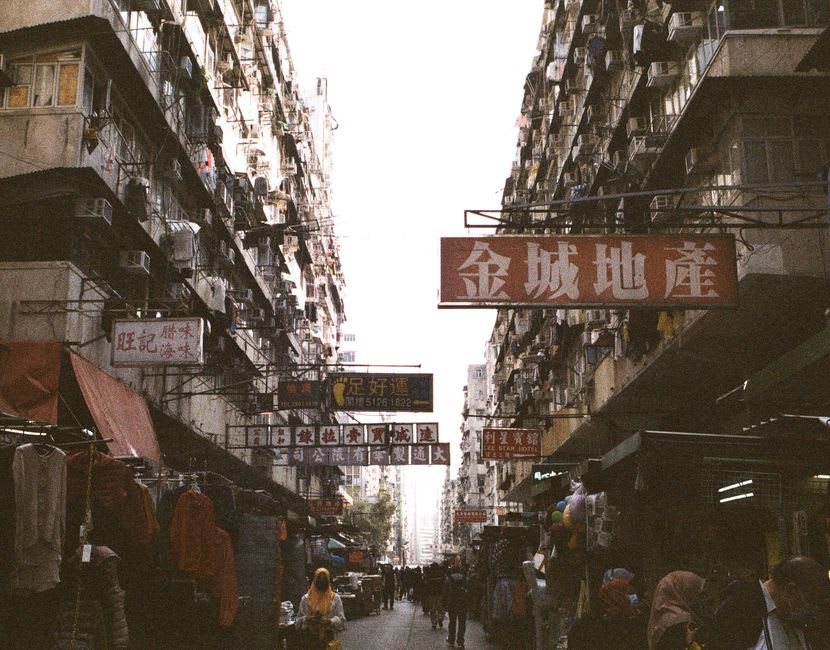
The ground floor is where the theatre happens. Fishmongers keep their catch swimming in aerated tanks until a customer points at exactly the one they want, then dispatch and clean it in under a minute with the kind of economy of motion that only comes from decades of repetition. Butchers work whole pig carcasses down to specific cuts on request, no refrigerated display case between you and the meat, just the animal, the cleaver, and a running commentary in Cantonese I couldn’t follow but could clearly tell was good-natured. Tai Po grew historically as the market town for the surrounding farming villages, and that agricultural backbone is still visible in the produce upstairs — vegetables that clearly came from nearby fields that morning rather than a container ship.
Tai Po’s food culture spills out beyond the market hall itself. The streets around it are lined with proper Hakka restaurants, a cuisine that doesn’t get nearly enough attention against Cantonese food’s dominance elsewhere in the city, serving salt-baked chicken and stuffed tofu that reflect the Hakka farming communities who settled this part of the New Territories generations ago. I had a bowl of Hakka-style noodles at a shop with no sign in English, sitting elbow to elbow with market workers on their break, and it remains one of the best unplanned meals of the whole trip.
The old Tai Po Market railway station, a short walk away, is worth a detour on its own — a beautifully preserved Chinese Renaissance-style building from the original Kowloon-Canton Railway, now a museum, that once decided which villages got market access to the rest of Hong Kong at all. Standing in it after the wet market gave me a strange, satisfying sense of the whole supply chain, past and present, in one afternoon.
When to go: Weekday mornings, ideally before 10am, when the market is at its busiest and freshest. It’s a genuine working market rather than a tourist attraction, so there’s no real “off” version worth avoiding — just quieter afternoons once the morning trade has wound down.