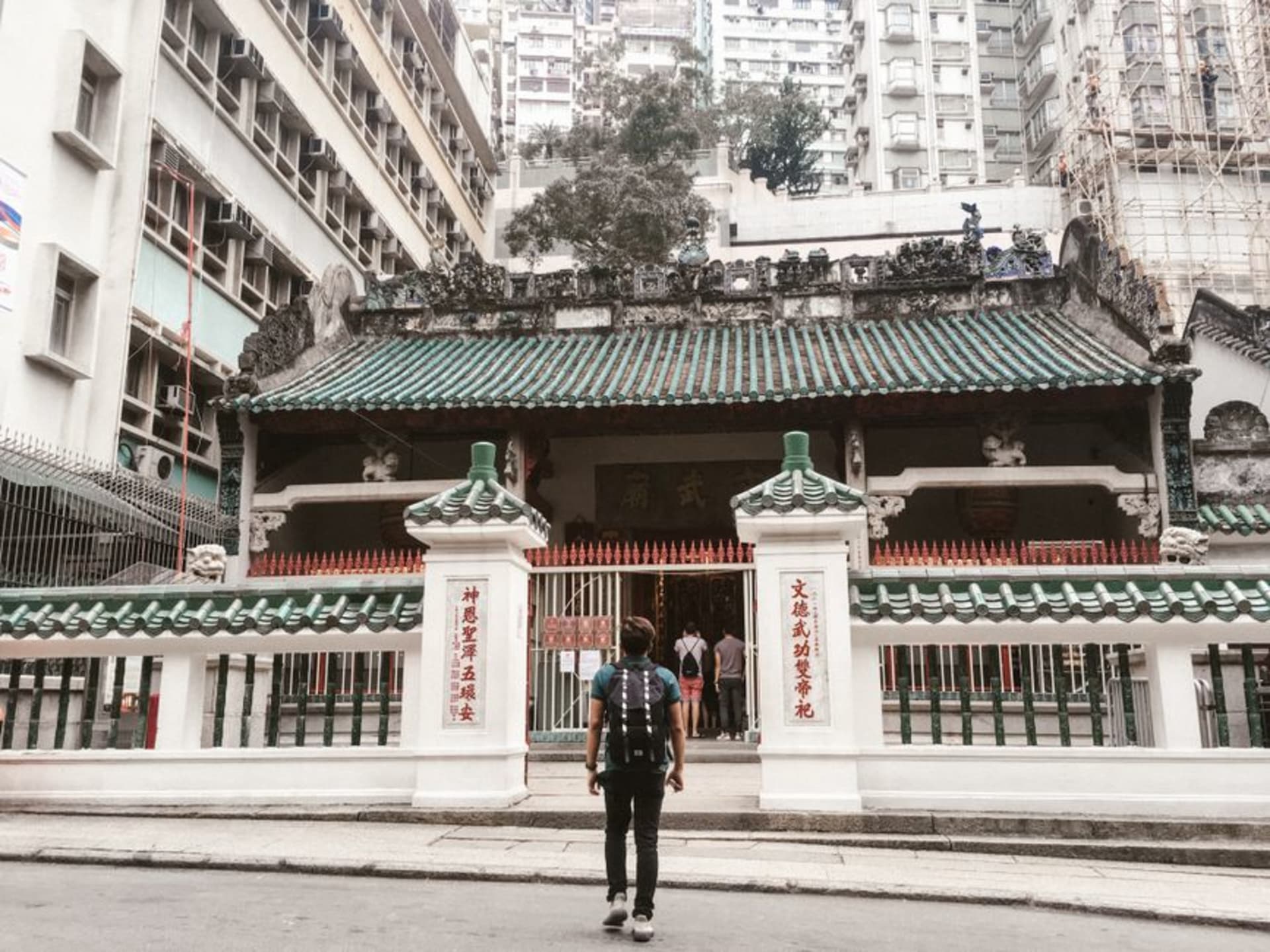
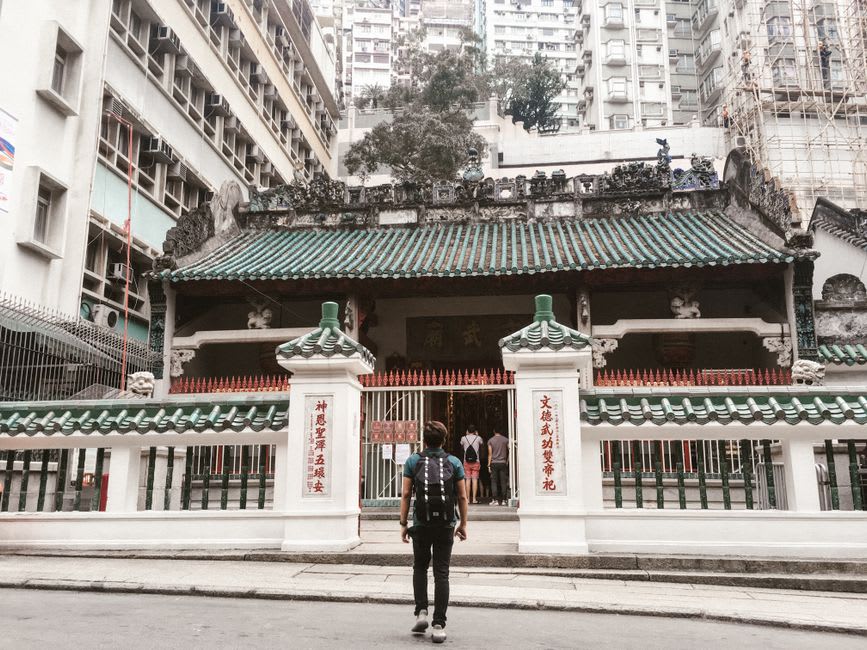
Man Mo Temple
"You don't need to believe in anything to feel something inside Man Mo Temple."
The oldest and most atmospheric temple on Hong Kong Island — a haze of slow-burning incense coils dedicated to the gods of literature and war.
I’m not a religious person and I don’t pretend to understand the specifics of the folk-religious practice that happens inside Man Mo Temple, but I’ve been back three separate times because the atmosphere does something to me that few other buildings in Hong Kong manage. Built in the 1840s on Hollywood Road, it’s dedicated to Man, the god of literature, and Mo, the god of war — a pairing that made sense in a colonial-era Chinese community where scholars needed patronage as much as soldiers did, and civil service exams were treated with the gravity of military campaigns.
What hits you first is the incense — not sticks, but massive spiral coils hanging from the ceiling in tiered rows, each one burning slowly for up to three weeks, so the entire interior stays in a permanent low haze. Shafts of daylight cut through the smoke from small openings above, and the effect, especially in late afternoon, is genuinely cinematic without anyone having designed it that way. It’s simply what happens when you burn incense at that scale in an enclosed space for nearly two centuries.
The altar area holds two carved wooden sedan chairs, ornately gilded, that were historically used to carry the temple’s statues through the neighborhood during festivals — a practice still occasionally revived. Elderly worshippers come through steadily, lighting incense, shaking chim fortune-telling sticks in bamboo cylinders until one clatters to the floor, then taking it to a fortune-teller’s stall just outside to have it interpreted. I did this once, mostly out of curiosity, and the interpretation was vague enough to apply to literally anyone’s life, which I suspect is the entire design of the system.
Man Mo Temple sits at the center of what was historically the Chinese business district during colonial rule, when the British administration was concentrated in Central and this stretch of Hollywood Road served as its own self-governing community hub — the temple functioned not just as a place of worship but as a courthouse and community center where disputes got settled by oath-swearing in front of the gods. That layered civic history is easy to miss if you just walk through for five minutes, so I’d suggest slowing down and reading the small plaques near the entrance before you go in.
When to go: Late afternoon on a weekday, when the incense haze catches the light best and the temple isn’t crowded with tour groups, which tend to arrive mid-morning in blocks.