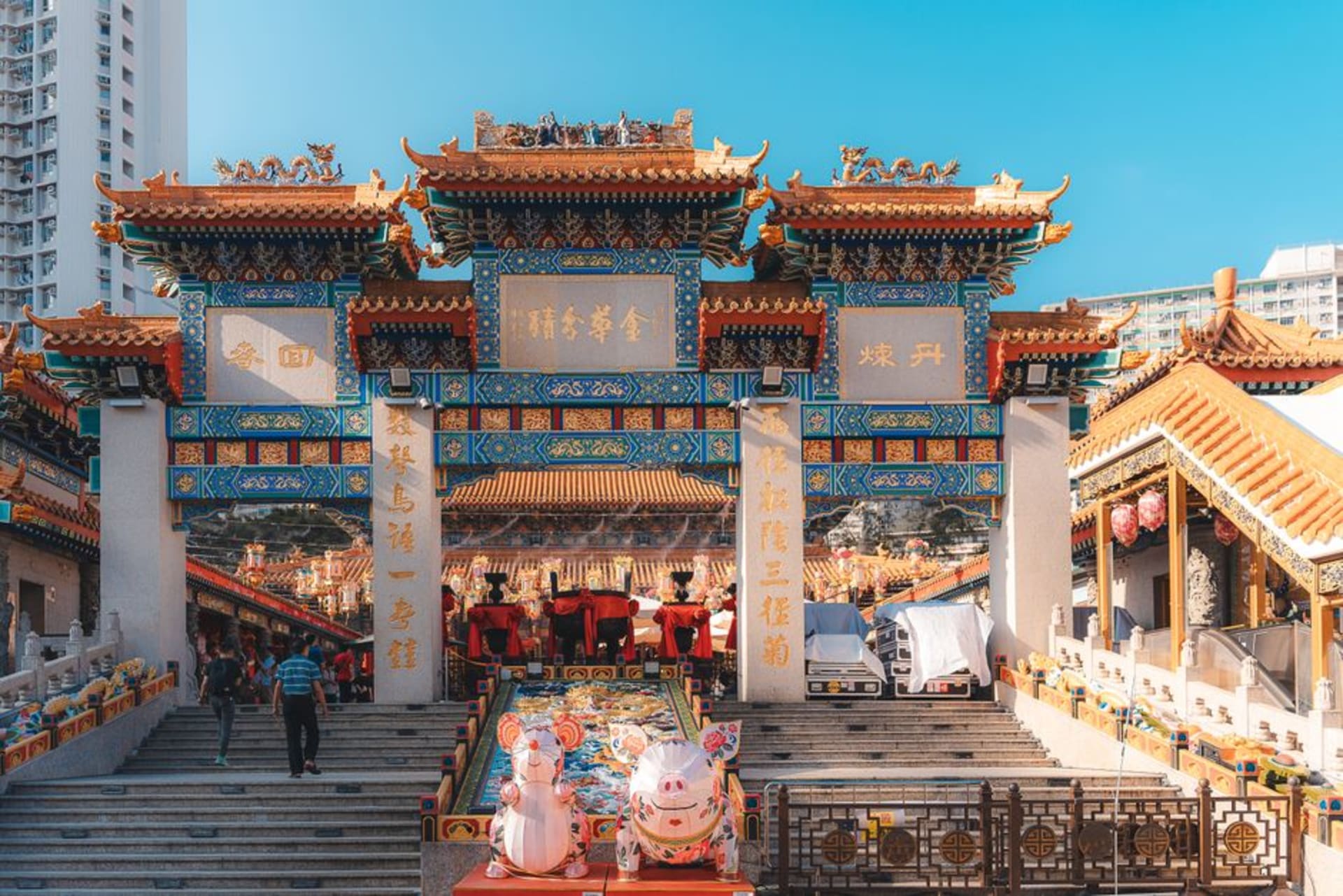
Hau Wong Temple
"An older neighbourhood regular told me, half in English and half by gesture, that this tree is older than the temple itself."
A small, weathered Kowloon City temple honouring a loyal Song dynasty official, standing in the shadow of the old Kai Tak flight path.
Hau Wong Temple is easy to miss, which is exactly why I’d send anyone with an afternoon free in Kowloon City there instead of somewhere better signposted. It’s dedicated to Yeung Leung-jit, a loyal official who served the last boy emperors of the Song dynasty as they fled south from Mongol conquest in the 13th century, eventually dying, according to local tradition, somewhere near this stretch of Kowloon. Whether the details hold up to strict historical scrutiny is beside the point; the devotion around the story has been consistent for a very long time, and the temple that grew from it, likely dating to the early Qing period, still functions as a genuine neighbourhood anchor rather than a heritage attraction.
What I remember most is the enormous old banyan tree growing beside the entrance, its roots partially fused into the temple’s stone wall over what must be well over a century of slow, patient growth. An older man sitting nearby, clearly a regular, told me in a mix of English and hand gestures that the tree predates the current temple structure — I have no way to verify that, but it felt true standing under it, the canopy thick enough to cool the whole small courtyard by several degrees.
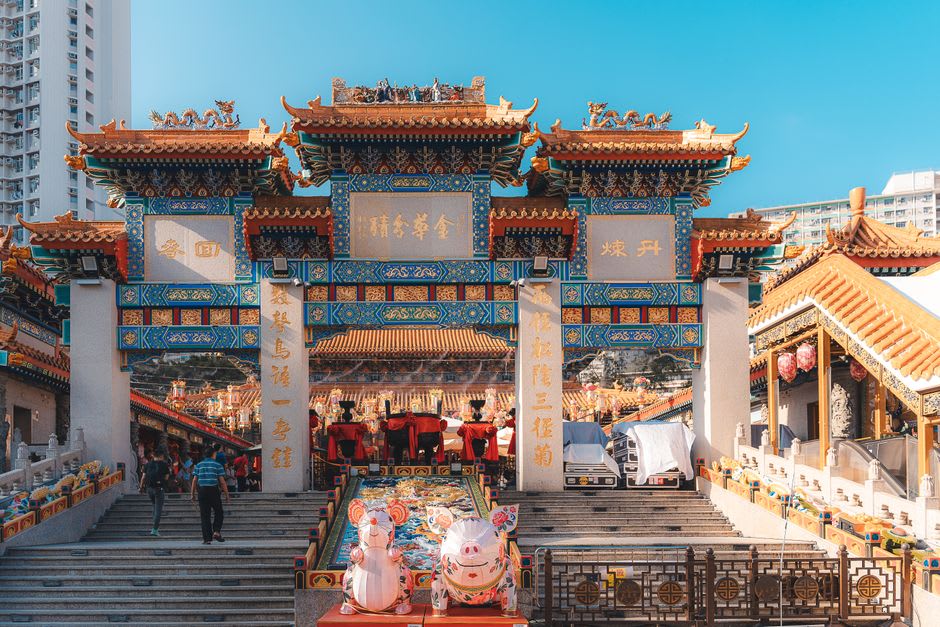
Kowloon City itself, the neighbourhood around the temple, carries an unusual identity in Hong Kong — it sat directly under the old Kai Tak Airport’s flight path for decades, planes roaring in low over the rooftops until the airport closed in 1998, and building height restrictions kept the area low-rise in a city that otherwise builds relentlessly upward. That history has left Kowloon City with an oddly preserved, human-scaled streetscape, dense with Thai grocers and old-school Chiu Chow restaurants, that feels distinct from almost anywhere else in Kowloon.
We ended up staying in the neighbourhood for a Chiu Chow dinner afterward almost by accident, following the smell of braised goose from a shopfront two streets over — one of those unplanned detours that ends up being the best part of the day.
When to go: Any time of year — this is a small, shaded, low-key site best paired with an afternoon exploring Kowloon City’s restaurants rather than planned around weather or season.