Utila
"I came for a whale shark. I stayed because it turns out I'm not as good at leaving as I thought."
Utila is seventeen kilometers long and flat as a table, fringed by mangroves and ringed by reef, and it operates on a logic that has almost nothing to do with the rest of Honduras. Time here is measured in dives, not hours. Conversations begin with “how many dives do you have?” the way conversations elsewhere begin with “where are you from?” I arrived knowing neither, which put me somewhere beneath plankton in the local hierarchy, but that’s fine — Utila forgives beginners.
The Reason Everyone Comes
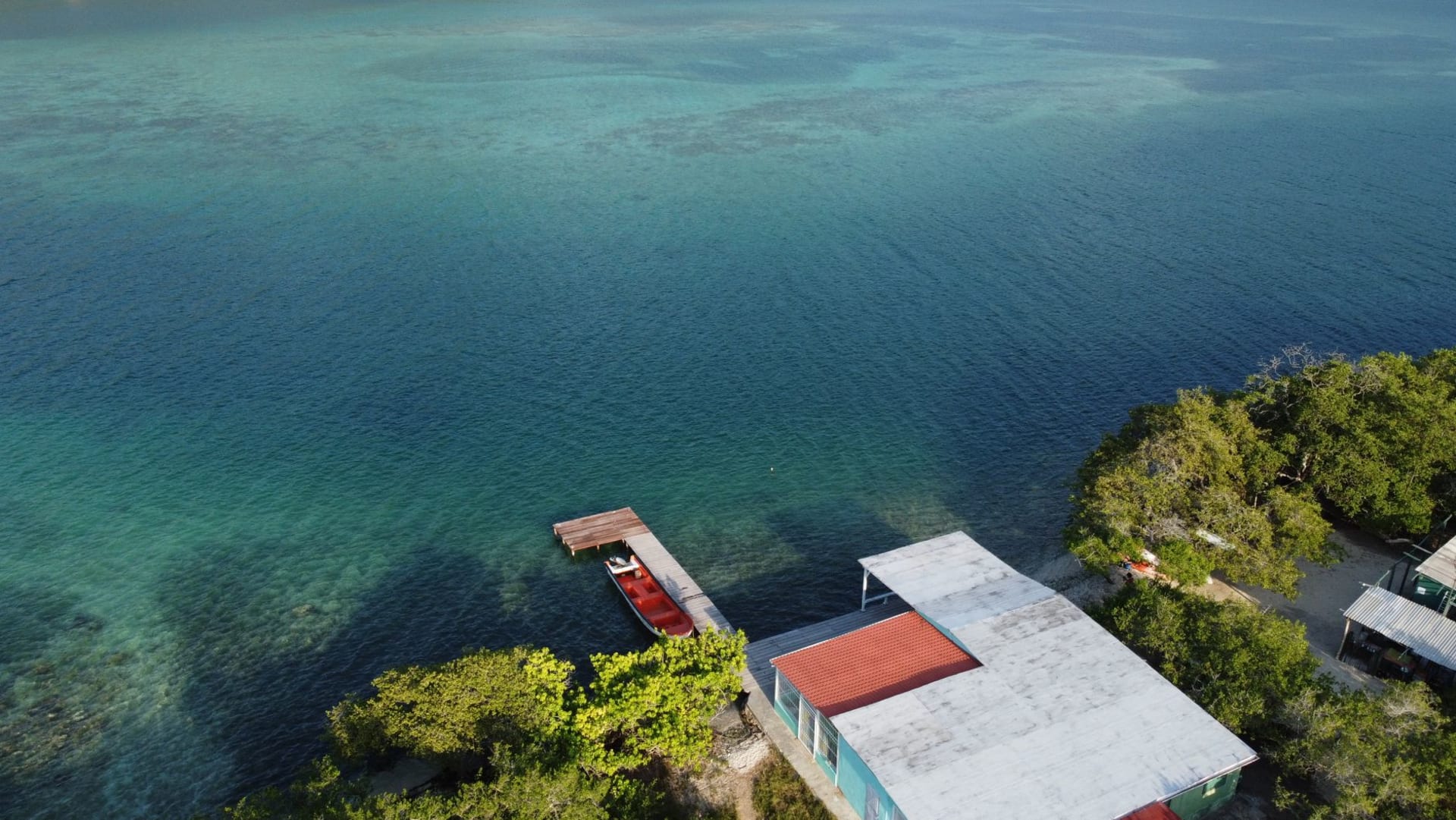
Whale sharks. The channel north of the island is one of the most reliable places on earth to encounter them, particularly between March and April and again from October into December. I say “encounter” because nothing about these animals is predictable. We spent two mornings drifting in a current, staring at surface chop, waiting. On the third morning, in that particular teal of deep Caribbean water, something very large materialized beneath the boat — slow, spotted, moving with the kind of unhurried ease that makes you suddenly aware of your own frantic little heartbeat. It was about eight meters and didn’t care about us at all. That indifference was the most moving part.
The Town and the Reef
Utila Town is the only settlement of any size, and it runs along one street for maybe a kilometer: dive shops, guest houses, a hardware store, a bar called Tranquila where someone is always playing guitar badly but with commitment. The reef begins embarrassingly close to shore. On a calm morning I swam out from the municipal dock and found myself above coral within minutes — parrotfish, sergeant majors, a lobster retreating under a ledge with great dignity. The diving here is not Roatán-polished, with its dive boats and underwater photography setups. It’s cheaper, less curated, and often better for it.
Getting Your Open Water Card
Half the people I met on Utila were mid-certification. The island has more dive instructors per capita than anywhere I’ve been, which makes competition fierce and prices accordingly reasonable — PADI Open Water courses here cost a fraction of what they’d run in Southeast Asia or Mexico. I watched a French couple from Bordeaux complete their final checkout dives on a Wednesday, surface triumphant, and immediately book their Advanced course. That is the Utila trajectory. You come for one qualification and leave planning the next.
The Pace of the Place
There’s a particular kind of afternoon lethargy that settles over Utila after the morning dive boats return. Hammocks fill. Someone’s kitchen produces the smell of baleadas — those flour tortillas folded over beans and crema that you can eat at every meal and never quite get tired of. The mangroves on the west end of the island glow golden at four o’clock, and if you borrow a kayak from one of the guesthouses and paddle out there before the sun drops, you’ll understand why people stay. It’s not dramatic. It’s just quietly, persistently good.
When to go: Whale shark season peaks March–April and October–November — these months draw the most divers and require advance booking. Outside those windows the island is quieter and cheaper, the reef is still excellent, and the town operates at a pace that suits people who have time to kill. September–October brings occasional tropical weather, but the channel is usually diveable.