Roatan
"Roatan's reef begins twenty meters from shore and runs to the edge of the Caribbean shelf."
A Bay Island sitting atop Mesoamerica's second-largest barrier reef, where the diving is world-class and cheap.
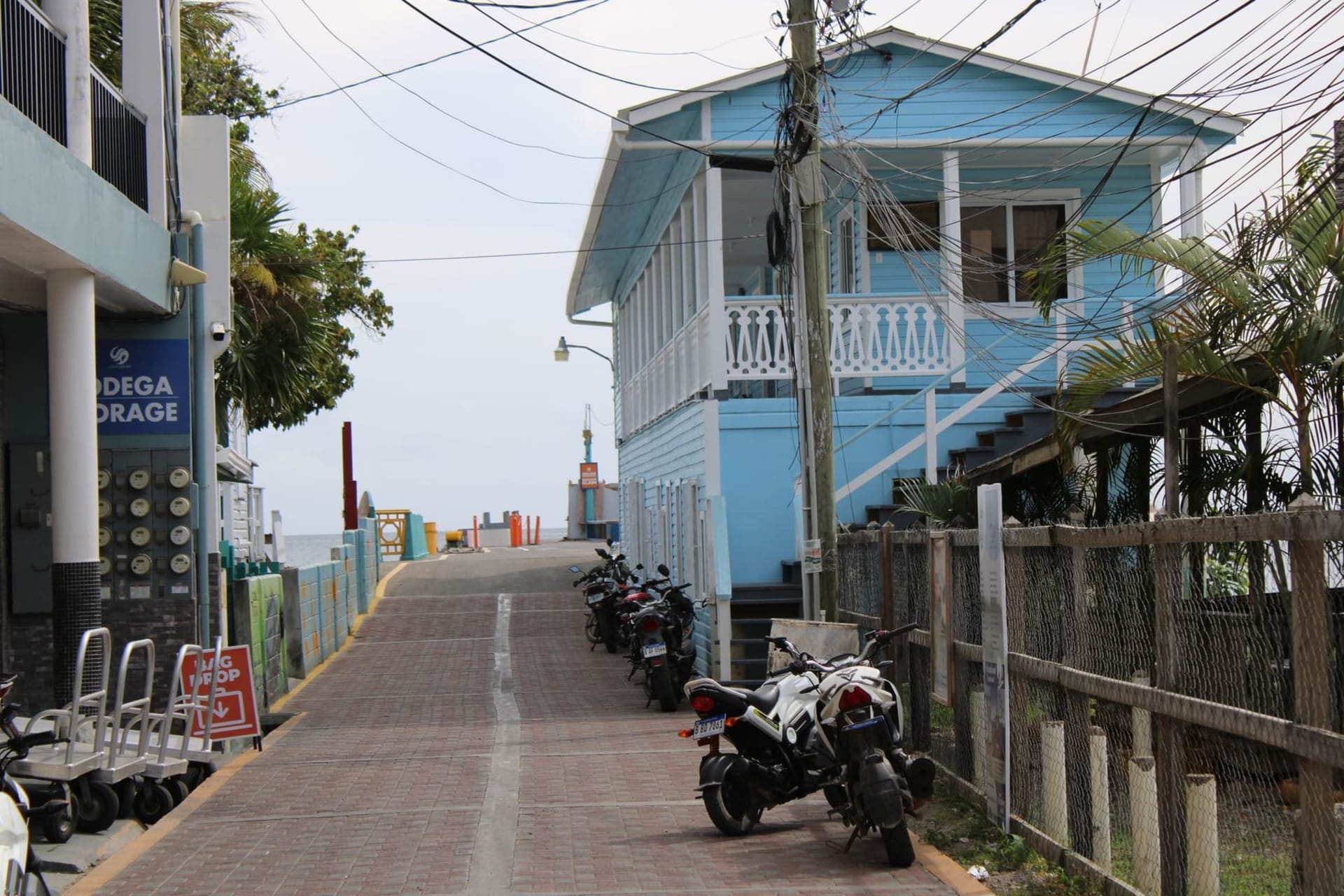
I arrived on the ferry from La Ceiba with wet clothes from a rain squall that had blown through the Cayos Cochinos and a hand-drawn map someone had pressed on me at the dock. By the time we reached West End — the small grid of dive shops and rum bars that serves as the island’s social center — the sun had returned and the street smelled of frangipani and two-stroke engine. Lia pulled off her sandals at the edge of the beach and walked straight into the water without saying anything. I understood.
The Reef at First Light
I dove with Native Sons, a local operator on the main drag through West End, whose boat left at six-thirty while the light was still going sideways across the water. The first dive site, Half Moon Bay Wall, drops from fifteen meters down to something you can’t see — the Caribbean shelf edge, where the water turns from turquoise to a blue so deep it reads as black. Spotted eagle rays moved through that darkness beneath me like slow signatures. The coral here is genuinely intact: brain coral formations the size of small cars, sea fans broad as doorways, the whole architecture of it undisturbed. I’ve dove in Thailand and the Maldives and in the cenotes off Tulum. Roatan’s reef is in that conversation.
The price is not. A two-tank dive costs around forty dollars. I dove six days in a row and did not feel extravagant.
West End Without the Diving
On the afternoon I gave my ears a rest, I walked east through Coxen Hole — the island’s actual working town, all hardware stores and school uniforms and the smell of frying plantain — and kept going until the road thinned. What I didn’t expect to find was a cassava bread operation run out of a woman’s front room in Punta Gorda, the Garifuna settlement on the island’s north side. She was pressing the dough by hand on a wooden board, the cassava giving off a faintly sour, earthy smell I’d never encountered before. She sold me two rounds for a dollar. I ate one standing in the road. It was the best thing I ate on the island.
That evening Lia and I sat at Sundowners, the open-air bar where the beach runs out, and watched the light leave. The reef glowed one last green before the water went dark.
Getting the Logistics Right
The ferry from La Ceiba takes roughly an hour and runs twice daily. West End is walkable. Everything else requires a tuk-tuk or rented golf cart, which costs almost nothing and is a fine way to cover the island’s single main road.
When to go: February through April offers the clearest visibility on the reef and the lowest chance of rain. Hurricane season runs June through November — the island is rarely hit directly, but October swells can close dive sites for days.