Marcala
"I've had good coffee in a lot of places. I didn't understand where it came from until Marcala."
A misty highland coffee town in La Paz department where cooperatives have quietly built one of Central America's most respected organic coffee regions.
I got to Marcala by a series of increasingly small buses, climbing steadily through La Paz department until the air turned properly cold and the hillsides on either side of the road turned into a uniform, orderly green of coffee plants under shade trees. At over 1,300 meters, Marcala sits at an elevation that produces some of the best arabica in Honduras, and the region has built a reputation — largely through organic-certified cooperatives — that now rivals more famous coffee zones elsewhere in Central America without anywhere near the same name recognition.
I visited a small farm belonging to a cooperative member named Doña Alba, who walked me through rows of plants heavy with ripening red cherries and explained, with more patience than my questions probably deserved, the difference between the varieties grown at this elevation and the lower-grown beans that dominate cheaper commercial coffee. Picking happens by hand here, cherry by cherry, over multiple passes through the same plants as they ripen unevenly — a labor-intensive process that explained, better than any tasting note could, why the coffee costs what it does.

At the processing facility afterward, I sat in on an informal cupping with two of the cooperative’s quality technicians, slurping spoonfuls of coffee from a row of cups the way I’d only previously seen done in specialty shops in Mexico City. The technician running the session could distinguish, blind, which of four cups had been sun-dried versus washed, a skill that made me feel genuinely uneducated about something I drink every single morning of my life.
Marcala’s town center itself is modest — a plaza, a church, a Saturday market where the surrounding Lenca villages bring produce and handwoven textiles — and the real appeal is the drive through the surrounding countryside, where mist settles into the valleys most mornings and lifts by midday to reveal ridge after ridge of cultivated slopes. I stayed at a small guesthouse where the owner served coffee from his own small plot each morning, and it was, without exaggeration, the best cup I drank anywhere in Honduras.
When to go: The harvest runs roughly November through March, when farms are most active and cooperatives welcome visitors for tours and cuppings. The climate stays cool year-round given the elevation — pack a light jacket regardless of season.
Keep exploring
More from Honduras
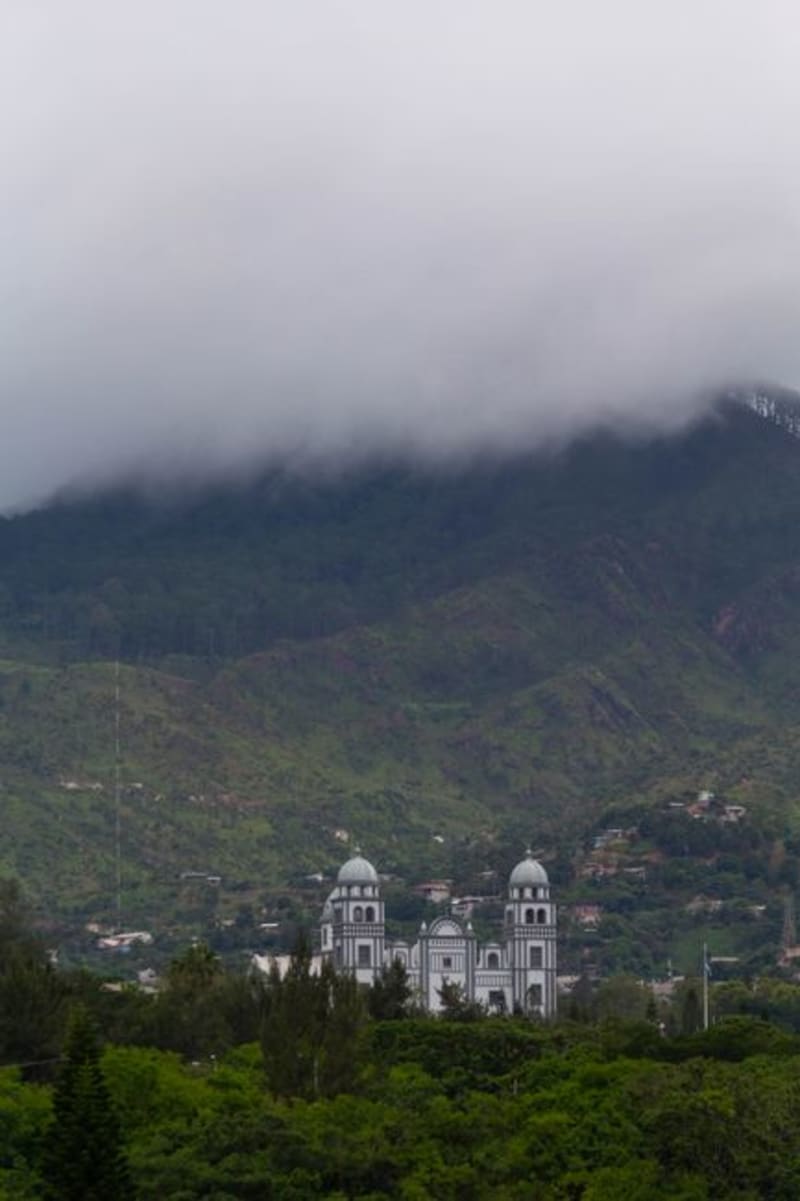 honduras
 Omoa
A drowsy Caribbean beach town near the Guatemalan border, guarded by an eighteenth-century Spanish fort that once held off pirates and now mostly holds off nothing at all.
Explore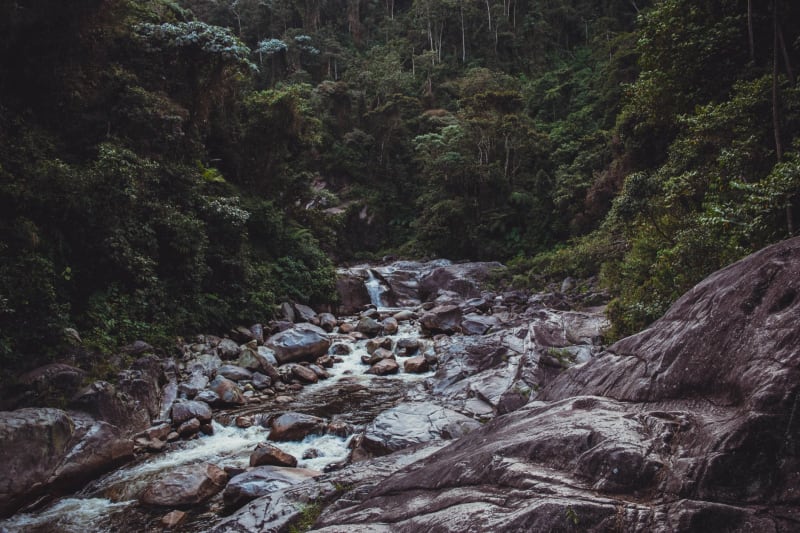 honduras
 Pico Bonito
A wall of cloud forest rising from the Caribbean coastal plain to nearly 2,500 meters — one of the most biologically dense national parks in Central America, accessible from La Ceiba in thirty minutes and seemingly from a different planet.
Explore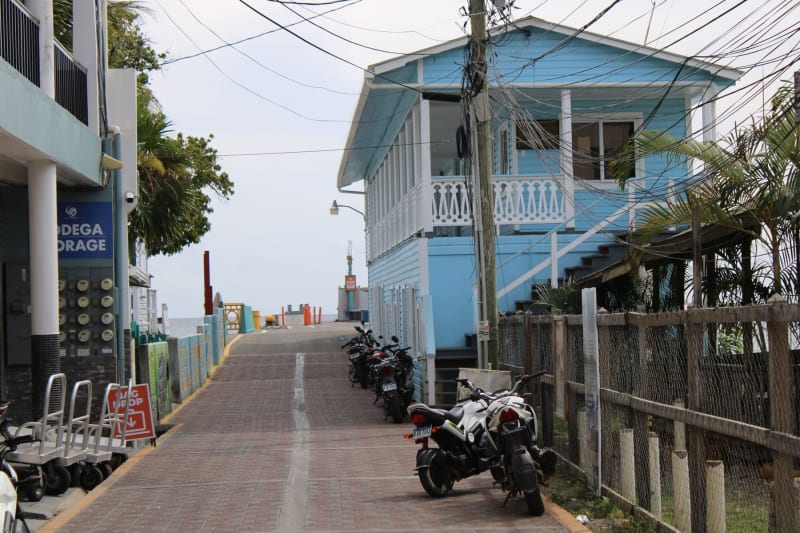 honduras
 Roatan
A Bay Island sitting atop Mesoamerica's second-largest barrier reef, where the diving is world-class and cheap.
Explore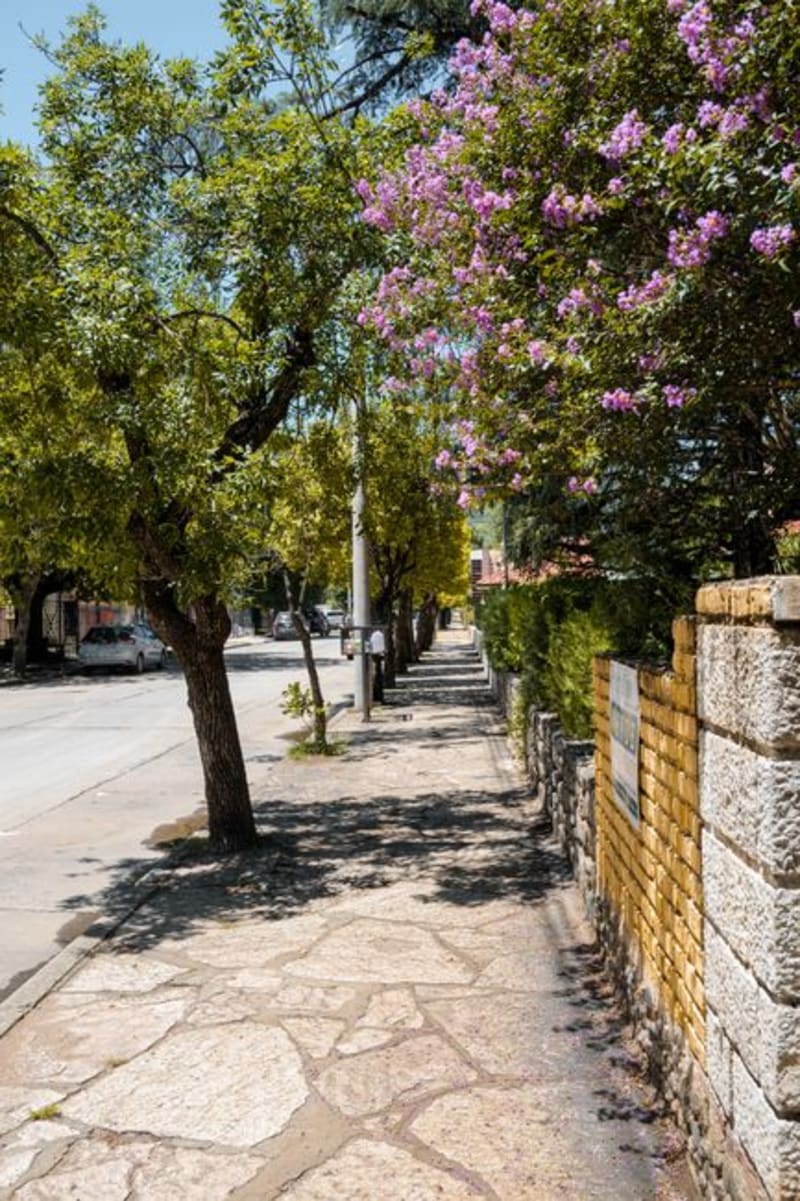 honduras
 Santa Rosa de Copán
A highland tobacco town of red tile roofs and cigar smoke, where colonial streets and family-run factories have been quietly rolling world-class puros for over a century.
Explore honduras
 Tegucigalpa
Honduras's capital sprawls across a bowl of pine-covered hills, a city everyone warns you about and almost nobody actually explains.
Explore honduras
 Tela
A languid Caribbean beach town backed by one of Central America's most intact coastal wetlands, where Garífuna villages dot the shoreline and the banana company's ghost still haunts the good side of town.
Explore