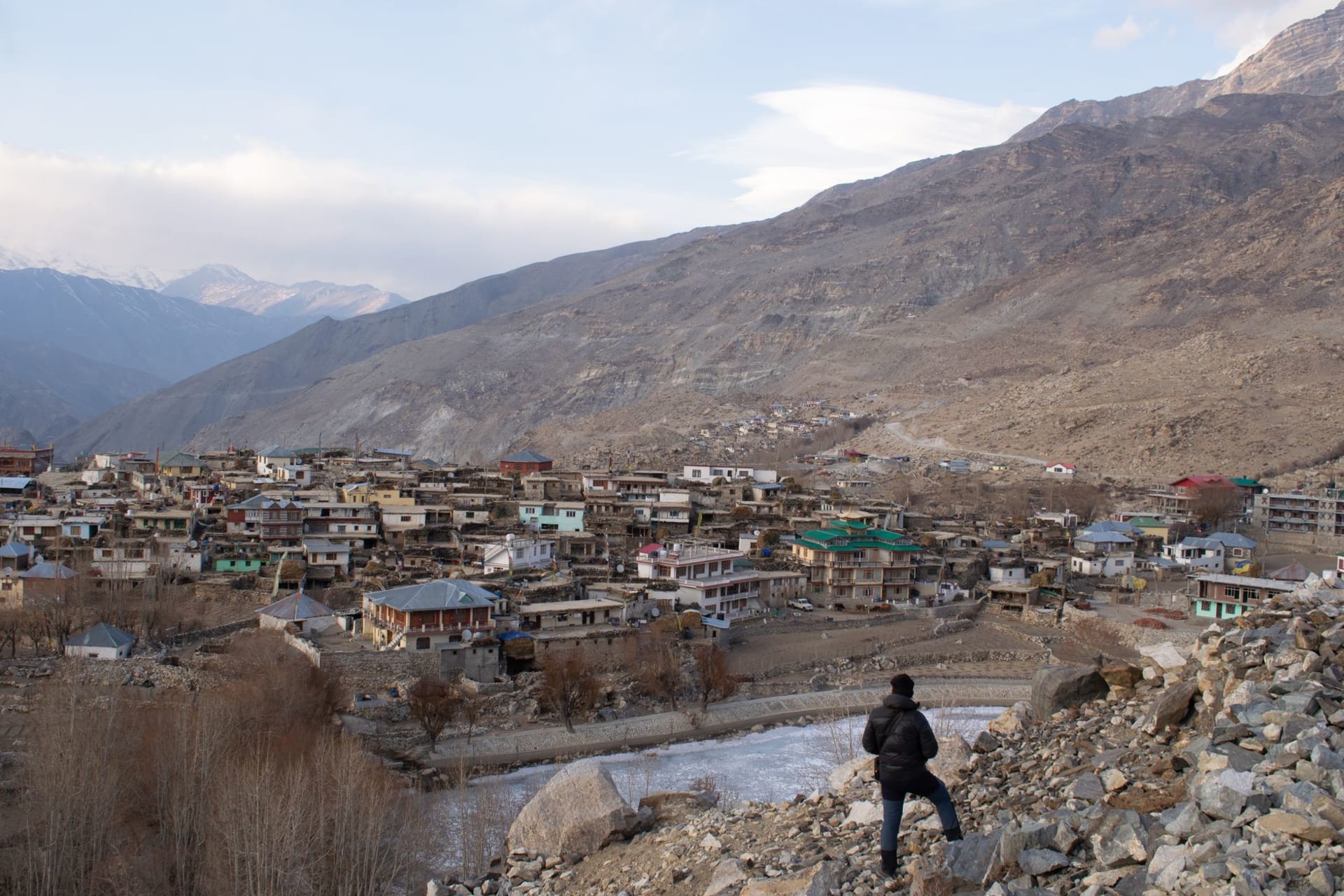
Kinnaur Valley
"You follow the river east and slowly everything becomes more remote, more layered, more itself."
Kinnaur is what happens when India and Tibet have been rubbing against each other for long enough that neither term applies cleanly anymore. I entered the valley from Shimla on the old Hindustan-Tibet Highway — a road that the British built along the Sutlej gorge in the nineteenth century to trade with Tibet and that today functions as one of the more vertiginous driving experiences available in the northern Himalaya. The gorge is so deep and the walls so sheer that sunlight only reaches the river at midday. Waterfalls drop off cliffs a hundred metres above. Pine forests cling to what appears to be solid rock. And through all of it, the road winds on a ledge barely wide enough for two vehicles, which do not always slow down for each other.
The lower Kinnaur Valley, around Reckong Peo and Kalpa, is apple country in the most emphatic sense. The apple orchards terraced up the valley slopes — Pink Lady, Golden Delicious, local varieties with no commercial name that are eaten only in the valley — represent an agricultural economy organized entirely around altitude and irrigation. In September and October, the harvest turns the valley into a working festival: every family on ladders, every road with a truck loaded down with crates, the smell of ripe apple cutting through the dry mountain air in a way that is almost overwhelming. I bought a paper bag of small, astringent local apples from a woman at a roadside stall who had grown them herself at 3000 metres and charged me less than I had paid for a single coffee anywhere further south. This felt like a correction.

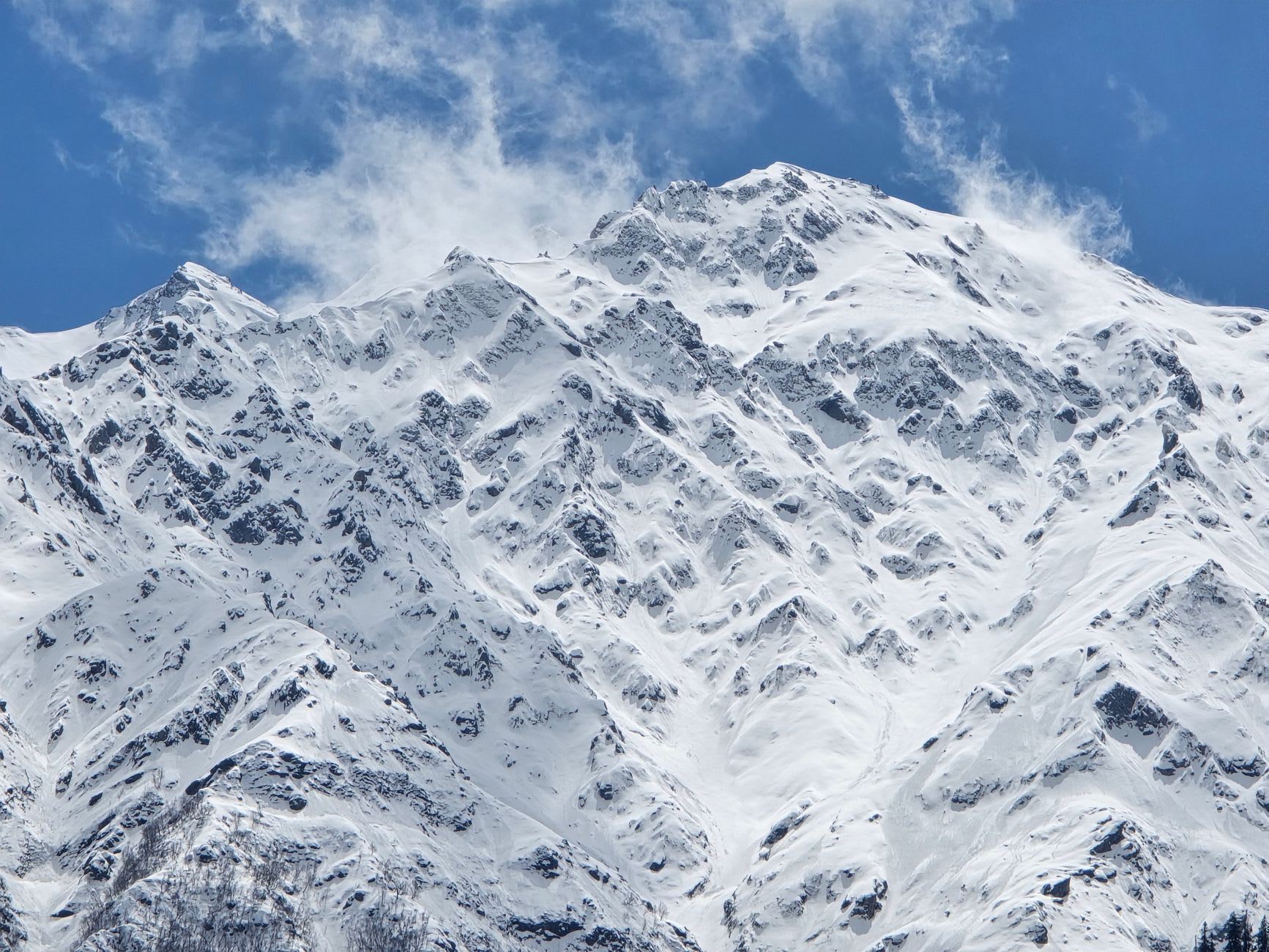
Kalpa deserves its own morning. The village sits above Reckong Peo on a spur that looks directly across at the Kinner Kailash massif — a wall of grey and white rock that rises almost vertically from the valley floor to over 6000 metres. This is one of the sacred mountains of Shiva, and in the village there are temples that have been here for centuries, with carved wooden details in the Kinnauri style that is distinct from anything else in the Himalaya: intricate, dark, layered with motifs that mix Buddhist and Hindu iconographies in ways that suggest the villagers long ago stopped worrying about the distinction. Watching the dawn hit the Kinner Kailash from Kalpa’s upper lanes — the snow face going from grey to pink to gold in the space of fifteen minutes while a small temple bell rings somewhere below — is one of those mornings that justifies a difficult journey.
The upper Kinnaur Valley, beyond Sangla and toward the confluence with Spiti at Sumdo, becomes increasingly Tibetan in character. Buddhist monasteries appear. The script on prayer stones changes from Devanagari to Tibetan. The food shifts from Himachali dal and rice toward Spitian barley and butter tea. The people wear the Kinnauri cap — a woollen hat with a green band — that marks a cultural identity specific to this valley. I reached Nako, a lake village near the junction with Tibet proper, and had the particular sensation of being very far from most things while simultaneously being extremely aware of what was just over the ridgeline to the east.
The road through Kinnaur is one of the most technically demanding in India and requires a valid Inner Line Permit for Indian citizens and a Protected Area Permit for foreigners beyond Reckong Peo. The bureaucracy is real but not prohibitive. The alternative — not going — would be the worse decision.
When to go: May to November, with the apple harvest in September and October being the obvious peak for the combination of scenery and culture. The winter closes the upper valley completely and makes the gorge road genuinely dangerous with ice. July and August bring some monsoon rain to lower Kinnaur, though the valley lies partly in the rain shadow and gets less than Shimla or Manali.