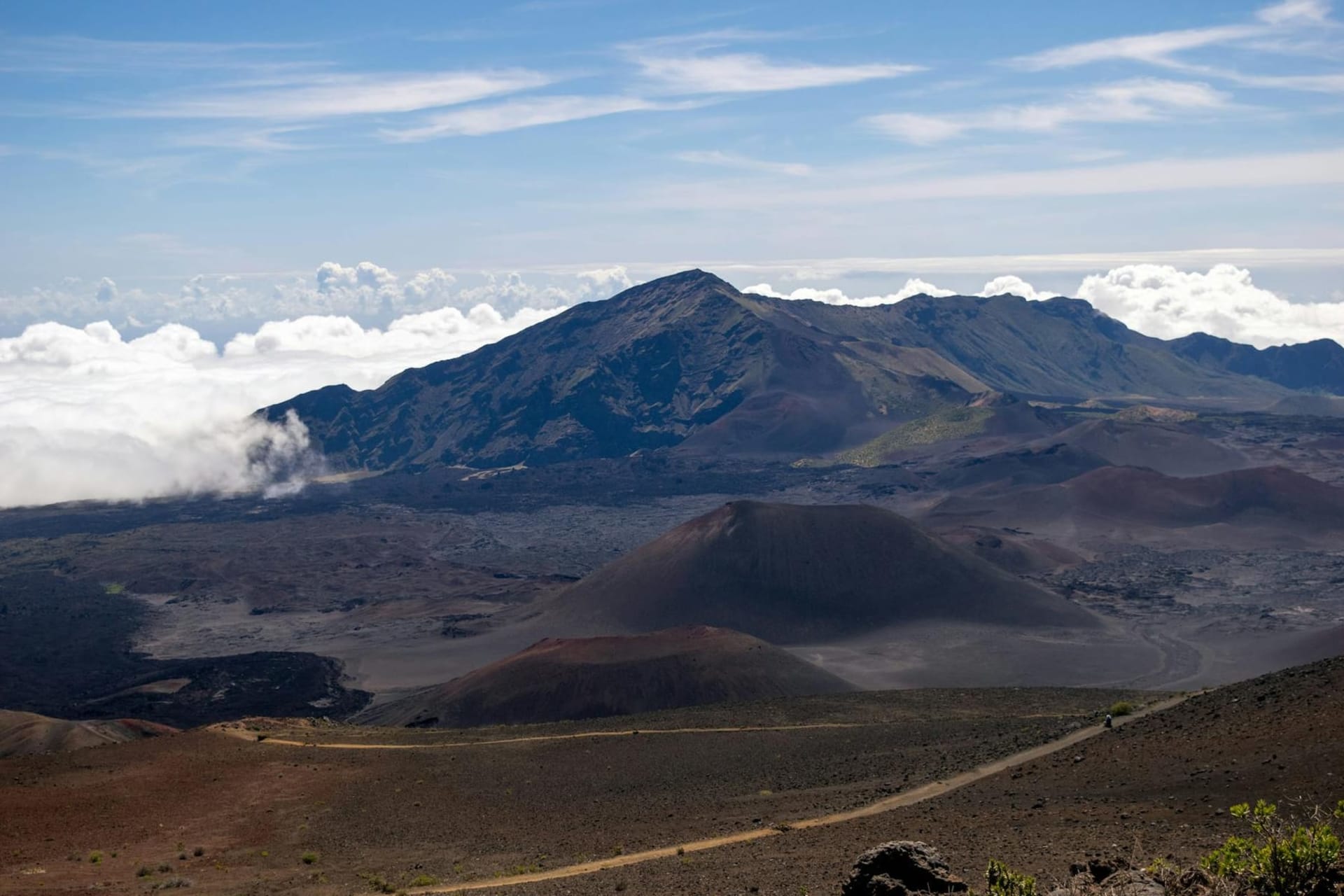
Where Kilauea's lava flows into the ocean in clouds of steam — the only place to watch an island being built.
There is a smell that hits you before you see anything — a faint sulfur bite riding the trade wind, something between struck match and bad boiled egg. It is not unpleasant so much as it is prehistoric. Standing on the rim of Halema’uma’u Crater just after sunrise, watching the crater glow pulse and dim like a slow breath, I kept thinking: this is not scenery. This is the planet thinking out loud.
The Caldera at Dawn
Lia and I drove Chain of Craters Road in the dark to be at the coast when the light broke. The road descends thirty-eight hundred feet through successive flows, each one labeled with a year — 1971, 1974, 2003 — the way a doctor might date x-rays. The 2018 flow had swallowed the road entirely for several miles; the new pavement simply cuts across it, asphalt on top of lava on top of older lava, layers of catastrophe all the way down.
At the lava delta where the 2018 eruption entered the sea, the ocean was still slightly warm in spots — I touched the water near the black sand at Wainapanapa and pulled my hand back faster than I expected. The ranger later told me the seafloor remains elevated in temperature years after an entry. The island remembers what it cost to grow.
What I Did Not Expect
I had braced for spectacle and crowds. What I found instead, along the Kilauea Iki Trail through the 1959 crater floor, was silence broken only by the creak of cooling rock underfoot and the occasional hiss from a steam vent near the trail’s edge. The crater floor is a vast black plate, cracked like dried mud, and you walk across it at roughly eye level with the tree ferns that have already begun reclaiming the walls. Life arrives before the rock is done cooling. A nene goose — the Hawaiian state bird, ungainly and unfazed — crossed the trail ahead of me and disappeared into a crack in the lava without any apparent concern. I laughed out loud. The island was already being lived in.
Eating Near the Park
After the hike, we drove up to Volcano Village and found Cafe Ono on Old Volcano Road, a small spot where I ate a plate of loco moco — rice, hamburger patty, fried egg, brown gravy — that tasted exactly like the kind of meal you need after walking across a volcanic crater. Strong Kona drip coffee. No pretension whatsoever.
When to go: The park is open year-round and volcanic activity does not follow a season, but April through early June offers lower crowds and cooler hiking temperatures. Check the USGS Hawaiian Volcano Observatory updates before any visit — conditions change without notice.