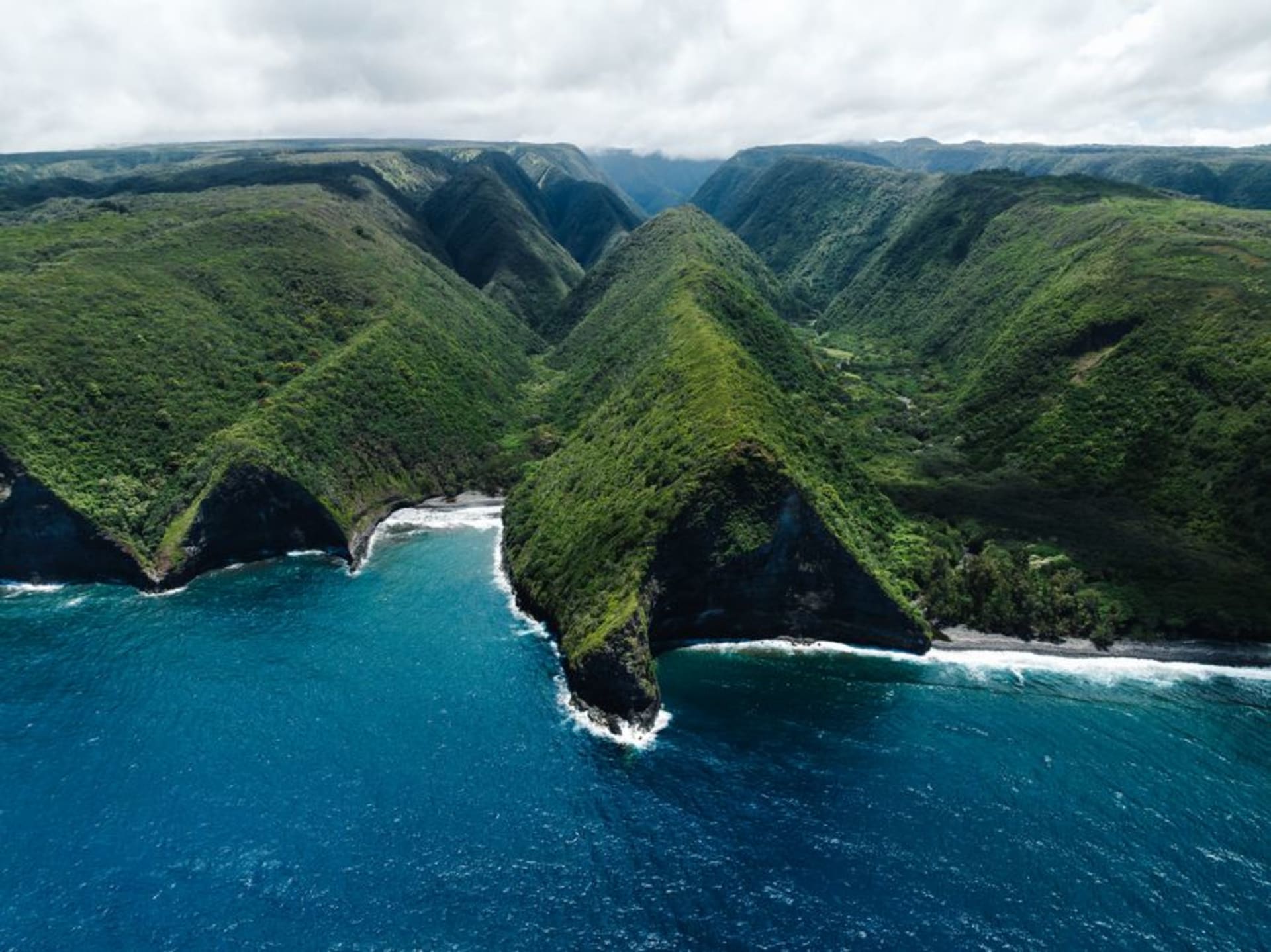
Hamakua Coast
"Every bridge on this road crosses a gulch that used to grow sugar and now just grows jungle."
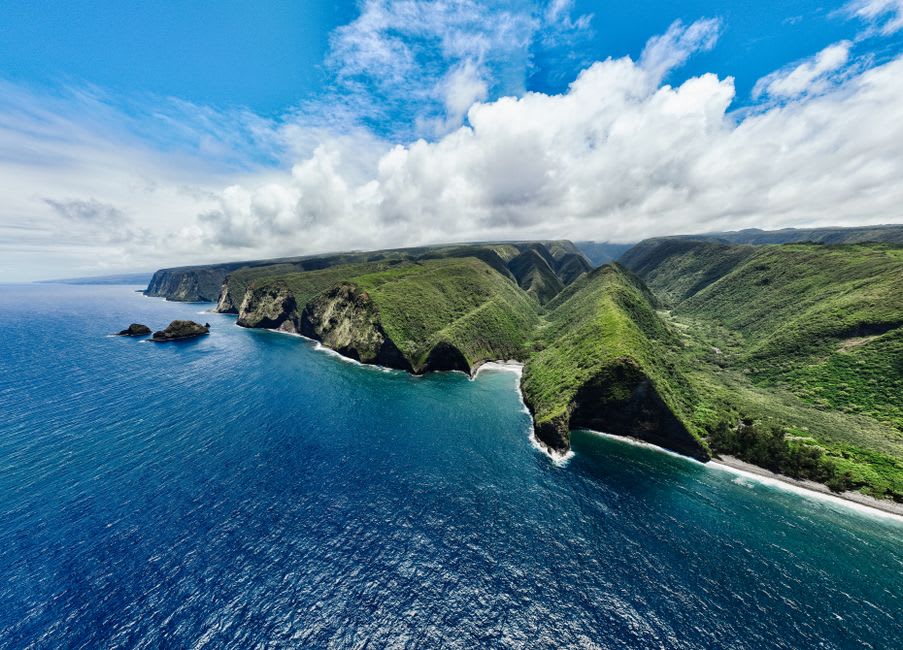
Forty miles of sea cliffs, waterfalls, and old sugar towns on the Big Island's wild, wet windward shore.
I did not plan to spend a whole day on a forty-mile stretch of two-lane highway. That was the mistake — or rather, the gift, because the old Hamakua Belt Road between Hilo and Honoka’a refuses to be driven quickly. It dips into gulch after gulch, crosses one-lane bridges over streams that are actively becoming waterfalls a few hundred meters downstream, and climbs back out through walls of African tulip trees and Norfolk pines planted a century ago by sugar planters who are long gone. Lia kept telling me to slow down, not because the road demanded it — though it did — but because every third turn revealed something worth stopping for.
The Sugar Ghosts
This coast used to run on sugar cane, and the evidence is everywhere if you know to look for it: the old mill smokestacks in Pa’auilo, the plantation-camp architecture in Honoka’a with its covered wooden sidewalks, the irrigation flumes rusting quietly in the undergrowth. The industry collapsed in the 1990s and the land went back to guava, strawberry guava, and African tulip almost overnight. I found this strangely moving — a hundred years of imposed monoculture erased by the forest in a single generation. Honoka’a itself is worth a slow walk. There’s a single-screen theater from 1930 still showing films, and a bookstore that smells like every good used bookstore in the world smells.
Waterfalls Without the Crowds
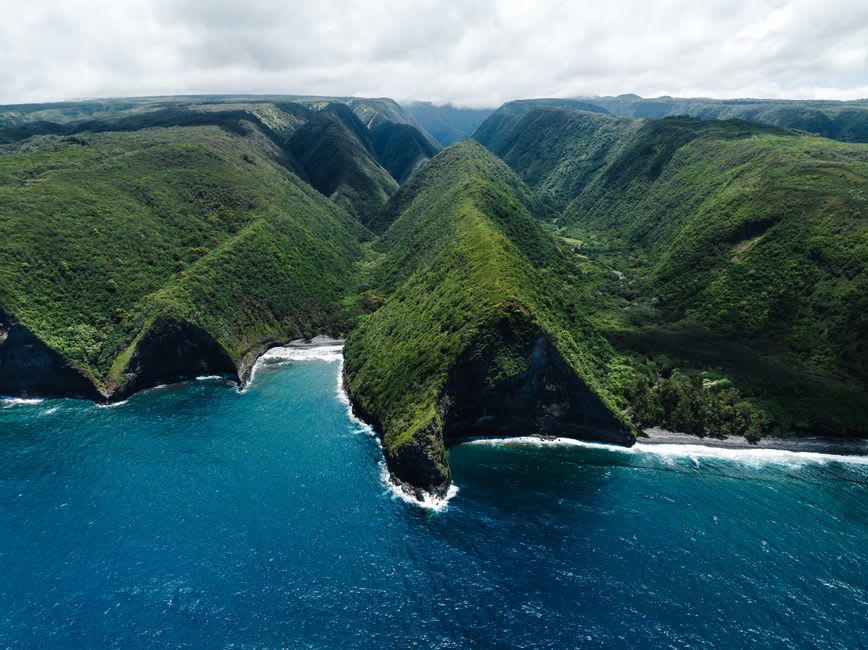
Everyone knows Akaka Falls. Fewer people stop at the smaller cascades strung along the coast highway — Kolekole, World Botanical Gardens’ triple falls, the unnamed drop you can hear from the Umauma bridge before you see it. I pulled off at Kolekole Beach Park on a whim and ate lunch alone at a picnic table with a waterfall thundering into a river-mouth pool thirty meters away, the Pacific breaking against black rocks just past it. Nobody else was there. That is the trade this coast offers: less polish than the famous stops, more solitude than you have any right to expect on an island this popular.
World Botanical Gardens
If you only make one stop, make it here. Three waterfalls visible from a single overlook, a maze planted in the shape of the island, and enough rain to keep everything absurdly green. I am not usually a botanical-garden person — Lia had to talk me into it — but the drop from the main overlook, where all three falls are framed together against the jungle canopy, earned its ticket price in about four minutes.
When to go: Year-round, but expect rain in any season — this is the wet windward side and the waterfalls depend on it. Mornings tend to be drier than afternoons. A rental car with decent tires is essential; the old road is narrow and occasionally one-lane.