Green Sand Beach
"Sand that looks lightly seasoned with something, until you realize it's the beach itself."
A remote olivine-crystal beach near South Point, reached by a rutted coastal walk or a bone-rattling truck ride along the island's windiest edge.
Getting to Papakolea is most of the story. From the parking area near South Point, the southernmost point in the United States, it’s a five-kilometer walk each way across an exposed, treeless coastal plain, wind coming straight off the open Pacific with nothing to slow it down for thousands of kilometers. We debated the truck option — locals run informal rides in the beds of battered pickups for a negotiated cash fee — and ended up walking one direction and paying for the ride back, which felt like the right compromise after seeing how rutted the “road” actually was.
Sand Made of Olivine
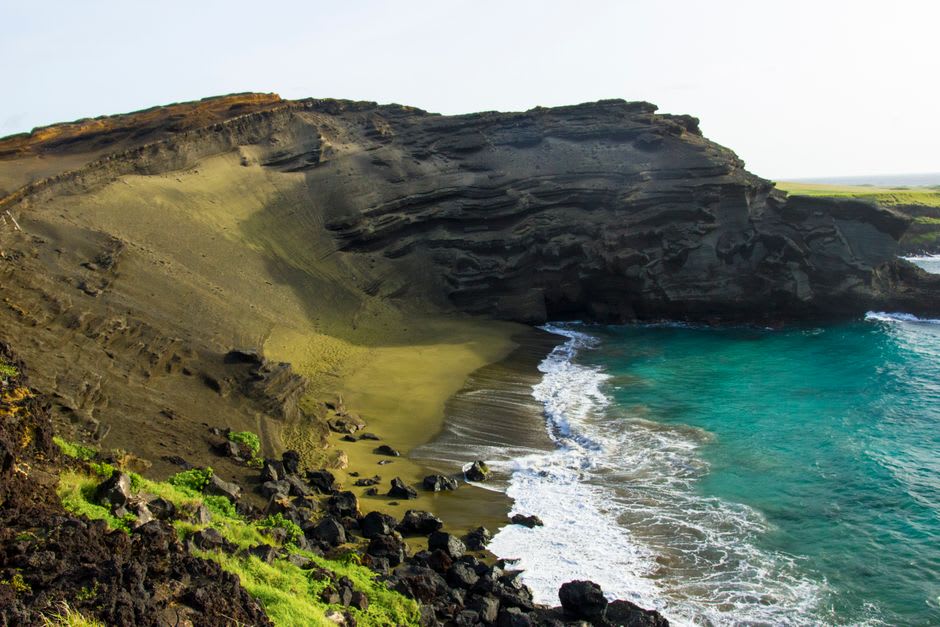
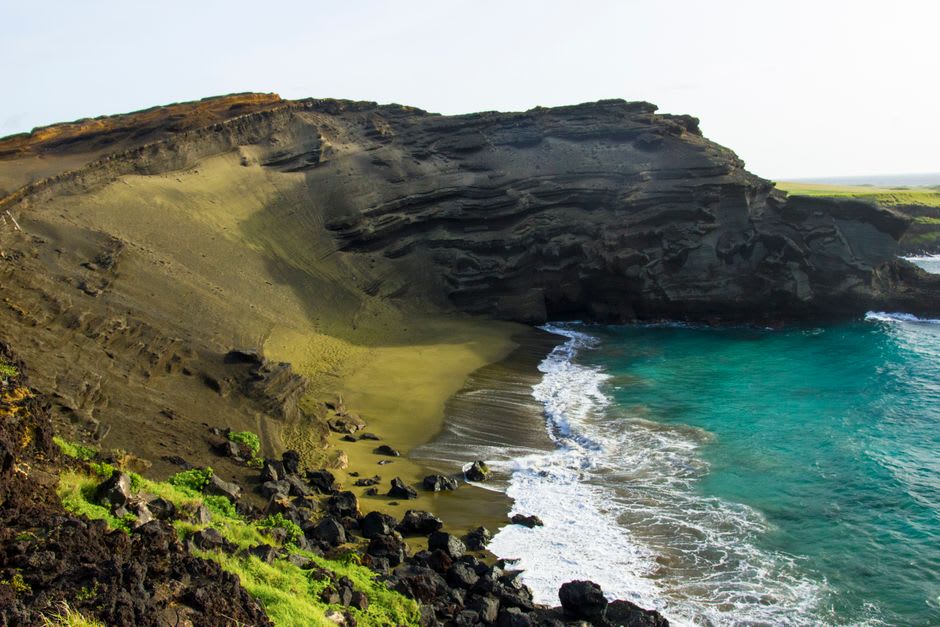
The green color comes from olivine crystals, a mineral common in the basalt that built this part of the island, concentrated here because a cinder cone partially collapsed into the sea and the surf has spent millennia washing out the lighter black sand and volcanic ash, leaving the denser olivine behind. It isn’t emerald green up close — more an olive, khaki tone that shifts with the light — but standing at the rim of the eroded cone looking down at a color of beach I’d genuinely never seen before was worth every meter of that windy walk.
Getting Down to the Sand
The descent into the cove itself is steep and loose, more of a scramble down crumbling cinder than a proper trail, and we watched a few people turn back rather than commit to it. Lia went first, testing footholds, and we made it down to a narrow strip of beach hemmed in by cliffs on three sides, waves breaking hard and close given the complete lack of any protecting reef. Swimming here is only for calm days and confident swimmers — the currents pull hard, and there’s no lifeguard for kilometers in either direction.
Worth the Effort, With Caveats
We passed almost nobody on the walk out and maybe a dozen people at the beach itself, which felt rare for anywhere this well documented online. Bring more water than seems reasonable — there is zero shade for the entire round trip — and start early enough to avoid doing the walk back in full afternoon sun, which we did not manage and regretted.
When to go: Morning, to avoid both the worst heat and the strongest afternoon winds, which can turn the walk genuinely unpleasant. Calmer summer seas make the final scramble down and any swimming safer, though conditions should always be checked locally before entering the water.
Keep exploring
More from Hawai'i
 hawaii
 Halawa Valley
Molokai's oldest continuously inhabited valley, reachable only by guided hike, where a Native Hawaiian family shares taro farming traditions dating back a thousand years.
Explore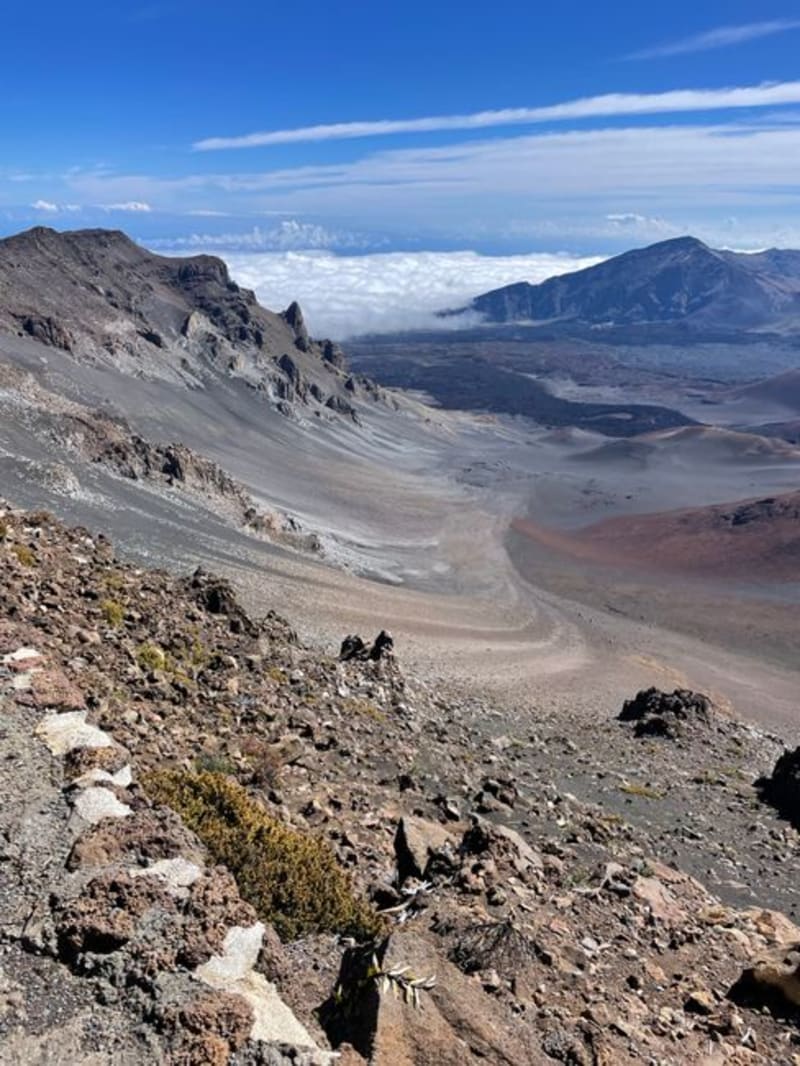 hawaii
 Haleakalā Summit
A 3,000-meter volcano where you drive from sea level into the cold before dawn to watch the sun rise above the clouds.
Explore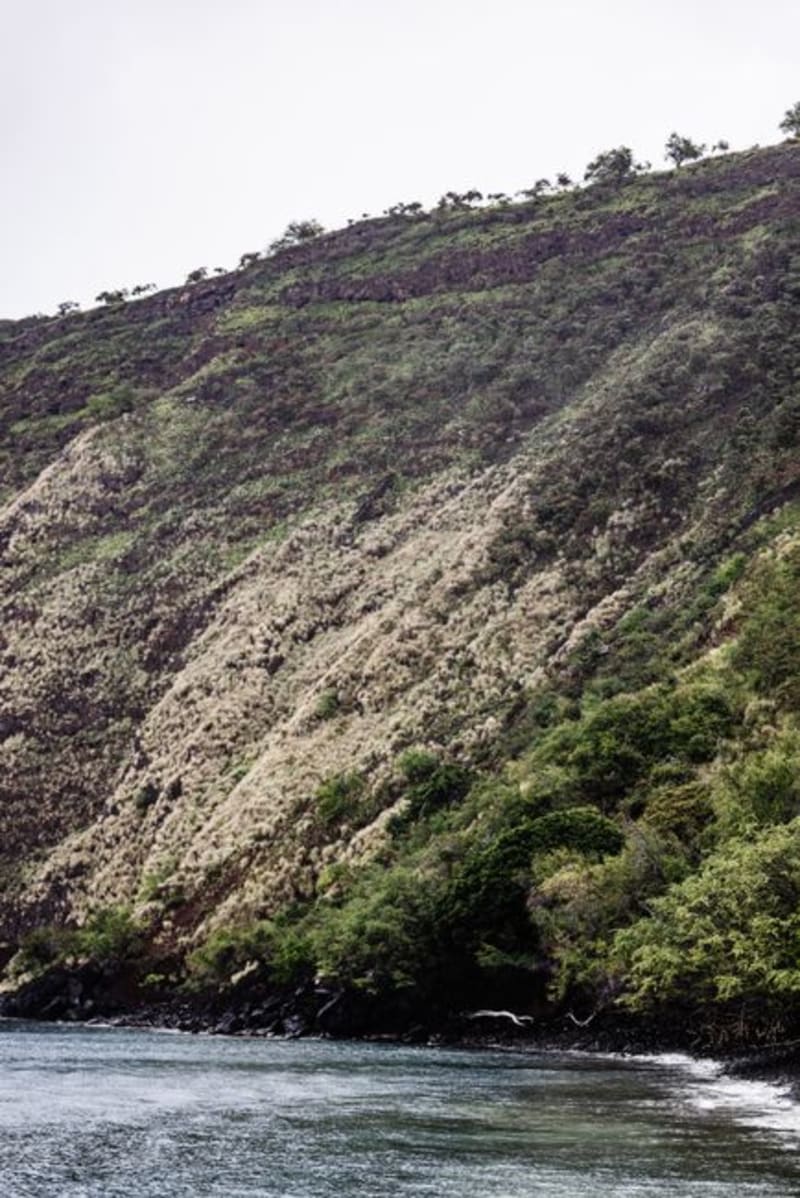 hawaii
 Hamakua Coast
Forty miles of sea cliffs, waterfalls, and old sugar towns on the Big Island's wild, wet windward shore.
Explore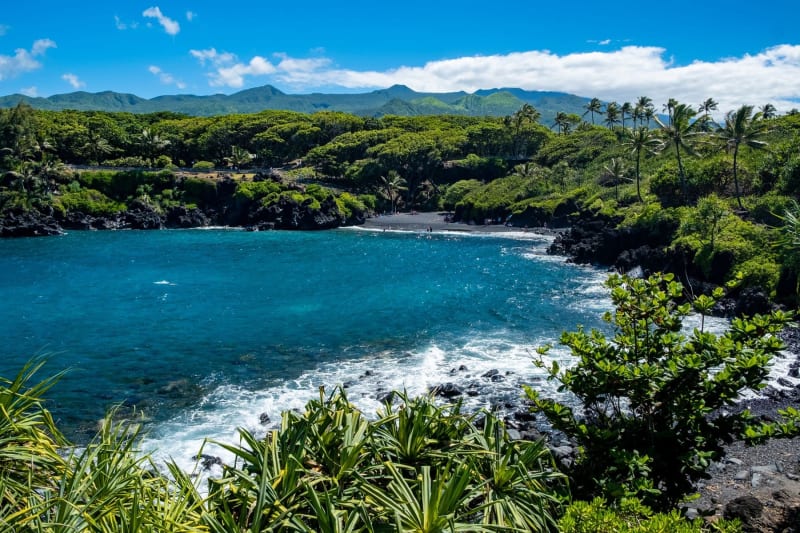 hawaii
 Hana Coast
Maui's legendary winding road past 617 curves, 59 bridges, and waterfalls pouring into black-sand pools.
Explore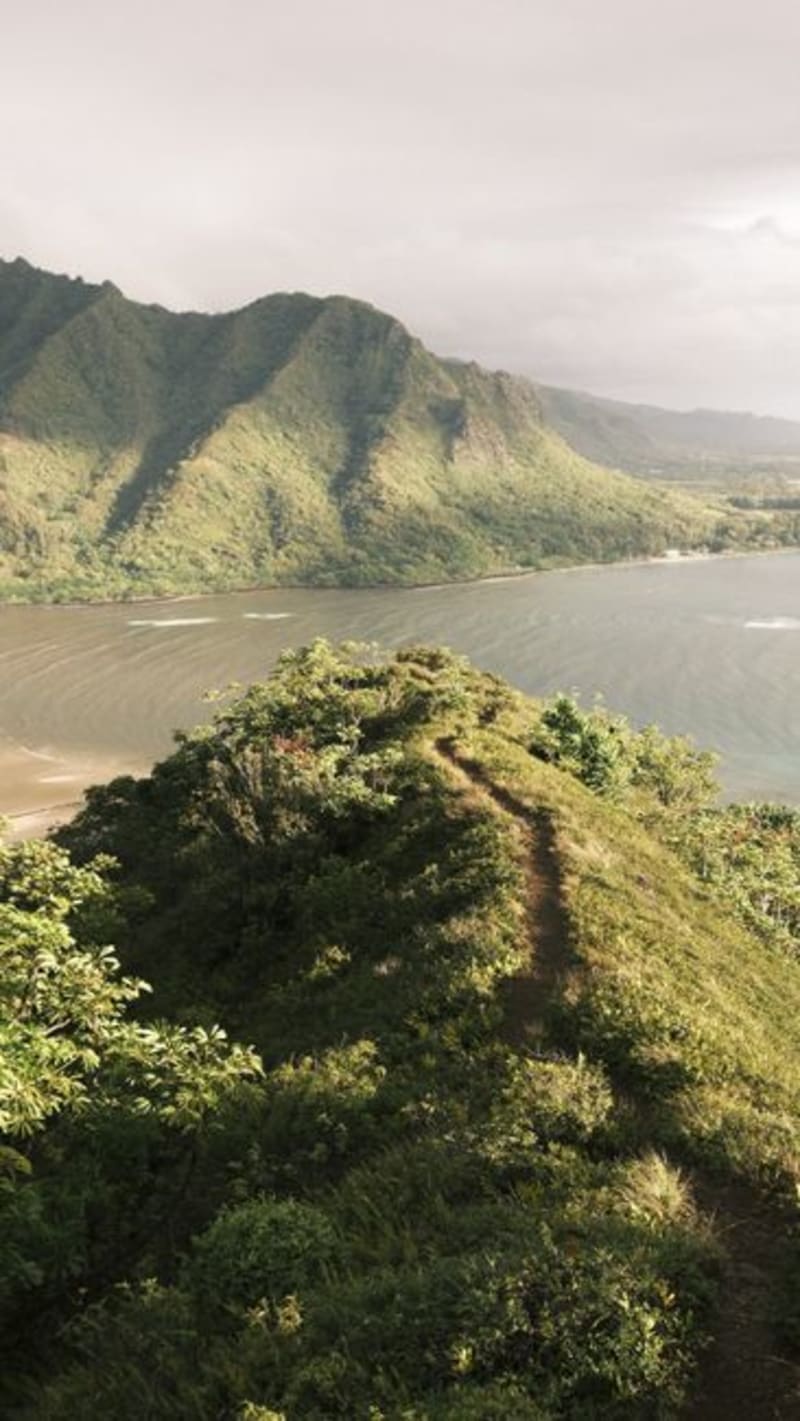 hawaii
 Hanalei Bay
The crescent bay and mountain-backed pier that launched a thousand sunset photos — and the small town that somehow still feels unhurried.
Explore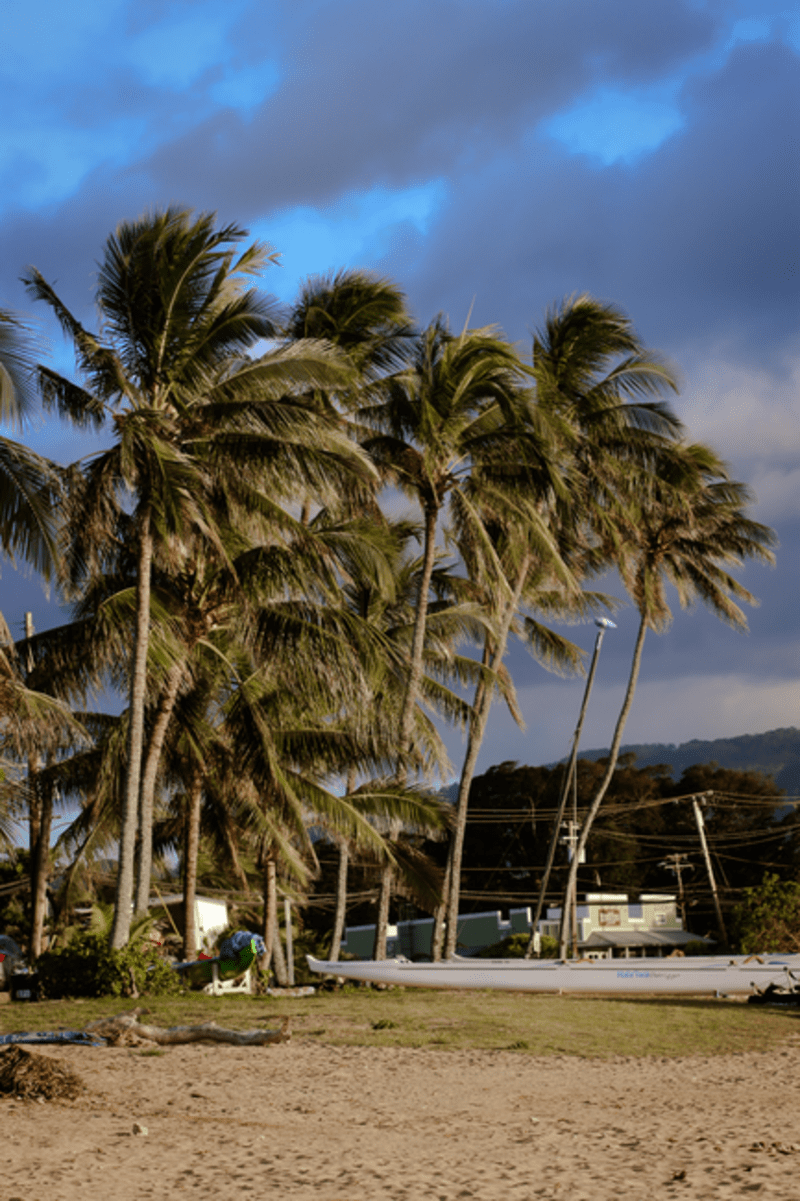 hawaii
 Hanapepe
A one-street plantation town on Kaua'i's west side that calls itself Hawai'i's biggest little town, and means it without irony.
Explore