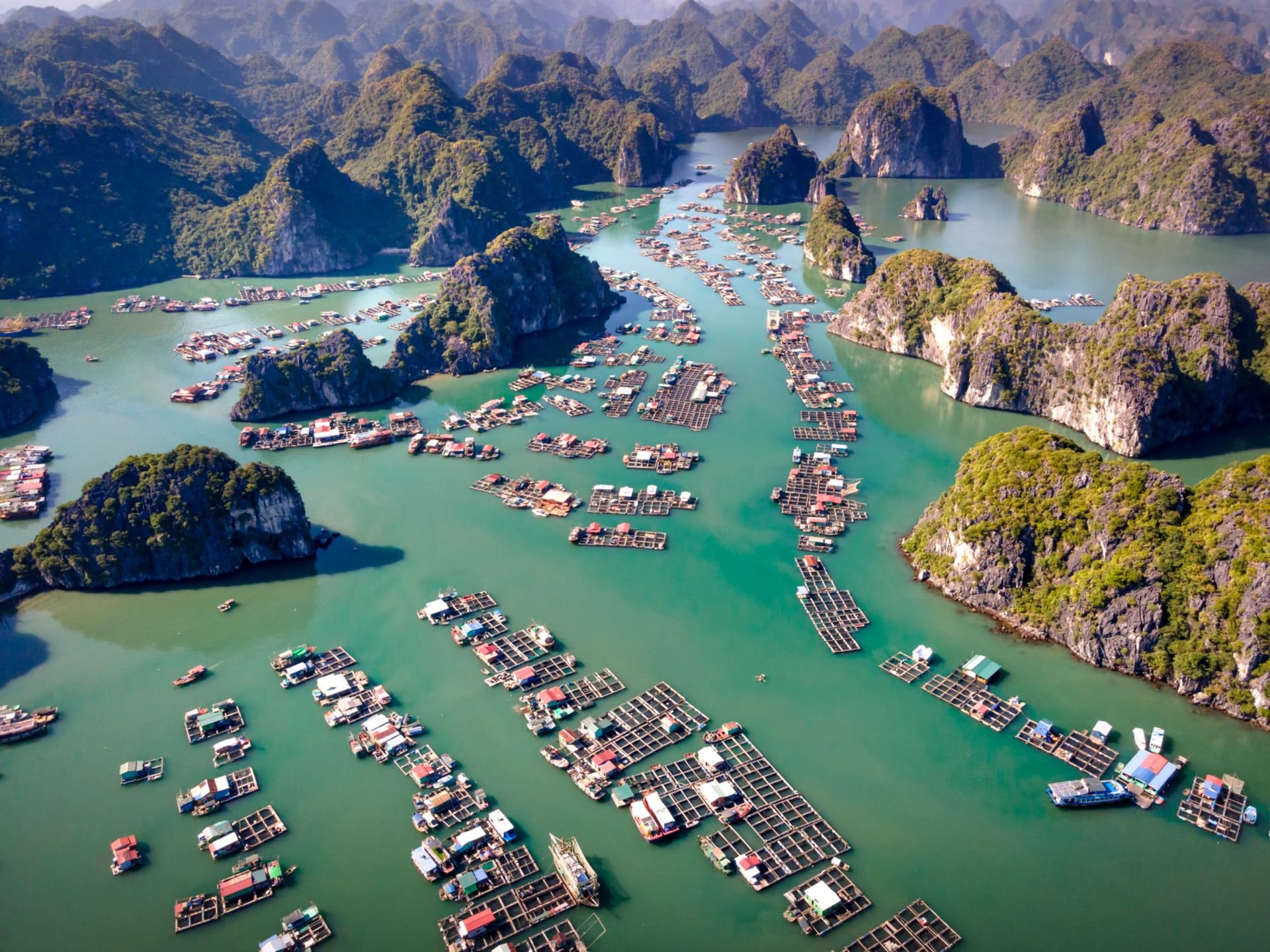
Vung Viêng Village
"Every floating house here sits on exactly what the sea allows — and somehow that feels more solid than most places I've lived."
The boat that took me to Vung Viêng left Cat Bà before sunrise and navigated through Bái Tử Long Bay in the gray pre-dawn that makes the limestone towers look like cutouts against the sky. By the time we reached the village, the sun was barely up and the water was still carrying the night temperature — cool, flat, faintly luminous. The first thing I saw was a woman at the edge of a floating platform, washing vegetables in a bucket of bay water, the limestone cliffs enormous and pink behind her. She waved without looking up.
Vung Viêng sits in a protected cove in the outer reaches of the greater bay, closer to Bái Tử Long territory than to the main touring routes. It’s reached by fewer cruise boats than Cửa Vạn and carries a different quality of stillness — more working village, less spectacle. The pearl farming is the key industry: below many of the floating platforms, you can see the lines of cages descending into clear water, each holding pearl oysters at the particular depth and salinity that produces the best lustre. The family that ran our boat offered to open an oyster — the pearl was small and gray, not the commercial round perfection you see in shops, but beautiful in a more complicated way.
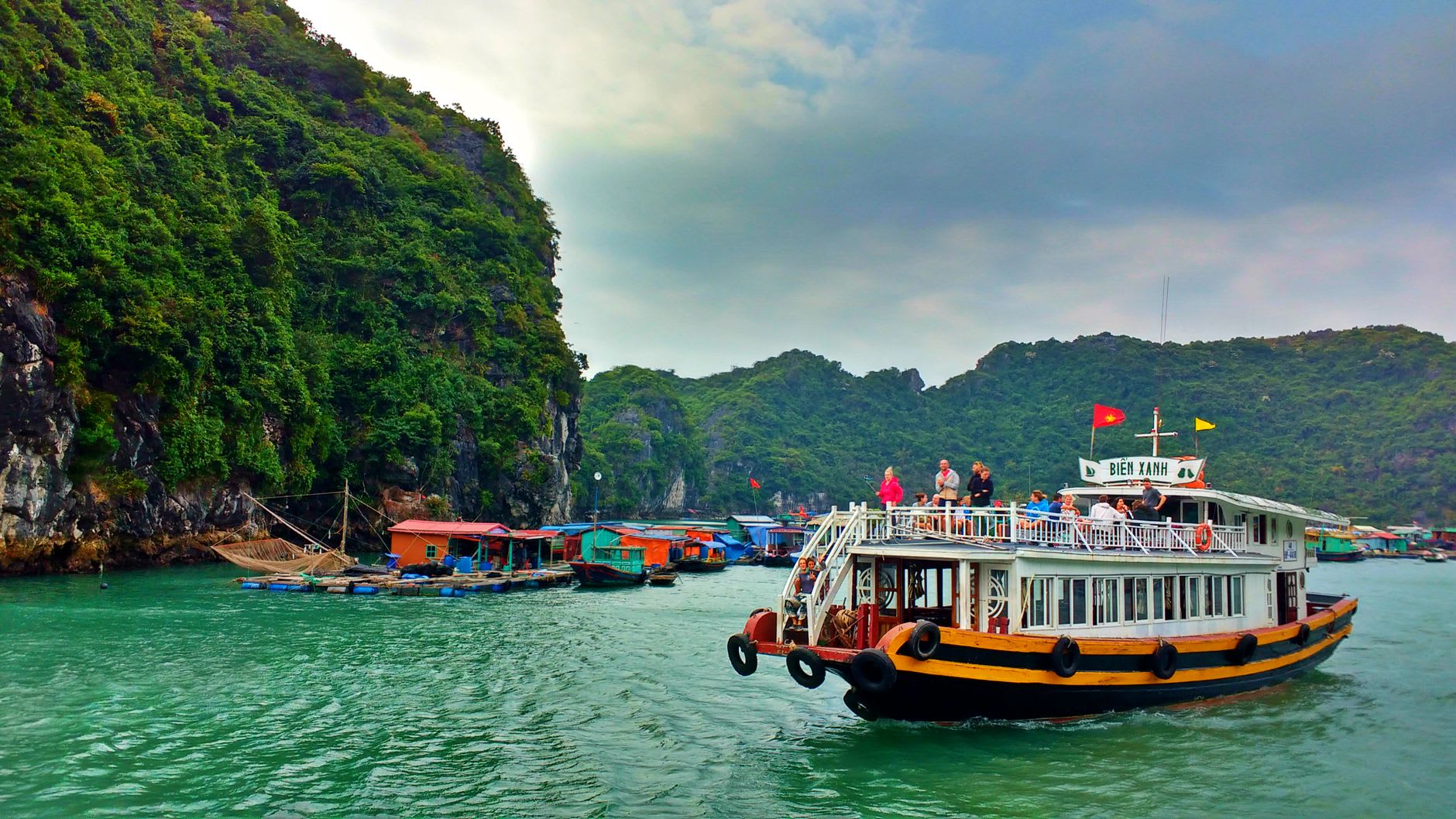
The village has a wooden footbridge that connects the floating platforms of the eastern section — an addition made for visitors, slightly precarious and excellent — and at one end of it, a small community gathering space with a painted sign in Vietnamese and Chinese that I couldn’t read but which someone explained listed fishing regulations, including a prohibition on dynamite fishing that implied the prohibition was necessary. The houses here are more permanent-looking than Cửa Vạn’s: painted in the particular Vietnamese palette of pale blue, pale yellow, and turquoise, with satellite dishes and potted plants on the front platforms that give the floating settlement the air of a land village that has simply not noticed it’s on water.

Lunch on the boat back was what I’d been told to expect: grilled fish caught that morning, morning glory stir-fried with garlic, fish broth that the cook had been maintaining since before I woke up, rice wine that arrived without being requested and that I drank more of than I intended. The woman who had washed vegetables at dawn appeared at the stern of our boat three hours later, selling dried squid from a waterproofed bag. I bought some. We didn’t share a language beyond the transaction. It was enough.
When to go: October through March offers the best visibility for the pearl farming cages and the calmest water for the crossing through Bái Tử Long Bay. The village is accessible as part of multi-night cruises or by private charter boat from Cat Bà.