Monkey Island
"The monkey took my mandarin orange, peeled it neatly, ate it in segments, and left without looking back. I found this deeply respectful."
Someone on the boat had warned me about the monkeys, which I had taken as the kind of warning that precedes disappointment. I had seen macaques in Malaysia, in India, in Thailand — confident, calculating animals with excellent spatial reasoning and a criminal relationship to tourists’ belongings. Monkey Island, I assumed, would be tame macaques looking for crackers. What I found was something slightly more organized.
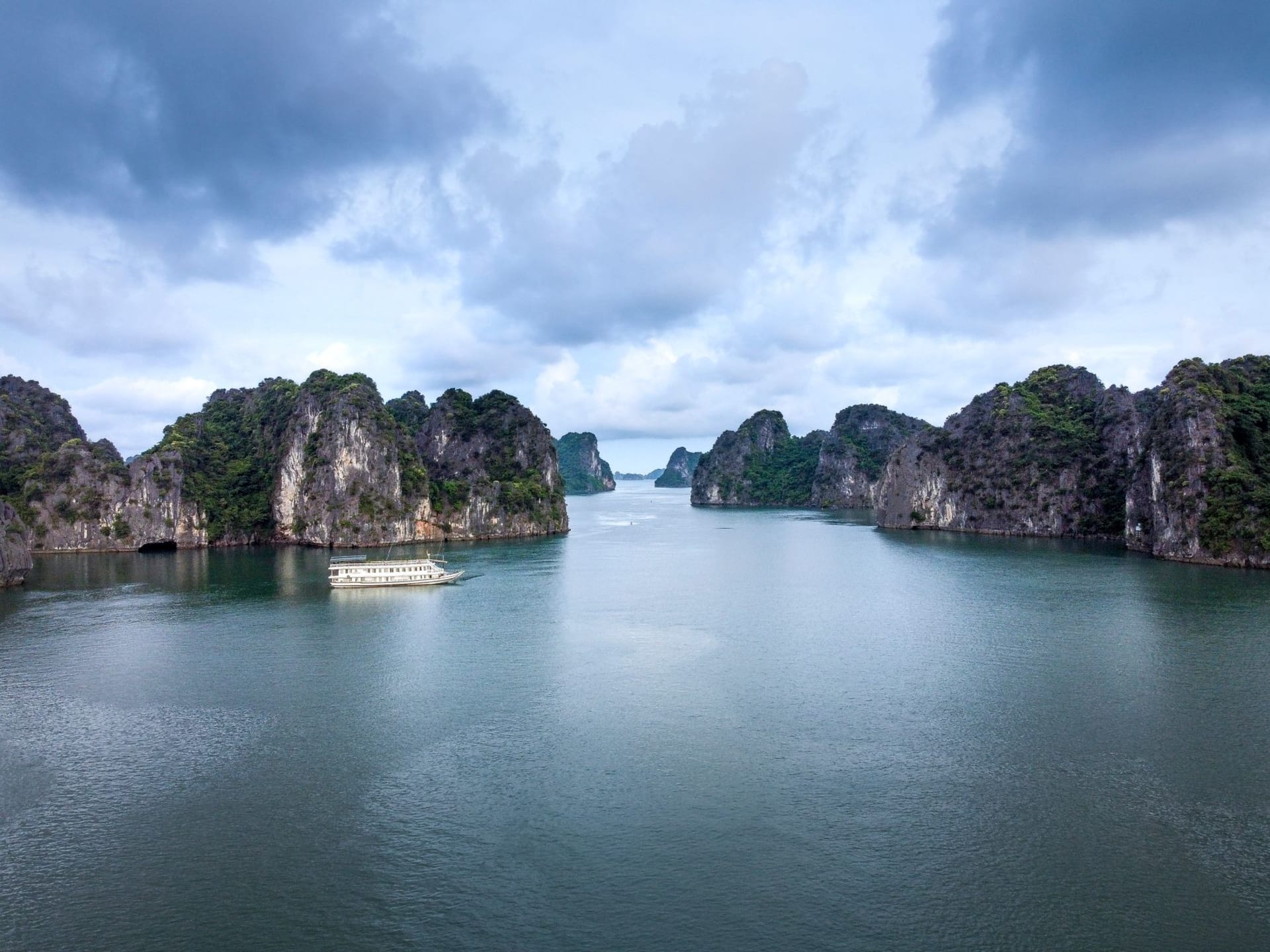
The island sits in the central section of Hạ Long Bay and is home to a community of rhesus macaques that have reached a sophisticated understanding of the tourist economy. They know the cruise boat schedule. They post lookouts at the tree line above the beach. They have, as far as I could tell in the time I spent observing them, a clear hierarchy: the large male on the flat rock above the waterline, three females with infants who operated the sand-level patrol, and a younger generation handling the actual contact with tourists with something approaching professionalism.

The beach itself is small and pretty — white sand, clear water, the karst formations rising on three sides and creating a cove that, in the early morning before the boats arrive, would be entirely beautiful. By ten in the morning it fills up, which is nobody’s fault exactly — the view from the beach is good, the swimming is clean and easy, and it’s included on essentially every Hạ Long Bay cruise itinerary. A guide named Minh told me that the monkeys were originally brought to the island as a tourism attraction in the 1990s and have since established their own sovereignty. The island is technically managed as a resort, but the macaques have clarified the management structure.
What I was not expecting was how genuinely funny they are — not funny in the cartoon sense, but funny in the sense of watching a small, very competent intelligence navigate a situation it has entirely mastered. A juvenile male found my bag where I’d left it on the sand (this was my error; I’d been warned), extracted a mandarin orange I’d forgotten was in there, peeled it with two quick movements on a rock above me, and ate it in segments with the deliberate pace of someone who has nowhere else to be.

The swim is good, the beach is better before crowds arrive, and the monkeys are the kind of company that makes you think carefully about who is actually visiting whom. I eventually found a flat rock at the water’s edge, away from the main area, and sat there for an hour watching the bay. Two monkeys came and sat nearby. We didn’t interact. It was a perfectly acceptable arrangement.
When to go: Visit before ten AM, before the main cruise boat circuit arrives and the beach fills up. The island appears on most standard bay cruises as a morning stop. Don’t carry food in an open bag. Avoid making sustained eye contact with the large male on the flat rock above the waterline — he interprets this differently than you intend.