Lan Hạ Bay
"Same karsts, same water, one-tenth the boats. The difference is everything."
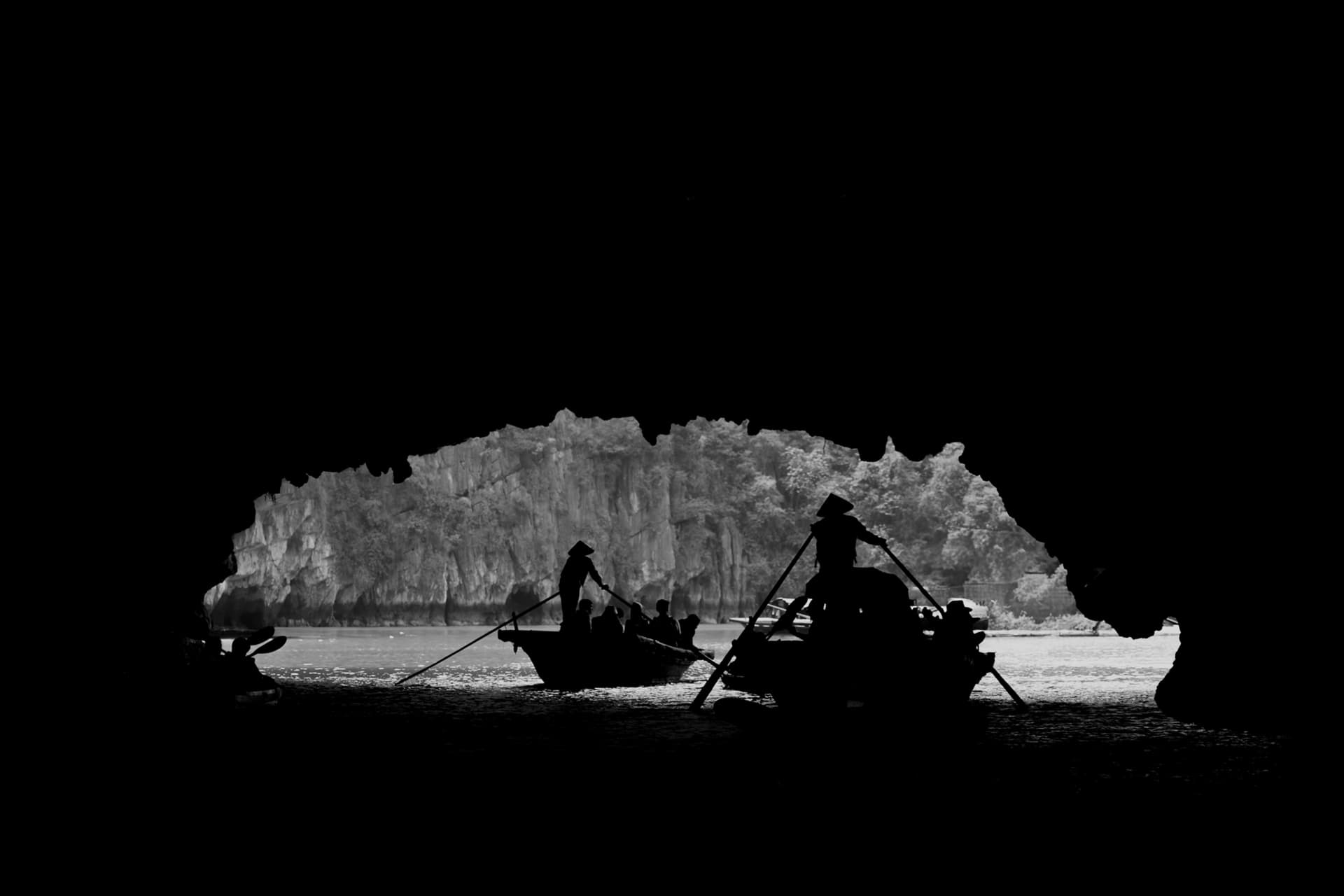
There is a passage between two limestone pillars at the southern end of Lan Hạ Bay where, if you are in a kayak and you time it right, you enter a lagoon so enclosed by rock that the sound of the bay disappears entirely. I found this by accident, following a gap in the cliff that the morning mist had made look solid. Inside: still water, birds I couldn’t name calling from somewhere in the vegetation above, a single heron standing on a flat rock in the absolute middle of the lagoon. The heron didn’t move. I didn’t move. We stayed like that for an embarrassing number of minutes.
Lan Hạ Bay sits just south of Cat Bà island, technically a separate body of water from Hạ Long Bay proper, though the landscape is identical — the same limestone karsts, the same jade-green water, the same shifting light that changes the color of the stone from gray to amber to almost white depending on the hour. The difference is administrative and, practically speaking, transformative: far fewer boats come here. On the morning I kayaked, I counted perhaps four other watercraft in a three-hour stretch. In Hạ Long Bay proper, cruise traffic can feel like a motorway by eight in the morning.
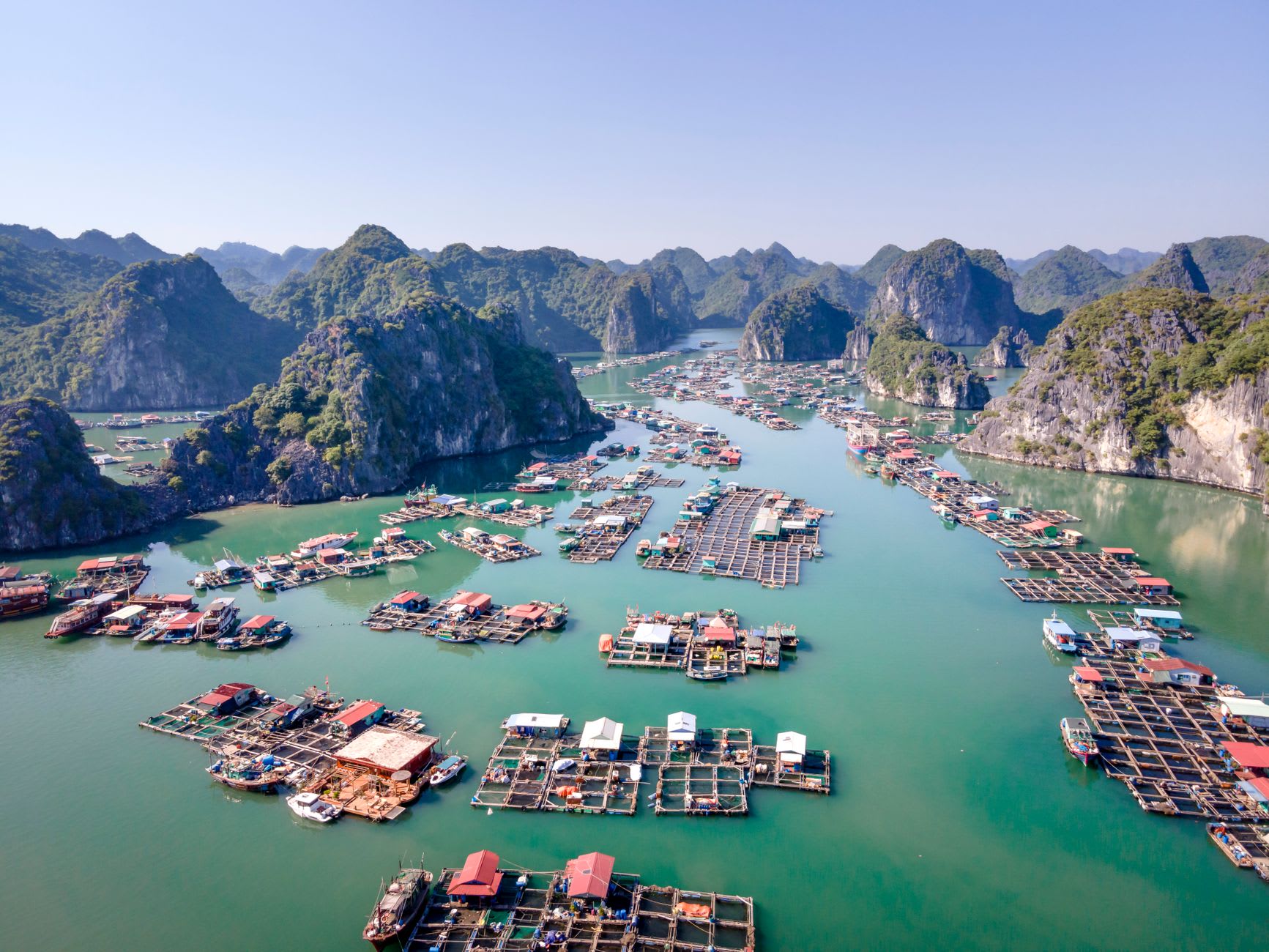
The bay is best accessed from Cat Bà Town, where small operators run kayak day trips and two-night cruises that anchor among the karsts at the southern end. The overnight option is the one worth stretching for. After the day-trippers return to Cat Bà at four in the afternoon, the bay empties and the mood shifts — the boat anchors between two walls of limestone, the water goes mirror-flat, and the cook brings out whatever the crew caught that morning: grilled squid, steamed clams in lemongrass, rice with fermented shrimp paste that I ate three servings of without quite meaning to.

Swimming here is different from anywhere I’ve been. The water is warm enough for comfort but cool enough to feel like water, and remarkably clear — I could see the bottom in patches, dark with sea grass and bright with the occasional flash of fish. There are no beaches to speak of, just rock and sea, and the swimming is from the boat into open water, which carries its own particular pleasure: the vertigo of floating in the middle of something enormous with no shore visible and no bottom beneath your feet.
When to go: October through April. The dry-season water is clearer and the karsts look better under a sky with some blue in it. February and March can bring the low fog that settles over this part of the bay in winter — beautiful, but it limits visibility in the enclosed lagoons. November and December offer the best combination of good light and settled weather.