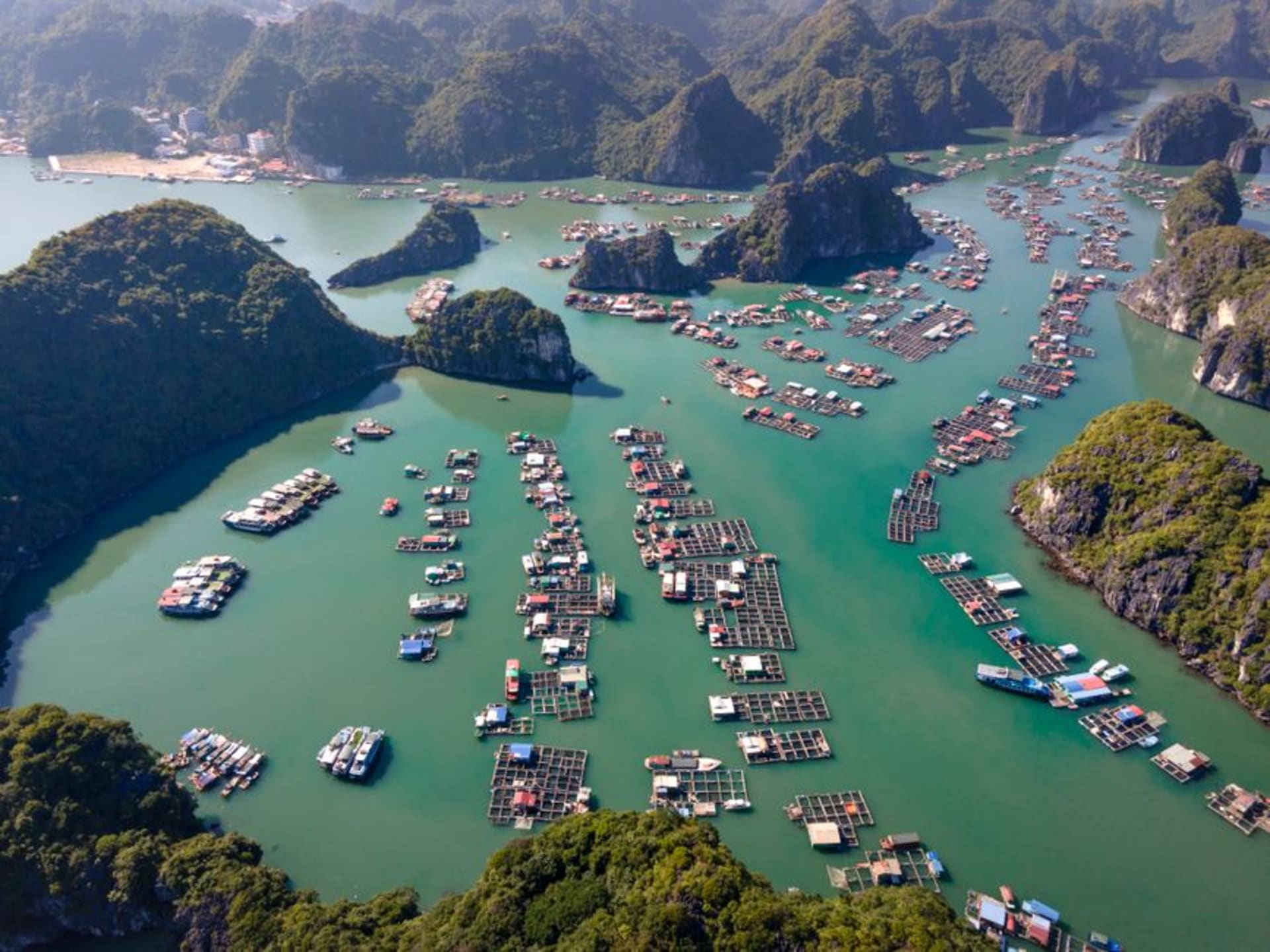
Ba Hang Fishing Village
"We paddled through a gap in the rock and the bay just closed behind us."
A hidden lagoon village of stilted houses ringed by limestone karsts, paddled through by kayak instead of walked.
We almost missed the entrance. Our guide cut the boat’s engine, pointed at what looked like a solid wall of limestone, and told us to get in the kayaks. Lia gave me the look she gives me whenever I’ve clearly underplanned something, but two minutes later we were gliding through a narrow crack in the karst, paddles tucked in tight against the rock on both sides, and then the passage opened into this impossibly still lagoon. Ba Hang appeared like it had been hiding on purpose. Houses on stilts and a few old fishing boats floated in a ring, the water so flat it looked lacquered, and the noise of the main bay just vanished behind us like someone had shut a door.
What got me was learning that people used to live their whole lives in there without ever touching solid ground. Generations of families were born, raised, married, and grew old on those boats and platforms, fishing and farming pearls in a lagoon that was basically their entire universe. I kept trying to picture it as we paddled slowly past the remaining houses — kids who’d never taken a normal step on land, a whole culture built entirely on water enclosed by rock. Most of that community was relocated to the mainland back in 2014, part of a push to protect the bay’s UNESCO waters, and you can feel that absence now. It’s beautifully preserved but quiet in a way that’s almost eerie, more memory than village.
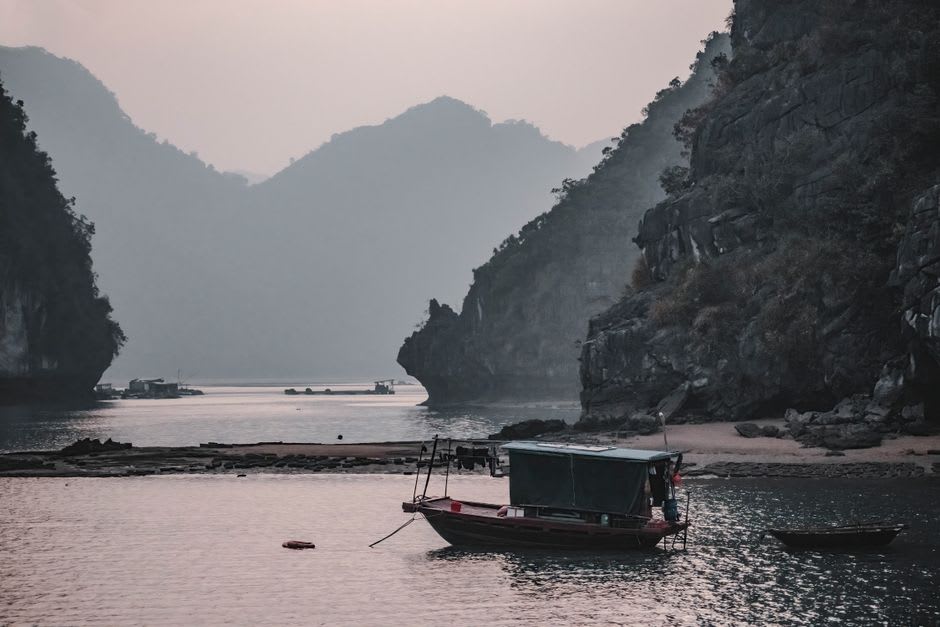
We drifted for a long time without saying much. An older woman rowing one of the last remaining boats passed close enough to nod at us, and I remember Lia just stopped paddling to watch her disappear around the bend. There’s a stillness in there that the open bay doesn’t have — the karsts block the wind almost completely, so every ripple we made spread out in these perfect, slow circles. I tried to take a photo that did it justice and gave up after the third attempt.
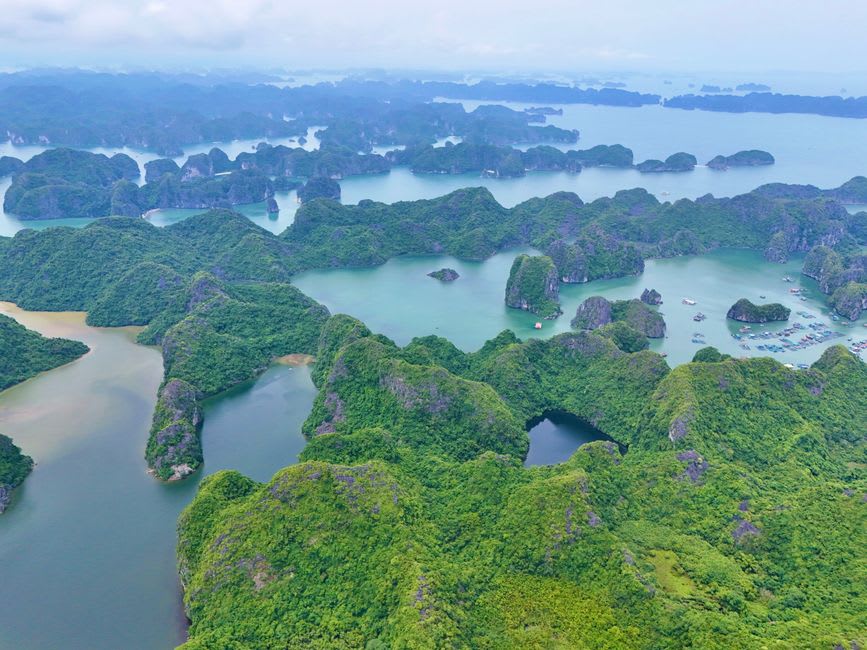
Before we left, our guide pointed out how narrow the water passage in was — barely wide enough for two kayaks side by side — and explained that’s exactly why the village stayed so sheltered for so long, almost landlocked by its own geography. We paddled back out the same tight gap we’d come through, and the bay’s noise rushed back in all at once, boats and chatter and open water, like surfacing from somewhere private.
When to go: We went in the dry season, between October and April, when the lagoon stays calm enough to actually enjoy the kayaking rather than fight the current — I wouldn’t try Ba Hang outside that window if you want the water this glassy.