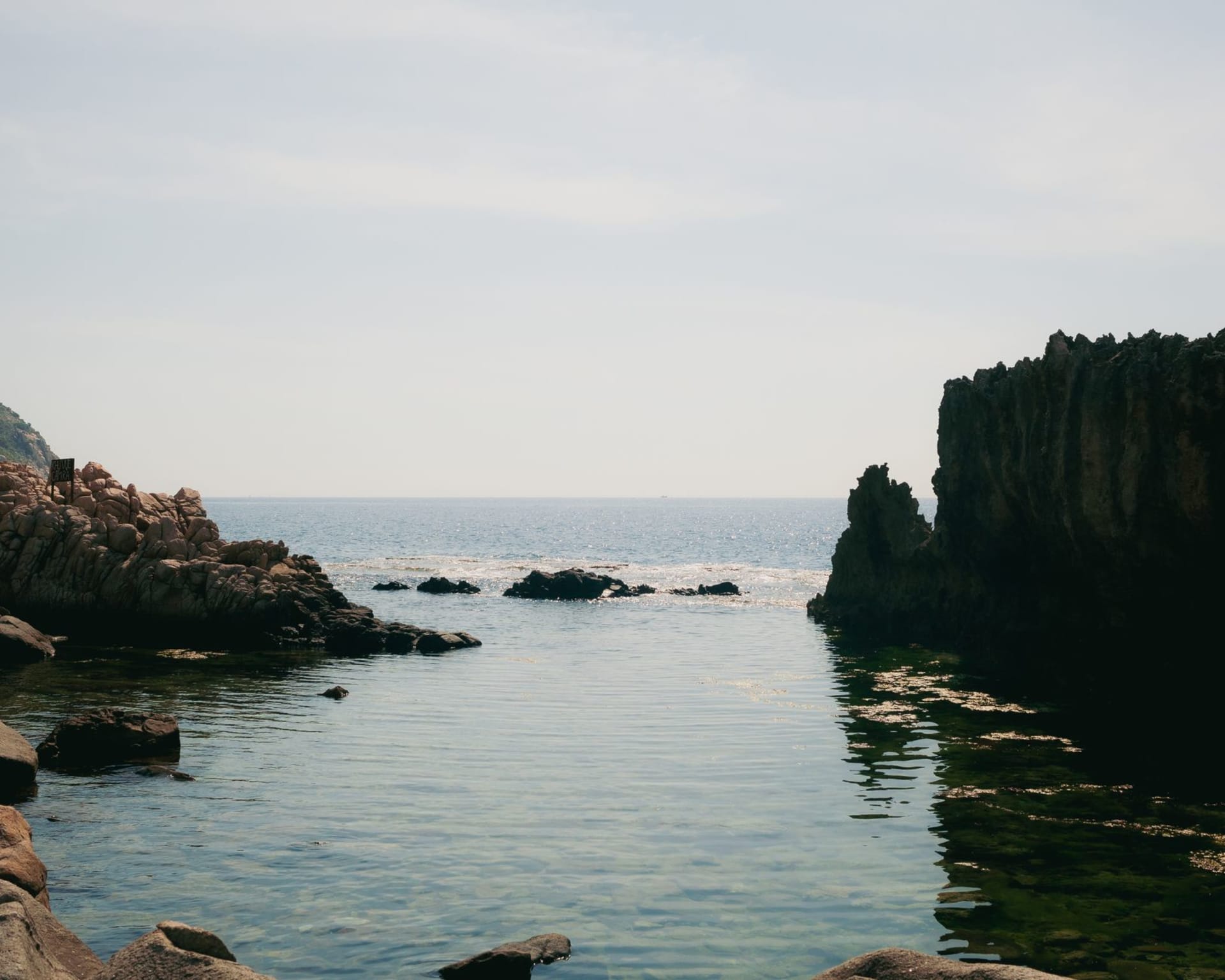
Shimei Bay
"Black rock, white foam, green palms — the light here does most of the photographic work for you."
I had read about the volcanic formations at Shimei Bay in a single sentence in a guidebook that was otherwise primarily interested in resorts, and that sentence was vague enough that I did not know what to expect. What I found, turning off the main road north of Wanning and following a track through what looked like abandoned construction, was one of those coastal landscapes that stops you physically. The basalt formations at the bay’s southern end rise from the sand in shapes that look deliberately placed — columns and arches and flat platforms worn smooth by the sea, black and rough-textured against the white of the breaking waves. The contrast is almost aggressive. Standing on the rock in the late afternoon, with the foam coming in below and the sea running green-blue out to the horizon, I stayed considerably longer than I had planned to.
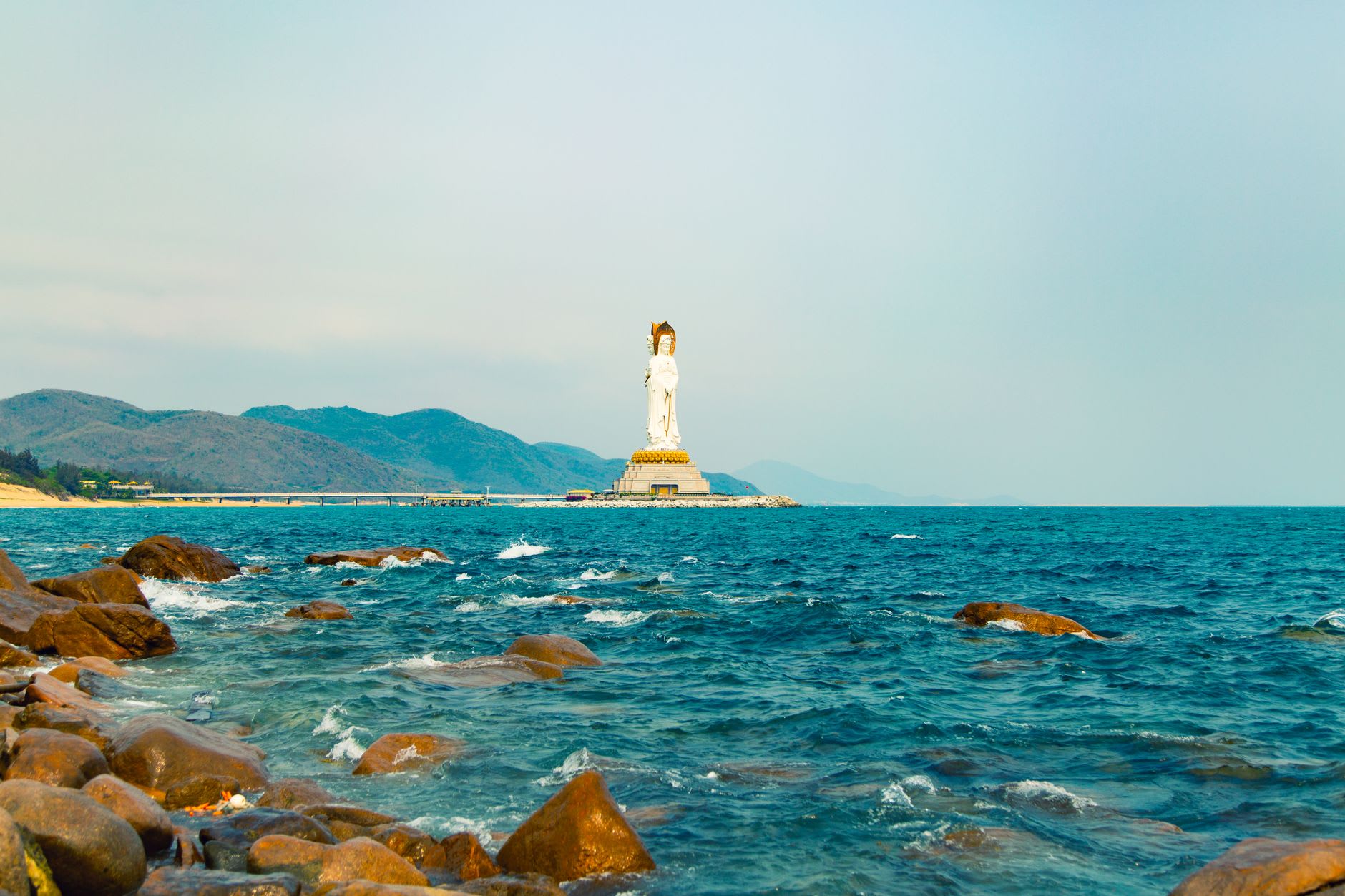
The surf comes in here with a consistency that surprised me for an island I had thought of primarily as a flat-water beach destination. The bay faces south-east, which gives it exposure to swell that the more protected resort beaches to the west entirely lack. The community of surfers who have gathered around Shimei Bay is small — I counted four surfboard rental operations along the main stretch — but it has been here long enough to have developed a distinct atmosphere: unhurried, slightly alternative by Chinese standards, more interested in the waves than in being seen. I met a man from Guangzhou who had come for a weekend two years earlier and simply never left. He ran a surf school now, badly, he admitted, but with great personal satisfaction. He lent me a board for an afternoon.
The beach itself extends for nearly four kilometres between the volcanic headlands and the sand changes character as you move along it — firmer and darker near the rocks at the south, fading to soft white at the northern end where the small guesthouse strip has set up its sun loungers and bamboo beach bars. The guesthouses are cheap and cheerful and several serve a passable version of Hainanese breakfast: congee with salted pork and century egg, or rice noodles in a clear broth with a hard-boiled egg and chilli oil on the side. I ate breakfast watching the early surfers from a plastic table six metres from the water and found this arrangement nearly perfect.

Away from the beach, the landscape around Shimei Bay is agricultural in a way that feels grounding after too much resort coast — coconut plantations and vegetable fields and the occasional rubber grove with its diagonal cuts in the bark and the small white collection cups. The road north towards Wanning passes through villages where the residents seem mildly surprised to see a foreign face and react to it with curiosity rather than tourism instincts. That, too, is refreshing.
When to go: October through April is the primary surf season, when the swell is most consistent and the weather is at its most stable. May through September brings warmer, flatter water that is comfortable for swimming and snorkelling around the volcanic rocks, though typhoon season (June–September) requires flexibility with plans.