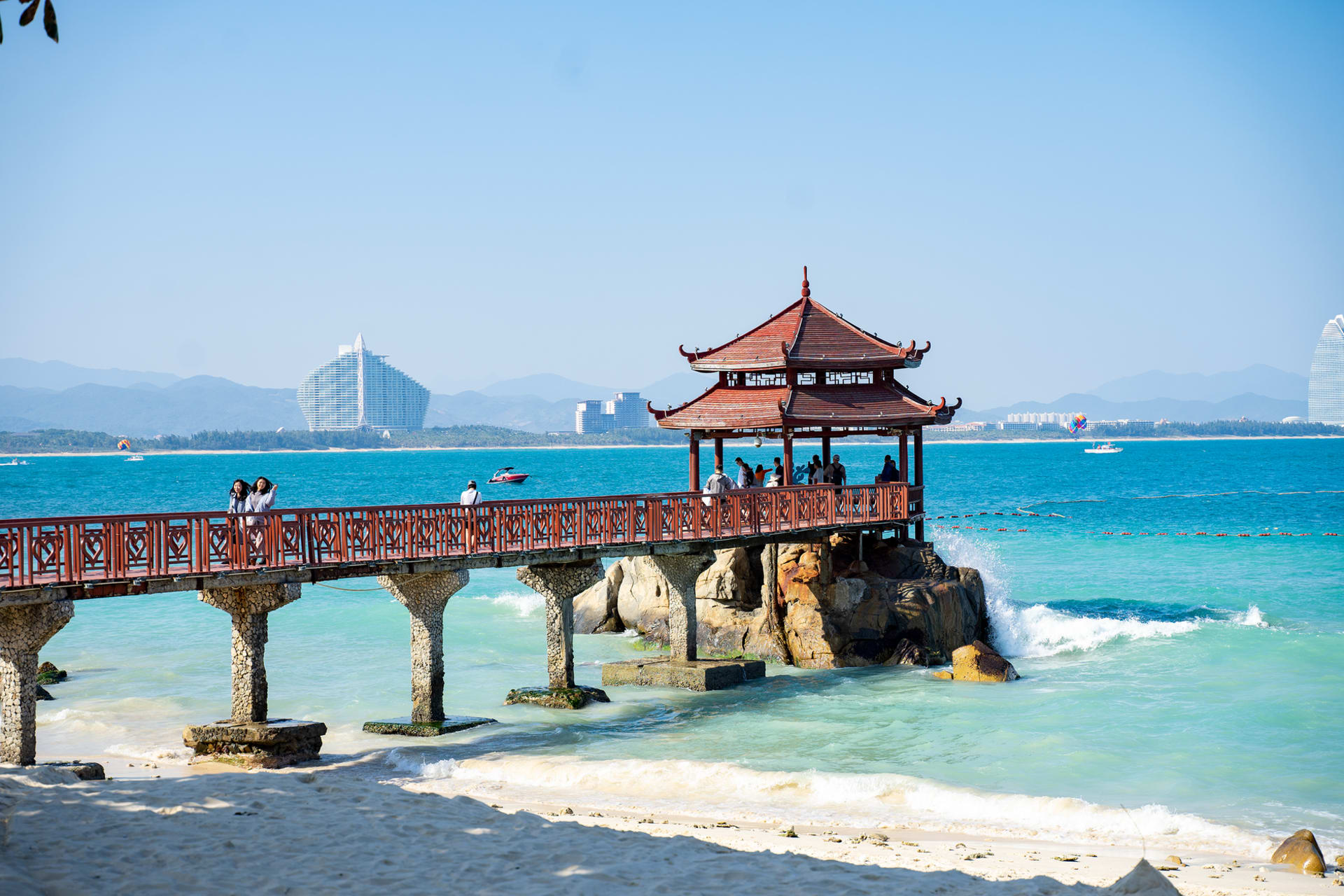
Haitang Bay
"The beach is genuinely beautiful. The mall beside it is genuinely enormous. I found both of these things true at once."
Arriving in Haitang Bay from Sanya, you follow a boulevard that grows progressively wider and more improbably planted, and then the scale of what has been built here resolves through the windshield and you simply have to sit with it for a moment. The resort development at Haitang Bay is not understated. The hotels are large enough to disorient. The duty-free shopping complex — which I had been told was significant and which turned out to be significantly larger than significant — occupies the kind of footprint that a small European city might use for its entire historic centre. And behind all of this, visible from the duty-free car park, the South China Sea does its thing in a shade of turquoise that has no interest in the real estate surrounding it.
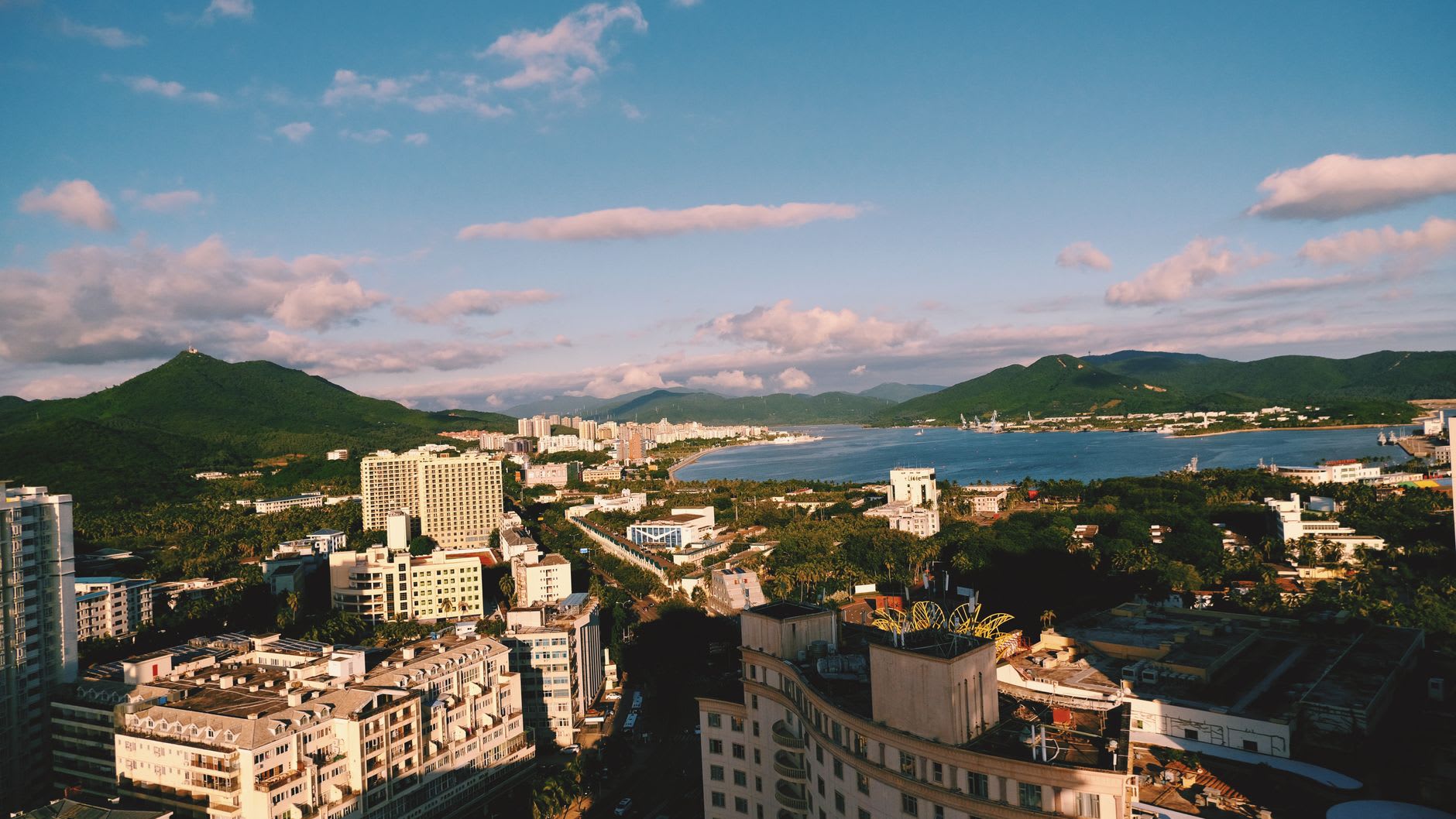
The beach is the honest argument for Haitang Bay’s existence, and it delivers. The sand here is finer and paler than Sanya Bay’s, and the water — owing perhaps to the bay’s more protected geometry — runs clearer than I expected from a beach this developed. In the early morning, before the hotel guests arrived in quantity, I walked the full length of it in about forty minutes and felt genuinely far from the infrastructure behind me. The surf was gentle. A group of fishermen were pulling a net through the shallows in a technique that required four people spaced along the length of it, and they moved slowly and methodically and ignored me entirely, which is its own kind of gift.
The duty-free complex is a phenomenon worth engaging with on its own terms, regardless of whether you intend to buy anything. China’s offshore duty-free policy allows visitors to the island — including Chinese nationals — to purchase luxury goods without import tax, and the result is an institution that has grown to a scale that is more theme park than shopping centre. I spent an hour inside on a quiet Tuesday and lost my sense of direction twice. The perfume section alone is longer than some streets I have lived on. But there is something fascinating about watching Chinese tourists — many of whom have saved specifically for this — approach the Louis Vuitton counter with the focused seriousness that people elsewhere bring to major life decisions. It is, in its own way, a form of tourism.
The eating situation at Haitang Bay is less interesting than Sanya proper — the development is newer and the food scene has not yet diversified beyond resort restaurants and the duty-free food court. But take a taxi fifteen minutes south and you arrive at a cluster of seafood places at the bay’s edge where the crab is live and the cooking is simple and the pricing reflects a place that does not yet know it is supposed to be expensive. I ate well there two evenings running and came back for breakfast congee on the third morning.
When to go: November through March is the sweet spot, as with all of Hainan’s resort coast — comfortable temperatures, dry weather, and the water at its clearest. Haitang Bay is notably less crowded than Yalong Bay even in peak season, which is its most practical advantage.