Dongfang
"The weaving here is extraordinary. The tourist infrastructure is almost nonexistent. That combination, I keep discovering, is rare."
The western coast of Hainan is the island’s other self — less photographed, less developed, less interested in the business of tourism. I drove there from Wuzhishan through the central mountains, the road dropping through cloud forest and rubber plantations before opening onto a coastal plain where the light had a flatter, harsher quality than the south and east. The towns were smaller and more functional. The roadside signs were in both Mandarin and the romanized script of the Li language. I stopped for lunch in a village where the menu existed only in the proprietor’s memory and what I received was a bowl of noodles in a broth I cannot fully account for — something between pork bone and fermented fish — that was one of the better things I ate on the island.
The Li people have been the indigenous inhabitants of Hainan’s interior for over three thousand years, and the communities along the western coast around Dongfang have maintained cultural practices that the more tourist-facing areas have largely packaged and simplified for visitors. The brocade weaving is the most visible: a double-sided technique in which the pattern is the same on both faces of the cloth, achieved through a method of crossing threads that takes years to learn and produces textiles of such geometric precision that I kept wanting to turn them over to check. I visited a workshop in a village outside Dongfang where a family — grandmother, mother, and a daughter who looked about sixteen and wove with an unhurried fluency that made the work look easy — produced cloth that is sold to museums and textile collectors. They were not set up for visitors and were patient about the visit in a way I found genuinely gracious.
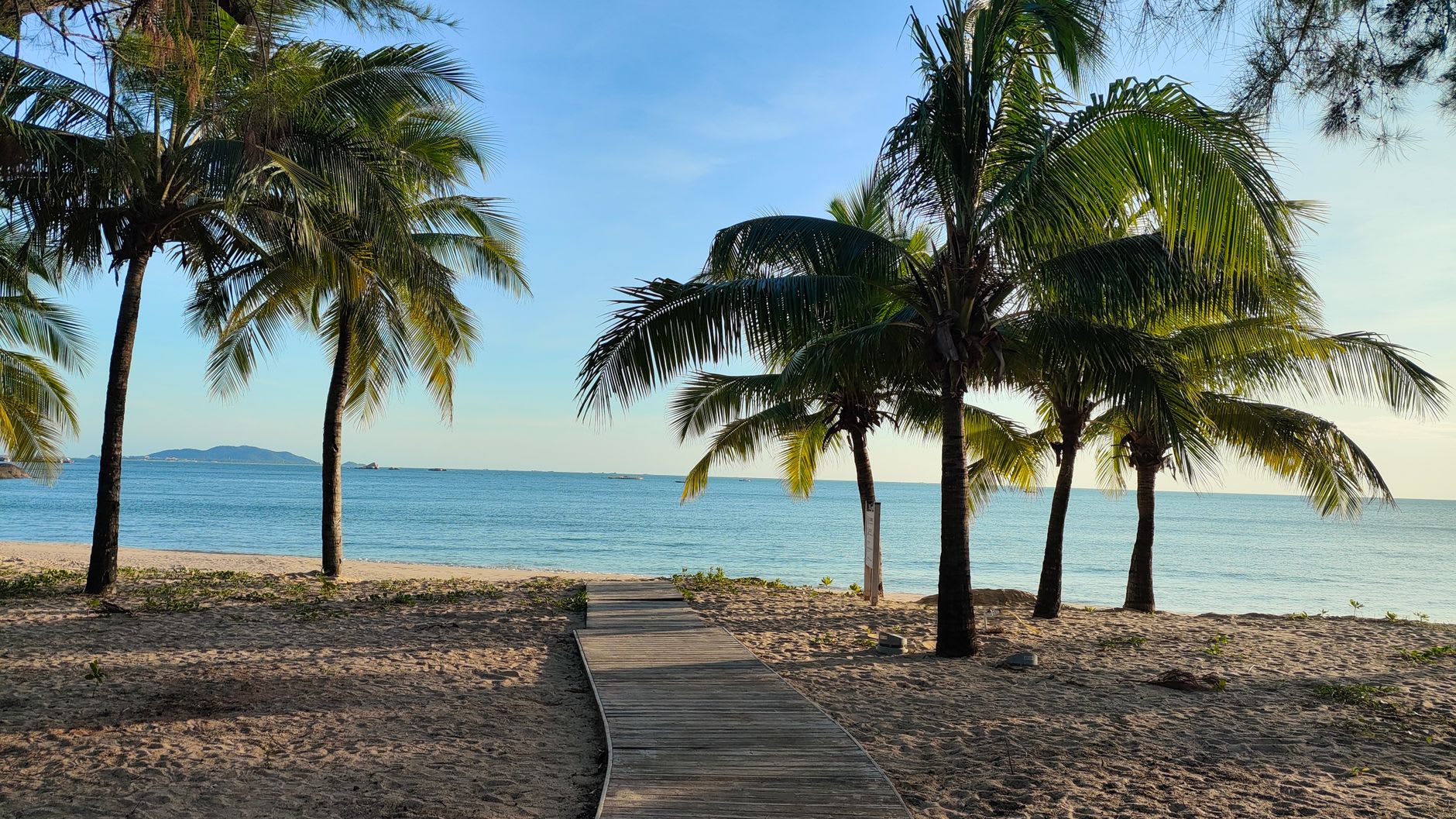
The Dongfang coastline is mangrove-heavy and less beach-oriented than the east coast, which means the handful of people who come here are more likely to be birdwatchers than sun-seekers. The intertidal zone along the western shore is extensive and the shorebird diversity reflects it: I watched sandpipers and godwits work the mudflats in the early morning from a road that had no other cars on it. The fishing villages along the coast still use wooden boats with eyes painted on the prow in a style that predates the island’s incorporation into China, and at dusk the boats come in trailing nets and the village women sort the catch on the quay with a speed and efficiency that makes the operation look choreographed.
Dongfang city itself is a working port with a nickel-processing facility that is visible from the highway and that most travel writing about Hainan declines to mention. It is not scenic. But the city has a morning market along the river that runs every day from five until nine and sells fish so fresh the ice beneath them is still dry, and a coffee vendor who has been at the same corner for fifteen years and grinds his own beans and is not interested in explaining himself to anyone. I had two cups. He charged me for one.
When to go: November through March for the best weather and birdwatching conditions. The western coast is more exposed to winter northerlies than the south, which can make the coast feel raw in January, but the Li villages are worth the cold.