Kaieteur Falls
"The mist soaked through my shirt, and the golden rocket frogs sat on their bromeliads as if the whole spectacle were simply Tuesday."
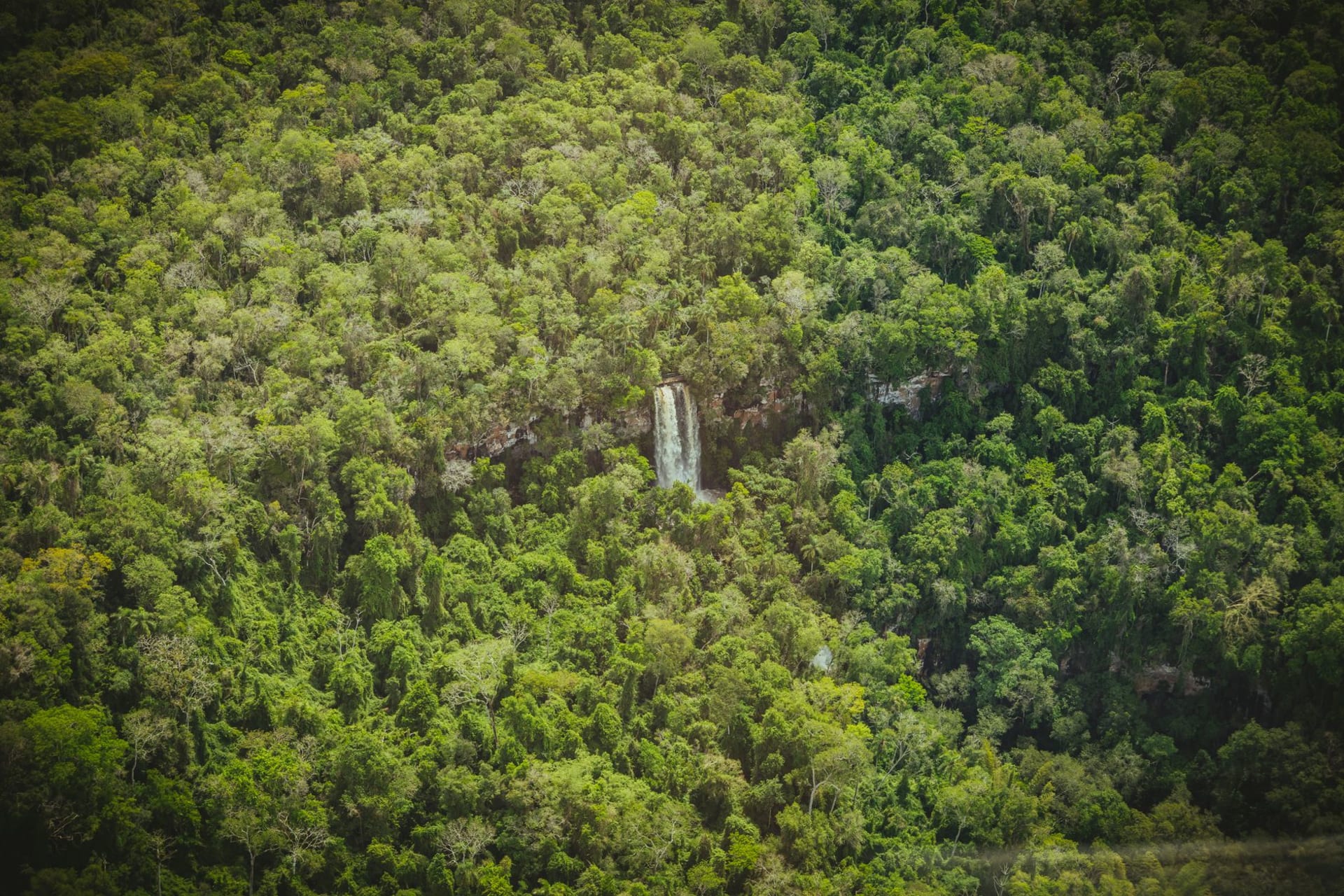
The small Cessna banked left over the forest and then there it was: a thin white line in a wall of green, dropping into a gorge of mist so deep you couldn’t see the bottom. I pressed my face against the scratched Plexiglas and felt something shift in my chest. From the air, Kaieteur Falls looks almost modest — the plateau stretches so vast in every direction that the waterfall reads as a detail rather than the point. Then you land on the grass airstrip at the top of the tepui and walk fifteen minutes through cloud forest to the rim, and you understand that the scale was simply too large to read from above.
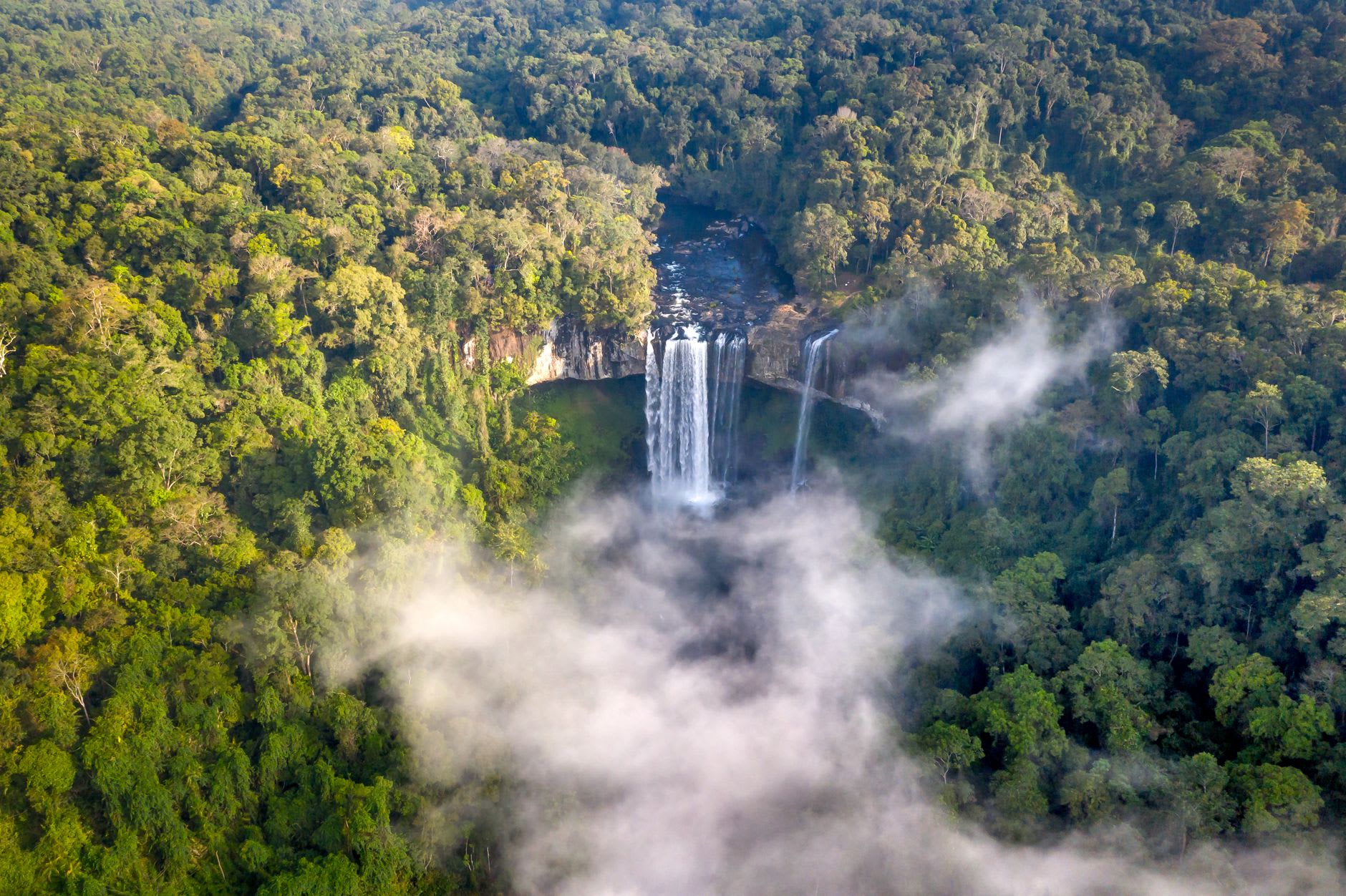
Kaieteur falls 226 metres in a single unbroken curtain. The volume of water passing over the lip is five times that of Victoria Falls. There is no visitor centre here. No railing. No gift shop, no QR code mounted on a viewing post. You walk to the edge and you stand there and the spray soaks you completely within minutes and the sound — it is not what I expected. It is not a roar exactly. It is more like a sustained exhalation from something so large it has no idea you are there.
The golden rocket frog is what nobody warns you about. The size of your thumbnail, almost luminously orange-yellow, endemic to this exact plateau and nowhere else on earth. They sit on bromeliads growing from the cliff face, within arm’s reach of the waterfall’s edge, catching insects in the mist. I crouched beside one for a long time. It regarded me with the complete indifference of something that has never learned to be afraid. It was one of those encounters that reorders your sense of proportion — not because the frog is impressive in itself, but because it exists in such unreasonable proximity to something so overwhelming.
The forest on top of the plateau is different from the canopy below. Shorter, stranger, adapted to the thin sandstone soil and the constant cloud, it holds species you won’t find elsewhere. I walked the trail behind the falls where the spray keeps everything perpetually wet and watched a cock-of-the-rock — scarlet, crested, improbable — vanish into the undergrowth. The guide with me, a Patamona man from a village an hour’s drive into the interior, knew every bird call before the bird appeared. He moved through the forest with a quietness I couldn’t begin to imitate.
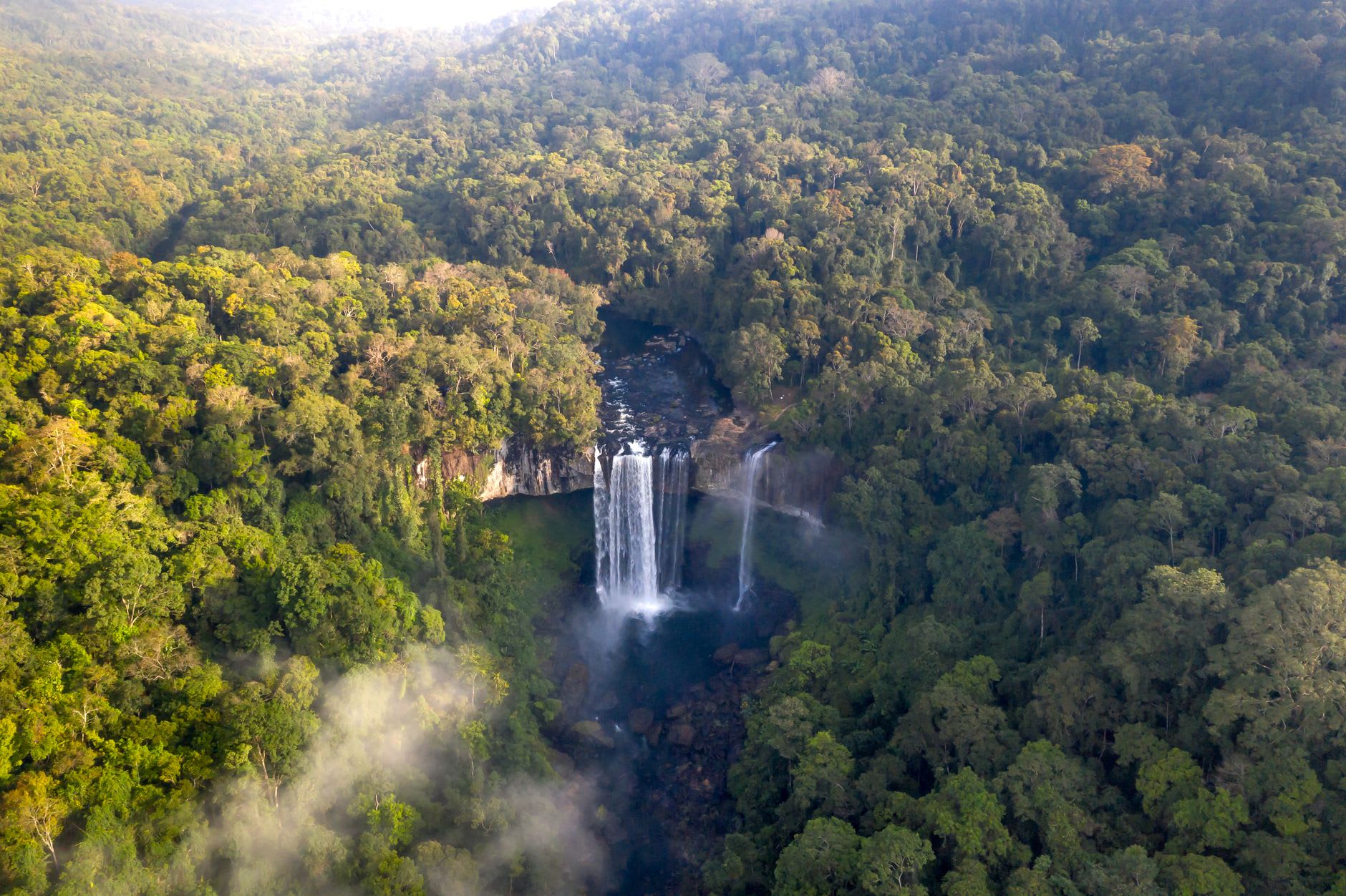
The light at Kaieteur changes through the day in ways that matter. Morning is cold and the spray catches gold when the sun clears the gorge rim. Midday flattens everything. Late afternoon, when the tour groups from Georgetown have flown back and you are one of the last people at the rim, the mist turns violet and the sound seems to get louder though nothing has changed. I stayed until the pilot said it was time to leave and felt, for the first time in a long time, genuinely reluctant.
When to go: The falls run full year-round, but peak flow is May through June at the height of the wet season, when the volume is staggering. February through April offers better weather for the flight and the trail. Most visitors fly in on a day trip from Georgetown — roughly 45 minutes each way on a small plane. Staying overnight at the ranger station is possible with advance arrangement and worth doing if you want the falls to yourself at dawn.