
Pensacola
"I picked up a handful of sand and it ran through my fingers like powdered sugar — I had not expected a beach to surprise me like that."
I had been driving the Gulf Coast for four days by the time I reached Pensacola, and I had grown accustomed to the marshland edges of the coast — the places where the land went soft and uncertain before becoming water. So the beach at Pensacola genuinely surprised me. The sand here is not like other sand. It is white in a way that reads almost luminous, the quartz washed down over millennia from the Appalachian mountains, ground so fine that it squeaks under your feet when you walk on it. I stood at the water’s edge in late afternoon and the Gulf was a shade of turquoise I associated with the Caribbean, not with Alabama and Florida. I picked up a fistful and let it run through my fingers like flour.
The town itself carries its history in layers that a week would not exhaust. The Spanish, French, British, and Americans all flew flags over this particular stretch of coast — some of them multiple times — and the old downtown district, Palafox Street, has the handsome commercial architecture of a nineteenth-century port that knew it mattered. I ate lunch at a restaurant inside a building that had served as a cotton exchange and then a morgue before becoming a place where they serve excellent grouper sandwiches. The iced tea came in a glass the size of a flower vase, which felt appropriate.
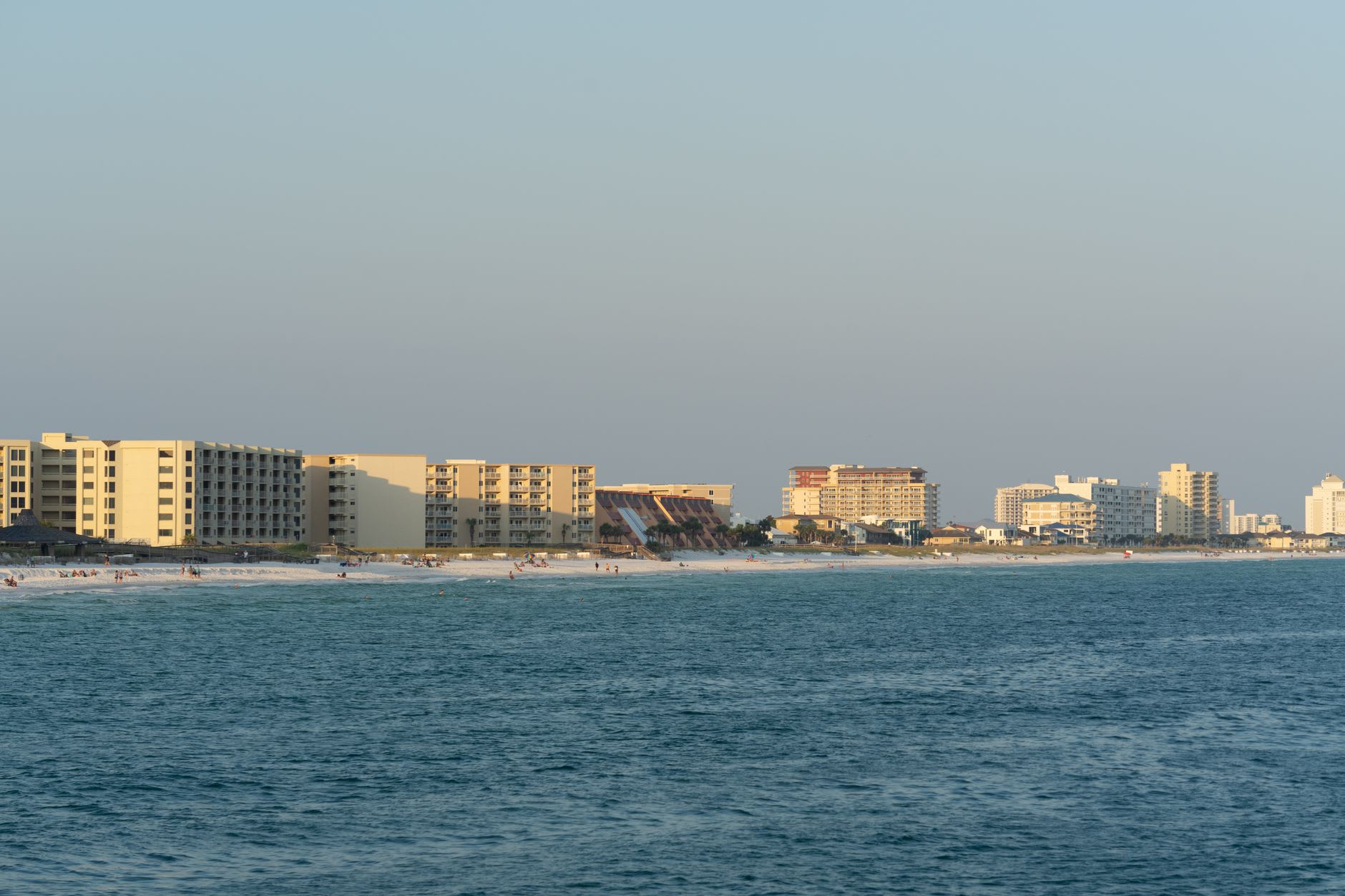
Fort Pickens, out on Santa Rosa Island, is the reason to get off the beach for at least one afternoon. The brick fortification sits at the western tip of the barrier island, and from its ramparts you can look east toward the endless white beach and west toward the mouth of Pensacola Bay. It was here that Geronimo was imprisoned in 1886, and there is something strange and affecting about standing in that particular place and watching pelicans cruise the Gulf thermals while trying to hold that history in your head alongside the beauty. The National Seashore protects the dunes from development, and the scrub oak and sea oats behind the beach give the whole island a feeling of improbability — all that wildness minutes from a city.
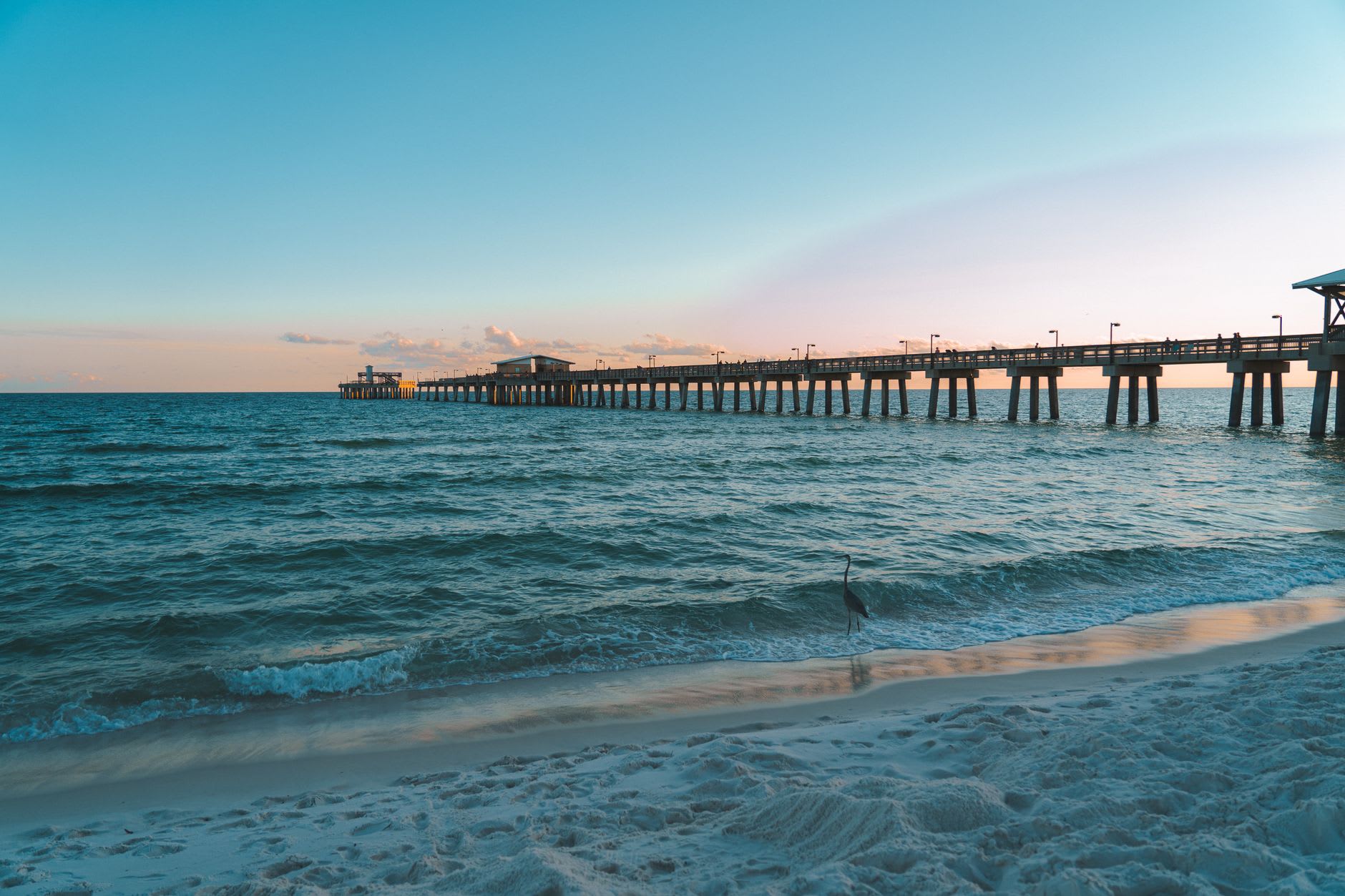
In the evenings I walked Palafox Street and ate oysters at a raw bar where the shucker cracked them open with a particular economy of motion that I found hypnotic to watch. The Gulf oysters here are briny and fat — different in character from the Pacific oysters I knew from elsewhere, a little wilder, less refined. I ordered a dozen and then a second dozen and sat there until the place got loud around me with a Friday crowd.
When to go: April through June is ideal — the water is warming up, the jellyfish haven’t arrived in force yet, and the crowds are manageable. October is a quieter second choice with warm water and cooler air. Summer is genuinely lovely for swimming but the beach fills up, particularly on weekends when visitors come down from Alabama and the Florida panhandle cities.