
Fanjingshan
"I climbed eight thousand steps to reach two tiny temples balanced on a rock, and I would do it again tomorrow."
Fanjingshan is the highest peak of the Wuling range, in the remote northeast of Guizhou, and it is the kind of mountain that looks invented. The summit is a vertical finger of rock — the Red Clouds Golden Summit — split clean down the middle by a narrow chasm, with a tiny temple perched on each of the two halves and a little stone footbridge arcing across the gap between them. It is a sacred Buddhist mountain, one of the five great sites of Chinese Buddhism, and looking at photographs of it I assumed they had to be doctored. They are not. It really does look like that.
Eight thousand steps, give or take
There is a cable car now, which carries you most of the way up the forested flank of the mountain and saves several hours and a great deal of suffering. It does not, however, save you from the final climb. From the upper cable-car station you still face a long staircase up to the summit area, and then the truly punishing part: the near-vertical stone steps and iron chains up the side of the Golden Summit pillar itself. Lia, who is fitter than me and never lets me forget it, went up the chains without complaint. I went up behind her with my heart going like a drum and a firm grip on the rail, very aware of the drop and trying not to look at it.
At the top, the two temples sit on their split rock — one dedicated to the Buddha of the present, one to the Buddha of the future — joined by the stone bridge over the chasm. When we reached them the cloud was moving fast, opening and closing around the peak, so that the world appeared and vanished every few minutes: now a vast green sea of forested ridges stretching to the horizon, now nothing at all but white and the wind and the prayer flags snapping. There were monks, and pilgrims who had climbed in sneakers and were now lighting incense with shaking hands, and a quiet that the altitude and the effort seemed to deepen.
The forest, and its monkeys
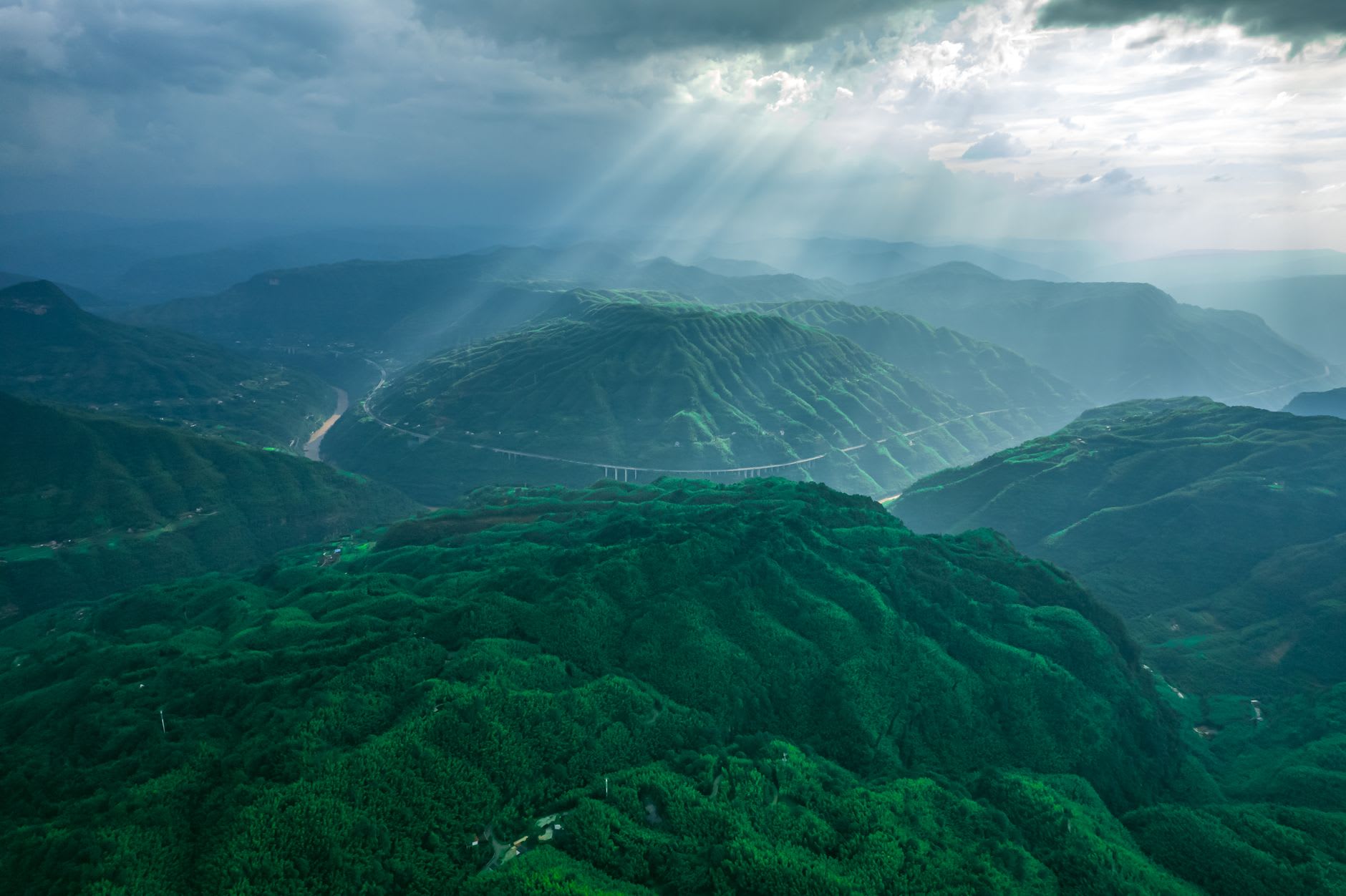
What gets less attention than the summit, and probably deserves more, is the forest that covers the lower mountain. Fanjingshan is a UNESCO World Heritage site less for its temples than for its biology: it is an island of ancient subtropical forest, isolated for millions of years, and it is the only home in the world of the Guizhou golden snub-nosed monkey — a strange, blue-faced, golden-furred creature of which only a few hundred survive, all of them on this one mountain. We did not see one; you very rarely do, and I had no real expectation of it. But there is something about walking through a forest knowing that it harbors a species that exists nowhere else on the planet, hidden somewhere in the canopy above you, that changes how you look at the trees.
The lower trails wind through dripping, moss-hung cloud forest — dove trees, ferns the size of umbrellas, the constant sound of water. We took our time on the way down, after the cable car, walking a stretch of the old pilgrim path through forest so thick and green and wet it felt prehistoric. By the time we reached the bottom my legs had turned to rubber and the light was going, and we ate an enormous, restorative dinner of sour-fish soup — Guizhou’s signature dish, a tangy fermented-tomato broth full of river fish and chilies — at a place in the gateway town, and I felt, for once, that I had genuinely earned it.
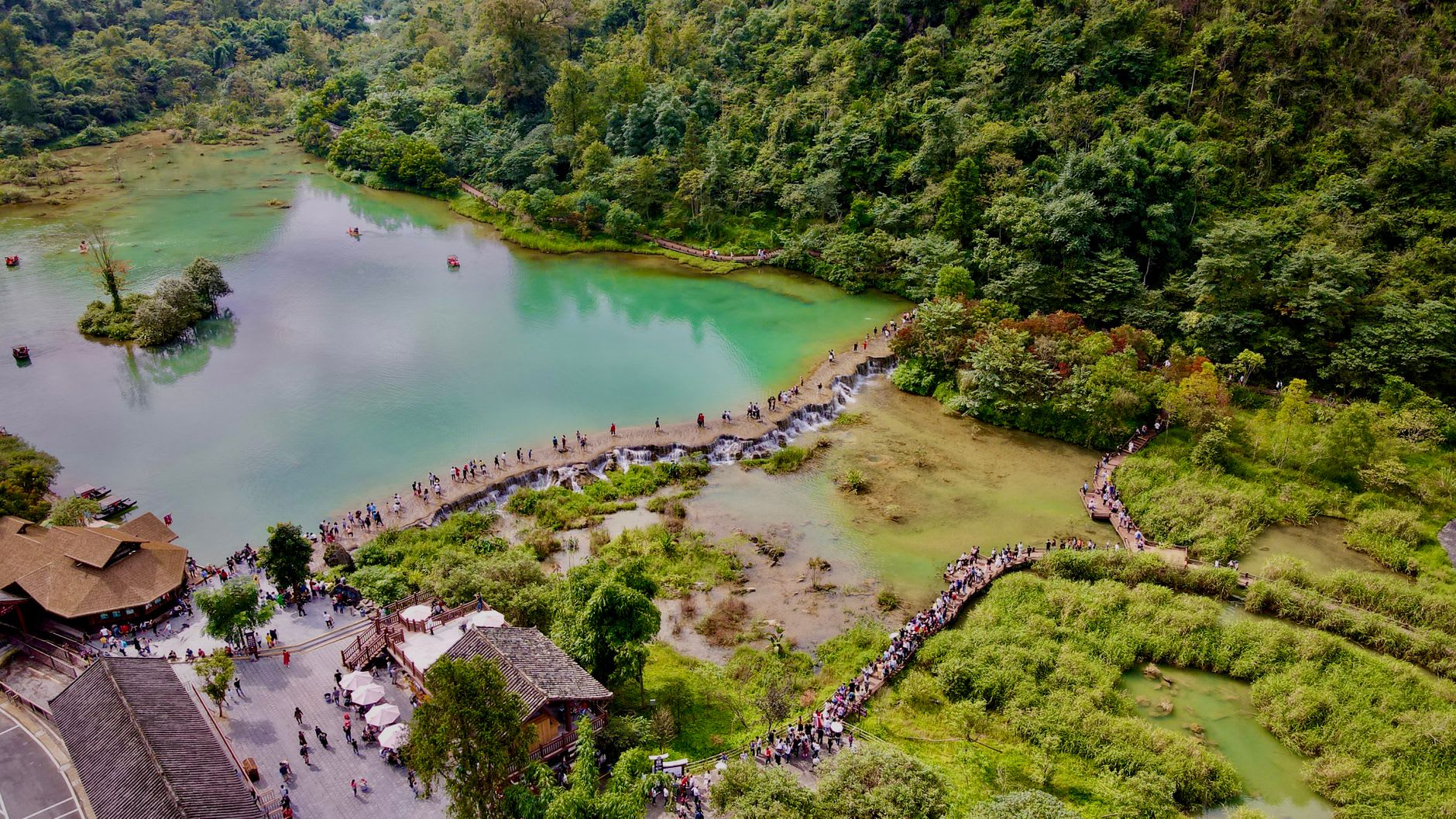
A practical warning: Fanjingshan caps its daily visitor numbers and the tickets, especially the cable-car ones, sell out — book online well ahead, particularly on weekends and Chinese holidays, when the summit steps become a slow, shuffling queue rather than a climb.
When to go: Late spring and autumn are best, with the clearest air and the highest chance of the cloud-sea effect that makes the summit so dramatic. Summer is green and lush but crowded and prone to afternoon rain. Winter brings snow and ice to the summit and the chains can close entirely — beautiful, but check conditions before you commit to the climb.