Boké
"Boké doesn't announce itself. It just sits there on its river, patient, and lets you catch up to it."
A river port beneath a colonial fort, where bauxite trucks and pirogues share the same slow, humid rhythm of the Rio Nunez.
We got to Boké after a long, rattling drive from Fouta Djallon, and the first thing I noticed was how different the air felt — thicker, closer to the sea even though the sea was still a good way off. Lia said it smelled like the Rio Nunez before we’d even seen it, and she was right. The road drops out of the plateau country and into something flatter, wetter, more languid, and Boké announces itself less like a destination and more like a place that has simply been getting on with its business for a very long time.
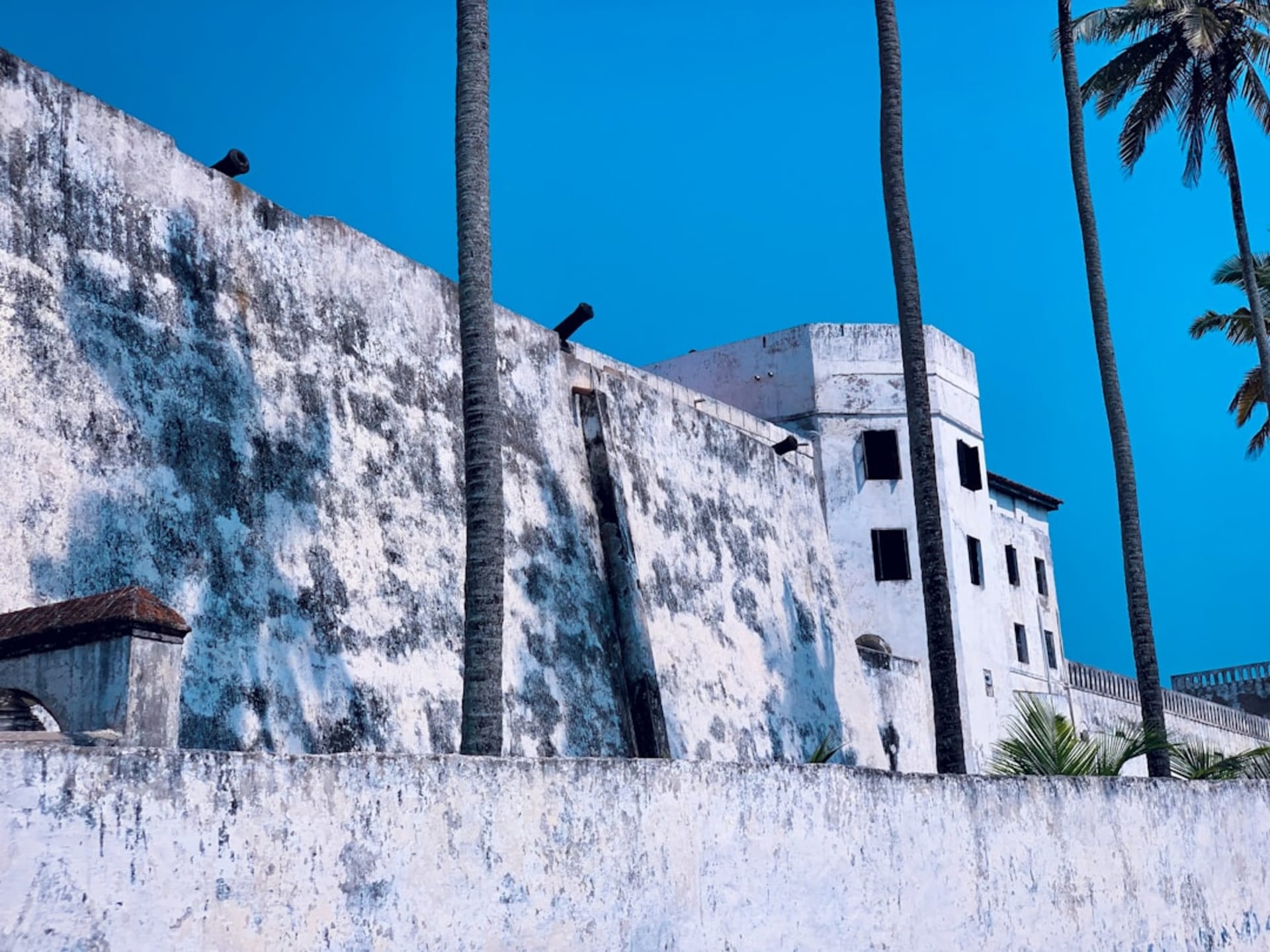
The fort is the first thing you look for, and it doesn’t disappoint. It sits up on its hill above the estuary, walls the color of dried mud, built by the French in the 1850s when this was a trading post for the Compagnie du Sénégal. I stood at the edge of it in the late afternoon watching the light go orange over the water and tried to picture it as it must have been — the crates, the ledgers, the boats coming up from the coast. Lia found a spot where you could see clean down to the river through a gap in the old wall, and we just sat there for a while, not saying much, the way you do when a place is doing all the talking.

Down in the old quarter, the pace slows even further. There are still colonial buildings with their shutters and their arcades, some cared for, some sagging into themselves, and between them the ordinary noise of a river town — women selling smoked fish, motorbikes threading past pirogues pulled up on the mud bank, someone’s radio playing something I couldn’t place. I ate grilled fish and rice at a stall near the water one evening, the vendor’s daughter bringing me chili sauce I hadn’t asked for and clearly enjoying watching my reaction to it. It was the kind of meal that tells you more about a place than any monument does.

What struck me most, though, was the tension running under the whole town. Boké is now the administrative heart of one of the world’s great bauxite regions, and you feel it in the convoys of mining trucks that rumble through on the edges of town, a world away from the fort’s quiet colonial calm. It’s a strange, honest layering — a 19th-century trading post that’s become a 21st-century industrial hub, still tethered to its river, still slower than the plateau towns we’d just left behind. I liked that Boké didn’t try to smooth that contradiction over for us.
When to go: We went in the dry season, sometime between November and April, when the roads in are actually roads and not rivers of their own — and when you can still get out on the Rio Nunez itself without the crossing turning into an ordeal.