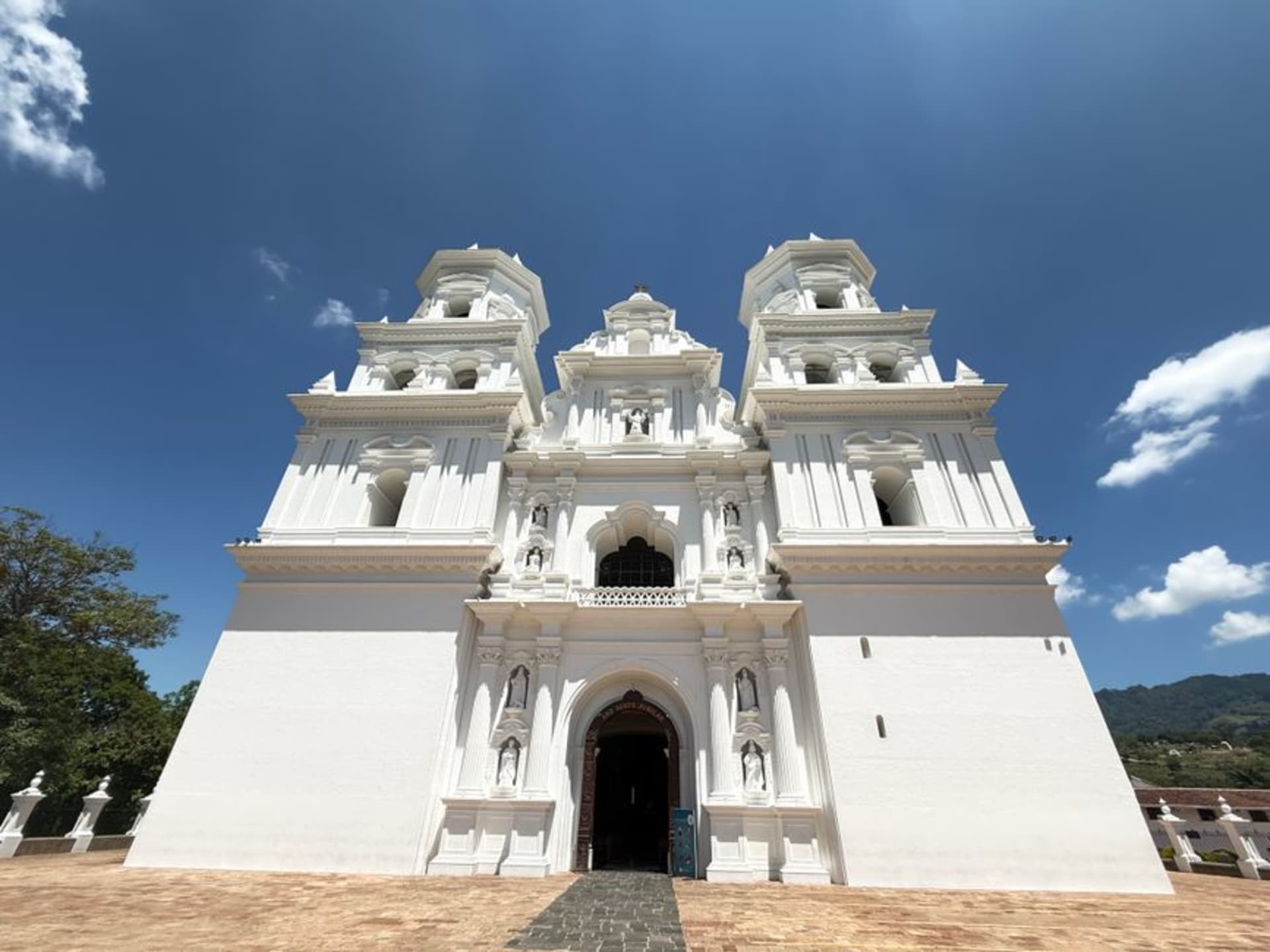
Central America's holiest pilgrimage town, where a colonial basilica shelters the venerated Black Christ and pilgrims arrive on foot from three countries.
I arrived in Esquipulas expecting a quick stop before crossing into Honduras and ended up staying two nights, because I had badly underestimated what this town actually is. The Basílica de Esquipulas sits at the top of the main street like a wedding cake, gleaming white against the hills, and even on an ordinary Tuesday the plaza in front of it was full of families who had clearly traveled a long way — some on buses from El Salvador and Honduras, a few, I was told, on foot from villages days away. This is not a tourist site dressed up as a pilgrimage. It is a pilgrimage that tourists occasionally wander into.
The Black Christ
Inside the basilica, behind glass and candlelight, is the Cristo Negro — a carved wooden Christ figure, darkened over centuries by candle smoke and the sheer number of hands and lips that have touched and kissed it, that draws devotees from across Central America and southern Mexico. The tradition dates to the late 1500s, and by the following century the image was already famous enough that a Guatemalan bishop had died en route to visit it, which locals will tell you as evidence of the pilgrimage’s power rather than its risk. I watched a woman in front of me press her forehead to the protective glass for what felt like five full minutes, motionless, while her husband waited a respectful distance behind her holding their sleeping child. Whatever your own relationship to faith, it is impossible to stand in that line and not feel the weight of what the room means to the people around you.
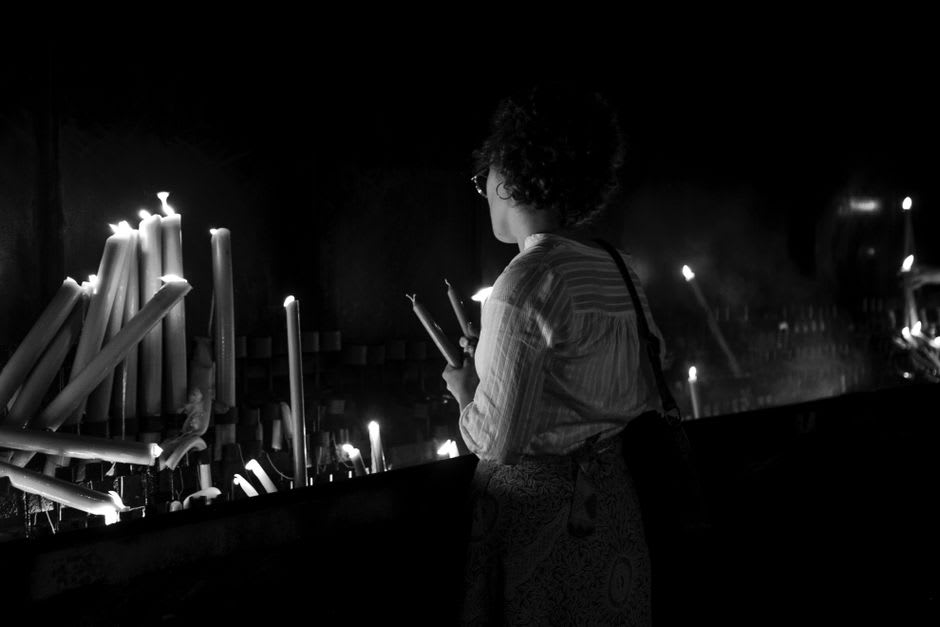
A town built entirely around devotion
Everything in Esquipulas orbits the basilica — streets lined with stalls selling candles, rosaries, and small clay whistles shaped like birds that pilgrims traditionally buy as souvenirs of the trip. I bought one out of curiosity from a woman who’d set up the same stall, she told me, for over thirty years, and she explained that the whistles used to be given to children to keep them entertained during the long walk home. The town fills to bursting every January 15th for the feast day, when the crowds are said to reach the hundreds of thousands, but even outside that peak, the steady, quiet stream of ordinary pilgrims gives Esquipulas an atmosphere unlike anywhere else I’ve visited in Guatemala — reverent, slightly worn at the edges, entirely sincere.

When to go: Year-round, but expect the town at its most intense around January 15th for the feast day. For a calmer, more contemplative visit, go on a weekday outside that window.