Molinière Bay
"I floated above a circle of human figures on the seafloor and could not tell if it was art or a vision."
The boat captain who took me out to Molinière Bay was named Junior and he had been doing this run for twelve years. He said he never gets tired of watching people put their masks on and look down for the first time. I asked him what expression they usually make. He thought about it and said: confused. Like they don’t believe it yet.
The Underwater Sculpture Park at Molinière is the first of its kind in the world — or was when it was installed beginning in 2006 — and whatever you have seen in photographs does not prepare you for the actual experience of being in the water above it. The bay itself is calm, protected from the open sea by the headland, and the visibility on a clear day runs to twenty-five meters or more. The water temperature was 29 degrees when I was there in February, and the clarity was such that from the surface, floating face-down with a snorkel, you could see the seafloor sculptures in detail at eight meters down.

The works are by British sculptor Jason deCaires Taylor, who has continued to develop similar projects in the Canary Islands and Mexico since, but this was his first installation and it remains his most ecologically integrated. The pieces are cast from life — real people from Grenada posed in scenes of everyday life — and made from pH-neutral concrete that encourages coral and marine growth. By the time I saw them, the figures had been down for nearly twenty years, and they were barely recognisable as sculptures in the conventional sense. Coral had colonised every surface: brain coral at the shoulders, sea fans arching from outstretched hands, Christmas tree worms spiralling from what used to be a face. Schools of sergeant major fish moved through the circles of figures like they were navigating a familiar neighbourhood.
The most striking installation is a ring of figures standing in a loose circle on the sand — known as Vicissitudes, a reference to human change and resilience. From above, at snorkel depth, the ring appears complete and intentional, and there is something about the postures — children, slightly bowed into the current — that reads as both playful and solemn. I circled above it three times and still could not fix on what I was looking at: art object, artificial reef, memorial, habitat. It functions as all of these simultaneously.
For divers, the bay offers more. The sculpture park is accessible to snorkellers but rewards diving — you can move between the figures at eye level, look up through the forest of coral and fish at the surface light, and access the deeper sections of the park that snorkellers cannot reach. Junior told me that night dives are particularly good; the nocturnal fish and invertebrates that emerge after dark give the sculptures a different atmosphere entirely.

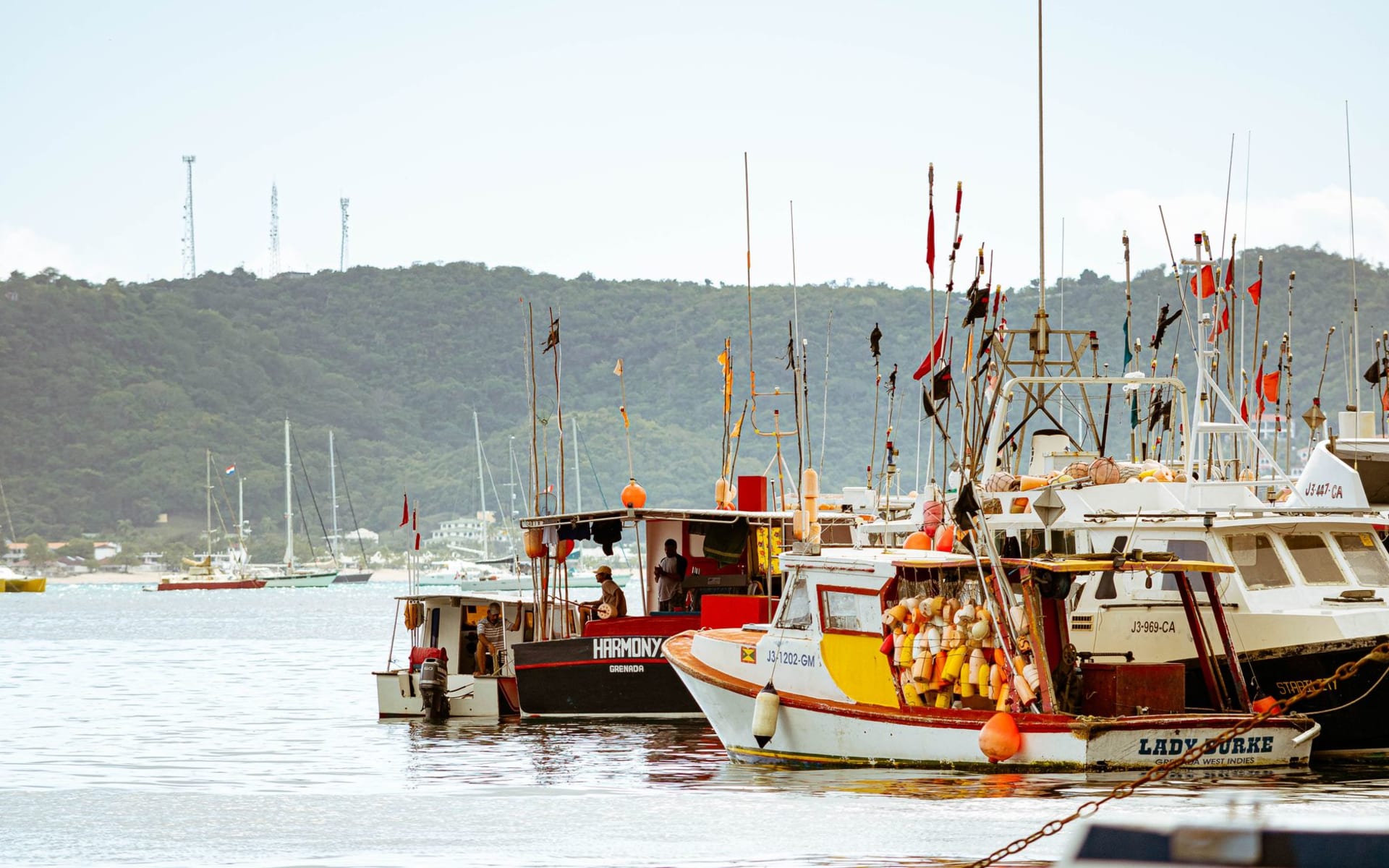
Above water, the bay is scenic in the conventional Caribbean sense — the headland forested, the water the blue-green colour that makes you feel like you are living inside someone else’s screen saver. But the underwater world is what you come for, and what lingers. Walking back up the dock in St. George’s afterward, I kept thinking about those figures on the seafloor, standing in their circle while the ocean built itself around them, unhurried.
When to go: Molinière Bay is most accessible during the dry season from January through May, when visibility is at its best and sea conditions are calmest. The park is a short boat ride from St. George’s harbour; day trips with dive operators or snorkel-only tours can be booked through most St. George’s guesthouses. The site is protected — no fishing, no anchor dropping — so water quality here has held up better than many Caribbean reefs.