Nuuk
"A capital city with 18,000 people and mountains that would embarrass Switzerland."
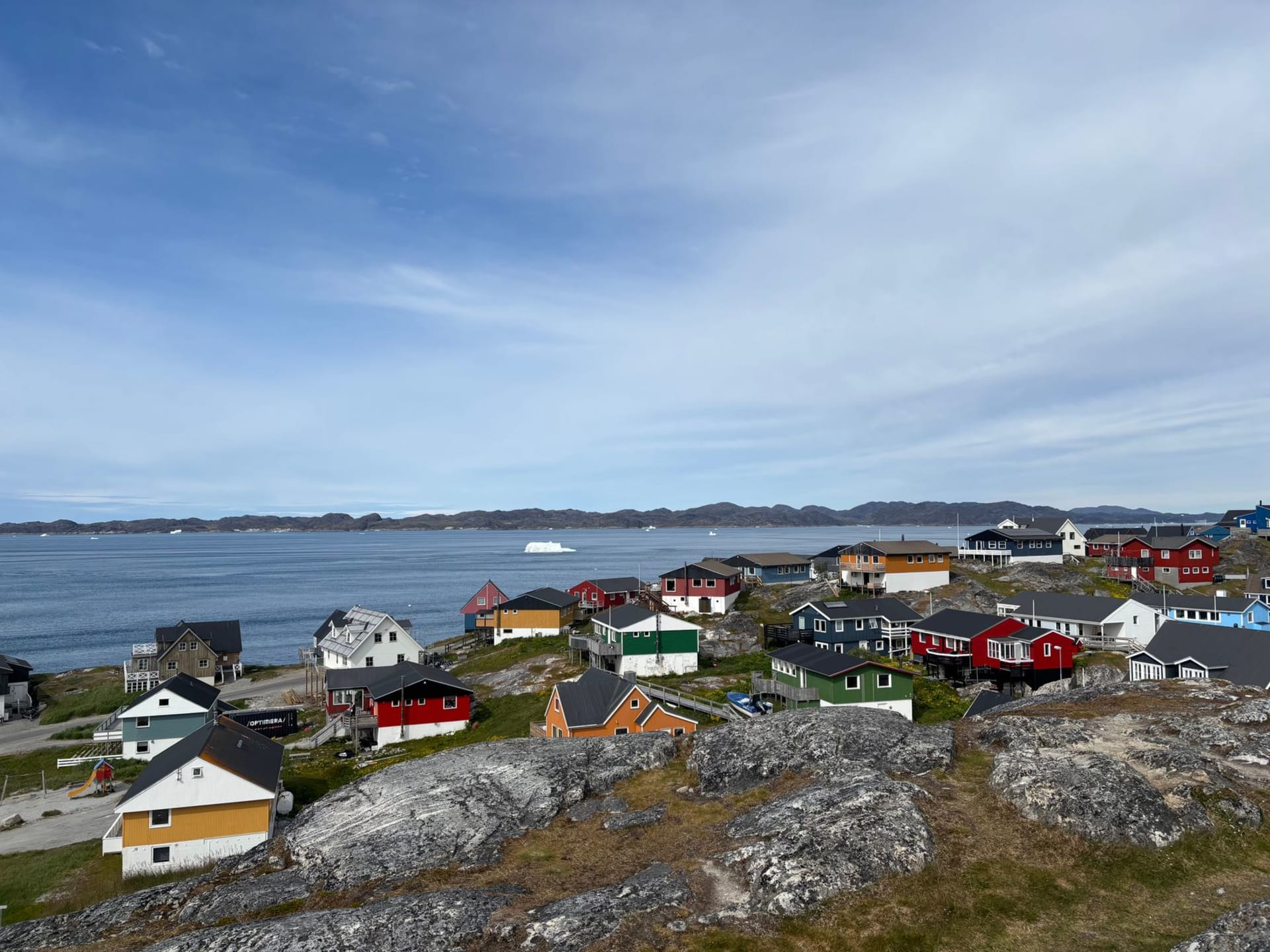
There is a moment arriving into Nuuk by air when the fjord system below becomes so complex — islands, inlets, channels twisting between peaks — that you genuinely cannot tell where land ends and water begins. The city appears suddenly, a dense cluster of red and yellow buildings on a peninsula, and then the mountains press in from every direction and the scale of the place becomes clear: this is a capital that the wilderness has not agreed to accommodate. The wilderness is still very much in charge. I had come expecting something between a remote outpost and a miniature Scandinavian city. What I found was both of those things and neither — a place with its own logic.
The old colonial quarter, Kolonihavn, sits at the tip of the peninsula above the harbor. The preserved buildings here are some of the oldest in Greenland, painted the deep ochres and reds of the Danish colonial period. The National Museum of Greenland is housed here, and it is worth an entire morning: the collection spans 4,500 years of Arctic habitation, from Saqqaq bone tools to the famous Qilakitsoq mummies — six women and two children found preserved in a rock overhang near Uummannaq in 1972, their traditional clothing so intact you can read the stitching. I stood in front of them for a long time. There is something about seeing faces from 500 years ago, expressions still visible, that breaks the usual museum distance.

Nuuk’s contemporary character lives in its neighborhoods rather than its monuments. Walk up from the harbor into the city center — past the heliport, past the supermarket where hunters sell country food out of the back of trucks, past the parliament building which is a modest wooden structure that does not announce itself — and you enter a city in genuine cultural negotiation with itself. Greenlandic rap plays from apartments. Young Inuit women wear traditional amauti parkas over jeans. Restaurants in the new harbor development serve reindeer tartare and fermented shark, and they are full on weeknight evenings with locals, not tourists. The Katuaq Cultural Centre, shaped like the Northern Lights, hosts concerts, film screenings, and community events year-round. On the evening I was there, a drum dance performance drew an audience that was almost entirely Greenlandic.

The fjord around Nuuk is the real revelation. Day trips by boat take you into a system of waterways so extensive that you could spend weeks exploring them. Whales — humpback, minke, sometimes fin — feed in the outer fjord in summer. The islands hold eider ducks and Arctic terns. There is a hot spring at Unartoq, a few hours south by boat, where you can sit in geothermal water while icebergs drift past at a distance that seems improbable. Nuuk resists the kind of summary you want to give it. It is not a postcard destination — it is a working city, with a housing shortage and complicated colonial history and an ongoing independence debate — and that complexity, more than the scenery, is what makes it worth your time.
When to go: June to August for boat tours on the fjord, whale watching, and hiking in the hills above the city. September and October bring reliable northern lights and the autumn colors on the tundra. Winter is dark and logistically demanding but not without its rewards — the city has a warmth indoors that the season intensifies.