Santorini's forgotten sister island across the caldera, with no hotels, one taverna, and a mule path down to a black-sand beach.
The ferry from Ammoudi Bay takes eleven minutes. Eleven minutes, and the cruise ships recede into a kind of postcard abstraction. By the time we stepped onto the concrete dock at Riva, Thirasia’s only port, the selfie sticks and the donkey queues and the wine-bar playlists were already another island’s problem.
Thirasia has roughly two hundred permanent residents. No hotels. One road. And a silence so deliberate it feels earned.
The Climb to Manolas
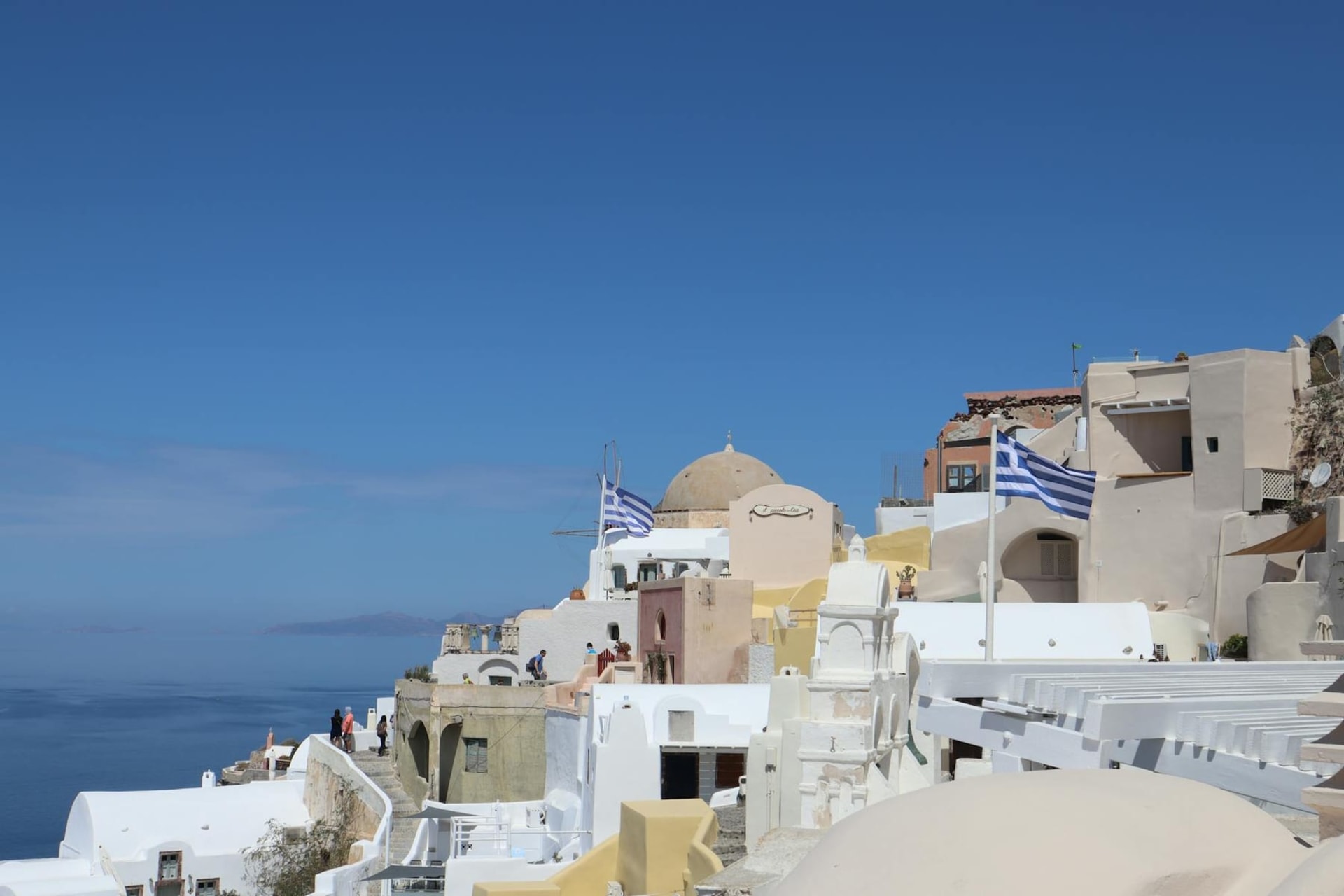
From Riva, a mule path switchbacks up the caldera wall — four hundred steps carved into volcanic rock the color of charcoal and rust. I counted them on the way up because Lia bet me I’d lose track. She was right, somewhere around two-forty, when the view opened and I forgot I was counting anything. Below: the glittering nothing of the caldera. Across: Fira, Imerovigli, Oia strung along the opposite rim like a white sentence written on blue sky.
At the top sits Manolas, the island’s main village. A single lane. Cats sleeping on walls that have been sleeping on walls for centuries. The kafeneio near the church square — Taverna Tholos, the only one worth knowing — serves grilled octopus that had been drying on the wire outside since morning. We ate it with a rough local wine poured from an unlabeled carafe, and the owner, a broad-shouldered man with no apparent interest in tourism, told us without looking up that the kitchen closed at eight and not a minute later.
Agia Irini and the Black Sand Below
The surprise came the next morning — unexpected because nothing in the ferry brochure mentioned it. Past the church of Agia Irini, a path continues north along the ridge before dropping sharply toward Potamos, a cove with a black-sand beach entirely unreachable by road. We half-scrambled, half-slid down loose pumice, arriving at a beach with no infrastructure whatsoever: no sunbeds, no bar, no Wi-Fi. Just dark sand that held the heat like a cast-iron pan, and water so clear the volcanic bottom appeared close enough to touch even at depth.
Lia swam out to a rock shelf and sat there for a long time, not doing anything in particular. That, I think, is Thirasia’s real offering — the permission to not do anything in particular.
The Sunset No One Sees
Every evening, Oia’s terrace crowds shoulder to shoulder for the famous sunset. On Thirasia, the same sun sets over the same caldera, and the audience is a handful of cats and whoever was slow enough to miss the last ferry back. We were those people once, deliberately. We watched the light turn the pumice cliffs amber, then rose, then the particular dark violet that belongs only to volcanic islands in the Aegean.
Nobody photographed us watching it.
When to go: Late May or early September, when the Aegean is warm but the day-tripper ferries run less frequently. Avoid July and August — even Thirasia gets a trickle of crowds then, and the mule path becomes a queue.