Nafplio
"Nafplio is the city that would have been Greece's capital if beauty were the deciding vote."
Greece's first modern capital retains its aristocratic charm — neoclassical mansions, a formidable fortress, and a harbor that glows at sunset.
There is a version of Greece that never made it into the guidebooks — not the bleached ruins and postcard caldera, but something slower, more inhabited, more lived-in. Nafplio is that version.
The Town That Time Kept
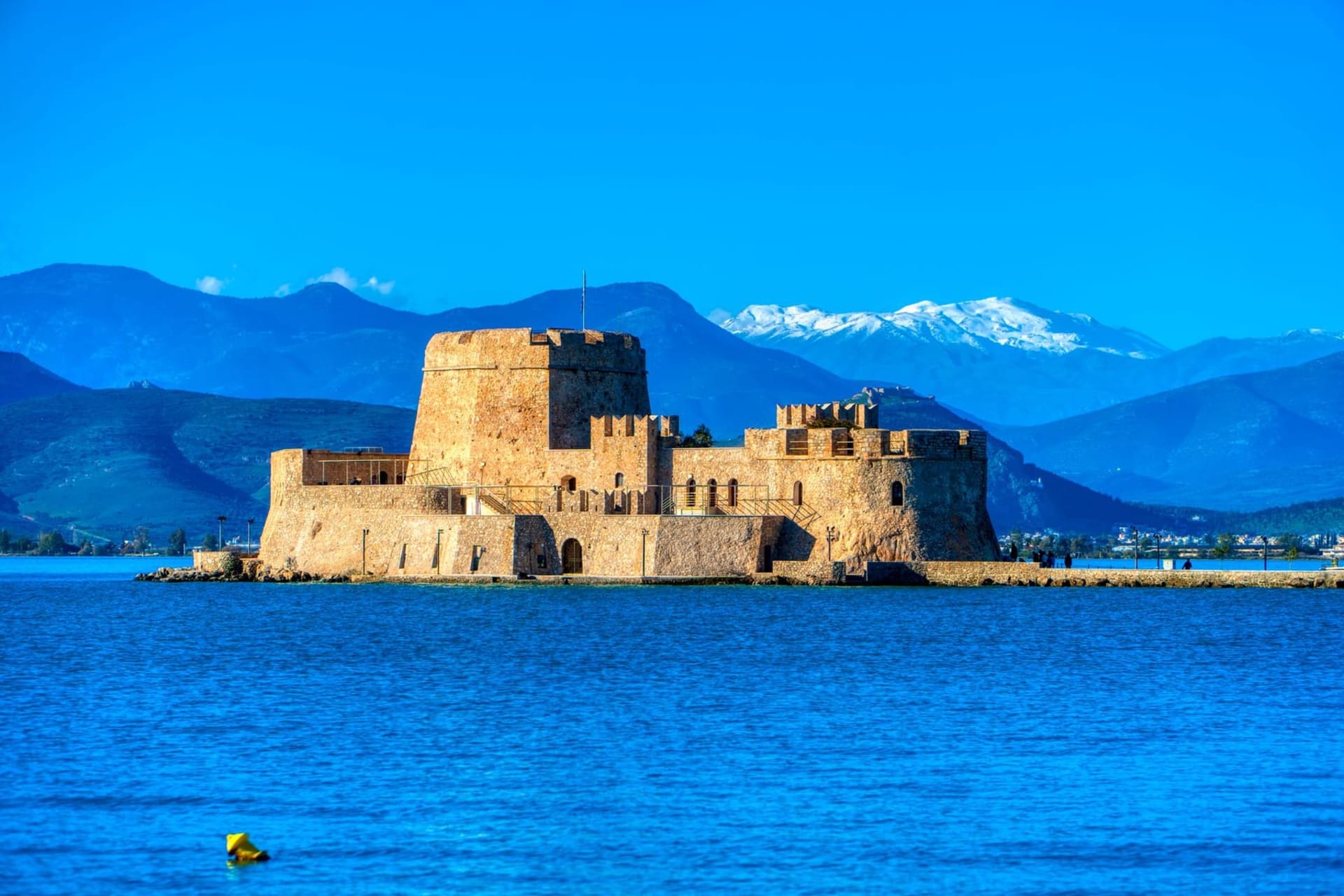
We arrived late afternoon, when the light over the Argolic Gulf turns the color of old honey. The harbor road — Akti Miaouli — curves along the waterfront past fishing boats and the low silhouette of the Bourtzi fortress sitting in the middle of the bay like something a child placed there by mistake. I’d read about Nafplio’s Venetian and Ottoman layers, but nothing prepares you for how gently they sit on top of each other. A Venetian lion carved above a doorway on Staikopoulou Street. A minaret-less mosque repurposed as a cinema. The town holds its contradictions without drama.
The old quarter, the Nafplia, is small enough to learn in a single afternoon. Syntagma Square anchors it — the real Syntagma, older and less trafficked than Athens’ version — flanked by the Archaeological Museum on one side and café tables that spill across the flagstones on the other. We sat there our first evening eating saganaki still sizzling in its pan, watching the light go orange against the neoclassical facades, and neither of us said anything for a long time.
999 Steps
The unexpected thing about Palamidi is not the view from the top, which is predictably magnificent — all of Nafplio spread below like an architect’s model, the gulf a deep Prussian blue. The unexpected thing is the staircase itself. There are 999 steps cut into the cliff, and somewhere around step 600, your legs stop being your legs and become something geological, something ancient. Lia made it look effortless; I arrived at the summit breathing like a man confessing sins. But the Venetian bastions up there, seven of them, laid out along the ridgeline — that fortress is a serious thing, a thing built by people who intended to stay forever.
What to Eat, Where to Linger
Nafplio’s mezedes culture is the best I’ve found on the Greek mainland. At the tavernas tucked into the lanes off Papanikolaou Street, the kritharaki — orzo baked in lamb broth — arrives in individual clay pots, crusted at the edges, fragrant with bay and cinnamon. Order it with rough local wine and a plate of Argolid olives, which are fatter and oilier than anything sold in a supermarket and taste of the specific earth they came from.
When to go: Late April through early June, or September into October — the light is extraordinary, the ferry day-trippers haven’t arrived yet, and the air still carries a faint edge of winter that keeps the afternoons honest.