
A wind-scoured limestone island off Gotland where guillemots crowd the cliffs and Stone Age hands once shaped bone tools in the caves.
The boat from Klintehamn was half full when Lia and I climbed aboard, and I remember thinking that felt strange for such a famous island — until our guide explained that Stora Karlsö only ever lets in a fixed number of visitors a day. It’s been that way since 1880, when the island became one of Sweden’s very first nature reserves, set up specifically to protect the seabirds that nest on its cliffs. Knowing that before we even landed changed how I looked at the place. This wasn’t a stop on an itinerary. It was a colony we were being allowed to visit on its terms.
Nothing prepared me for the noise. We walked out to the base of the Stora Förvar cliff, and the guillemots were stacked on ledge after ledge, thousands of them, calling constantly, wheeling out over the water and back in tight formation. It’s supposed to be one of the biggest guillemot colonies in the entire Baltic, and standing underneath it I believed every word — the air smelled of salt and guano, and the cliff face itself seemed to shift with movement.
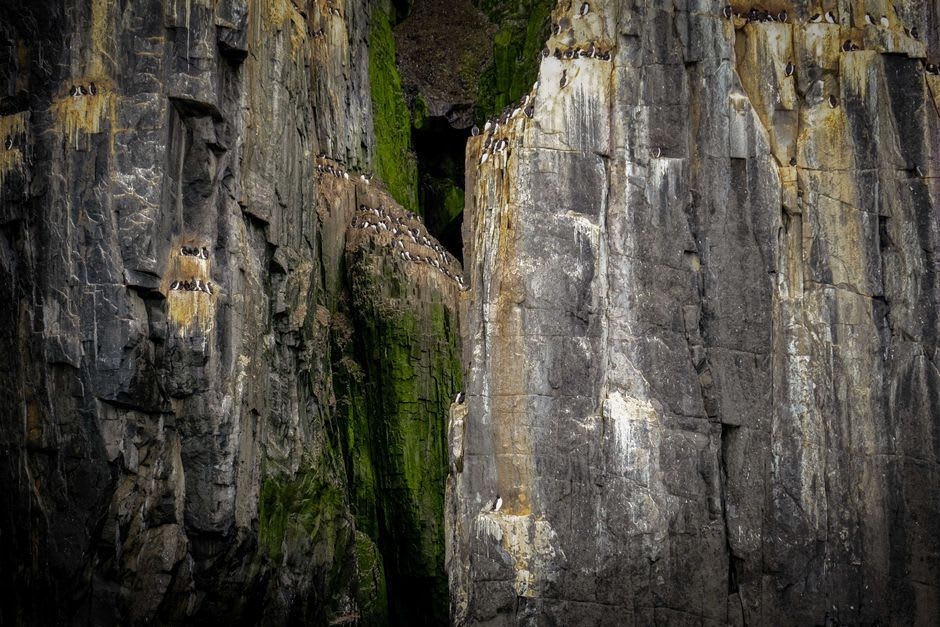
We spent the afternoon walking the western shoreline, where the limestone drops nearly 50 metres straight into the sea, pale grey rock against water that kept shifting between green and a deep, cold blue. Lia found a flat spot near the edge and just sat there with her sandwich, watching razorbills cut past below us, and I remember not wanting to talk for a while — the wind and the birds were doing enough. Later, our guide took us near the entrance of one of the caves where archaeologists found bone tools nearly 9,000 years old, evidence that people were working this same shoreline in the Stone Age. Standing at that cave mouth, boots on limestone worn smooth by who knows how many feet before mine, put the whole day into a different kind of perspective.
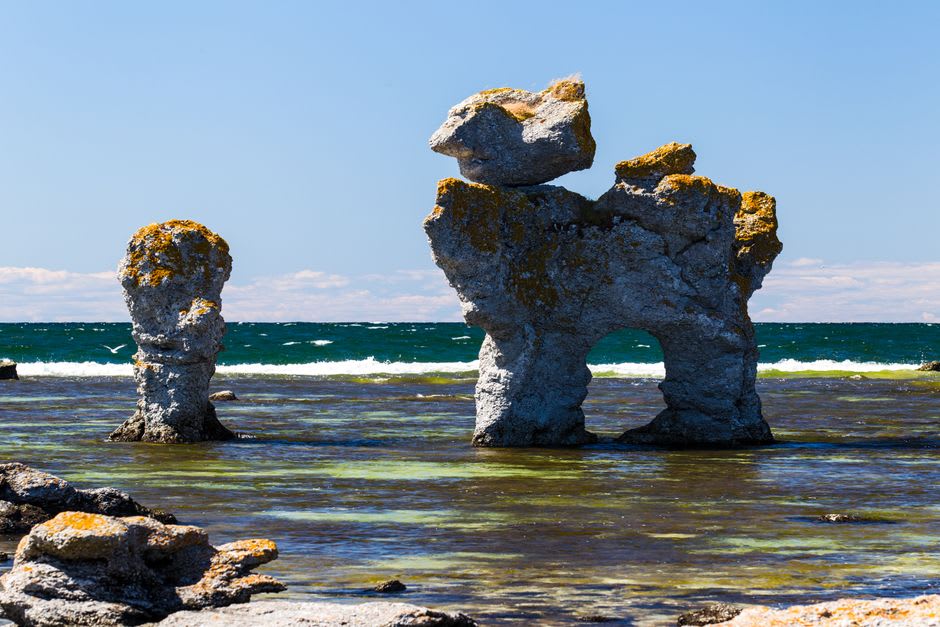
By the time we were back on the boat to Klintehamn, my ears were still ringing faintly with bird calls, and I had sand and limestone dust in my shoes that I didn’t bother shaking out for days. Stora Karlsö is small, and you can’t wander it freely, but that restriction is exactly what makes it work — the birds don’t scatter, the cliffs stay wild, and you leave feeling like you were a guest rather than a tourist.
When to go: Aim for late May through early July, when the guillemot and razorbill colonies are at their breeding peak and the cliffs are loudest with life.