Klintehamn
"Klintehamn doesn't pretend to be a destination. It is a beginning, and it is perfectly comfortable with that."
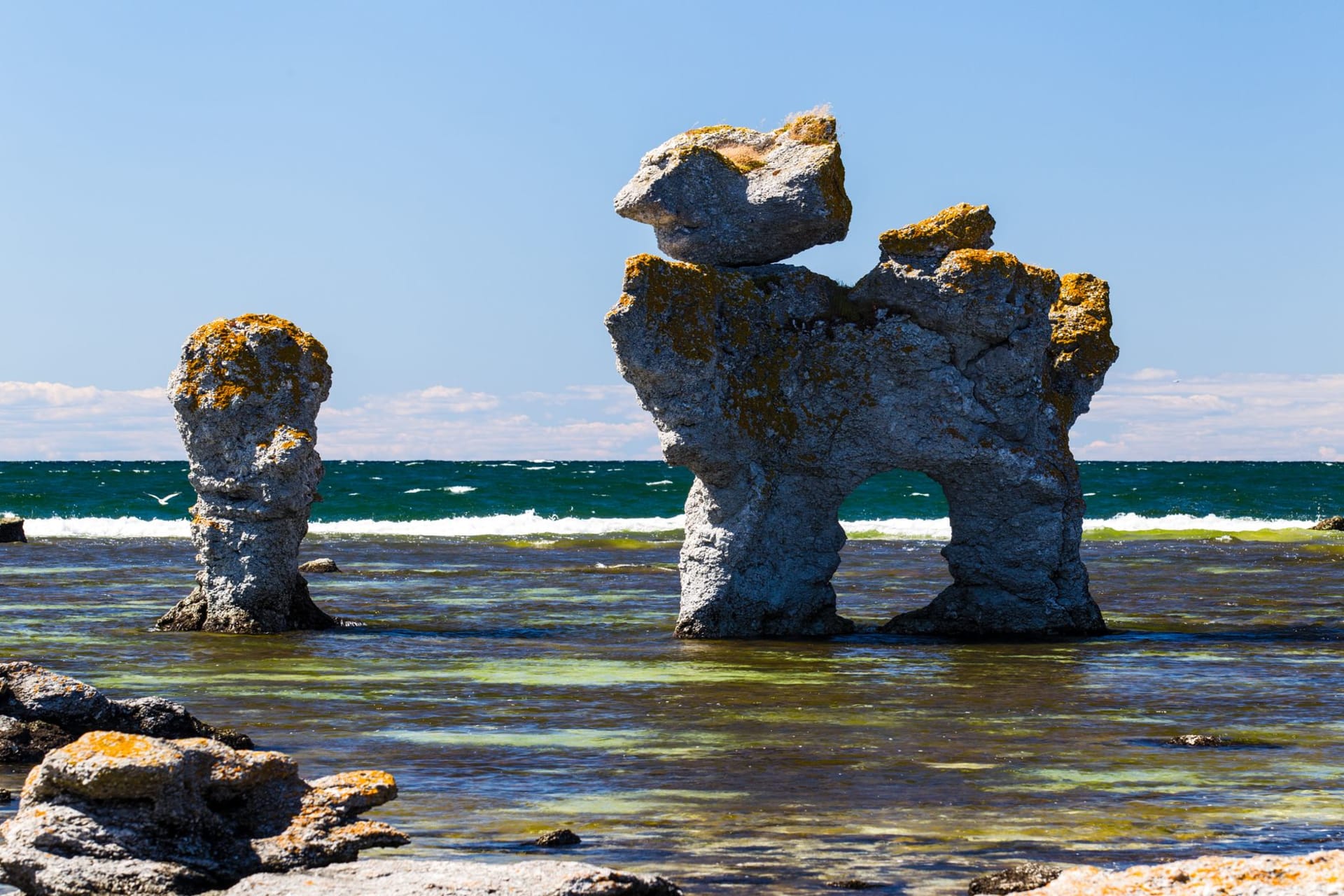
I arrived in Klintehamn on the afternoon bus from Visby and found a harbour town doing what harbour towns do: boats at the pier, nets drying on a wooden rail, a couple of men sitting outside a café with coffee and no apparent urgency about anything. The town is not small enough to be picturesque in the way of a village, nor large enough to feel genuinely active, and it occupies this middle ground with complete comfort. The harbour is the point. The reason I was here was visible from the pier: a dark line on the western horizon that was Stora Karlsö, the small island nature reserve that sits five kilometers offshore and houses one of the most spectacular seabird colonies in the Baltic.

The Stora Karlsö ferry runs in summer and takes about twenty minutes. The island is a nature reserve and there is accommodation for those who book months in advance, but most people go for the day. I went for the day. The island rises abruptly from the sea in limestone cliffs that house guillemots, razorbills, and black-backed gulls nesting in numbers that make the noise audible from the approaching ferry before you even dock. The smell arrives first — marine, sharp, not unpleasant exactly, but wholly present. I walked the cliff path in a state of mild astonishment at the sheer density of birds stacked on every ledge, wheeling above the cliff tops, making the kind of racket that cannot be called pleasant but is impossible not to find thrilling. One guillemot on a ledge three meters away regarded me with the flat attention of an animal that has never learned to be afraid of people and has not found this to be a problem.
Back in Klintehamn, the town keeps a small local museum at Klinteby Farm covering the cultural and agricultural history of the west coast area. I spent an hour there on a grey morning when the Stora Karlsö ferry was cancelled, looking at old photographs of fishing communities, farm equipment, and a set of painted wooden boxes that had belonged to a merchant family in the 1820s. The museum is the kind of place that would seem unremarkable elsewhere and is oddly essential here, in a town that exists at the junction of land and sea and does not try to be more than that.

The town has one good restaurant, a supermarket, a hardware store, and a bakery that opens at seven. On the morning I caught the early Stora Karlsö boat I stopped at the bakery for coffee and a roll with cold butter and watched the baker write the day’s specials on a chalkboard with the concentration of someone composing a letter, not a menu. The boat was at eight. I made it with five minutes to spare and felt the crossing was already worth the effort before the island was even visible.
When to go: June through August, when the Stora Karlsö ferry runs regularly. Seabird nesting season peaks in June and July — guillemots and razorbills are at maximum numbers. Book overnight accommodation on Stora Karlsö months ahead if you want to stay; day trips need no advance booking beyond the ferry ticket. Klintehamn also serves as a useful starting point for the cycling route south toward Hoburgen.