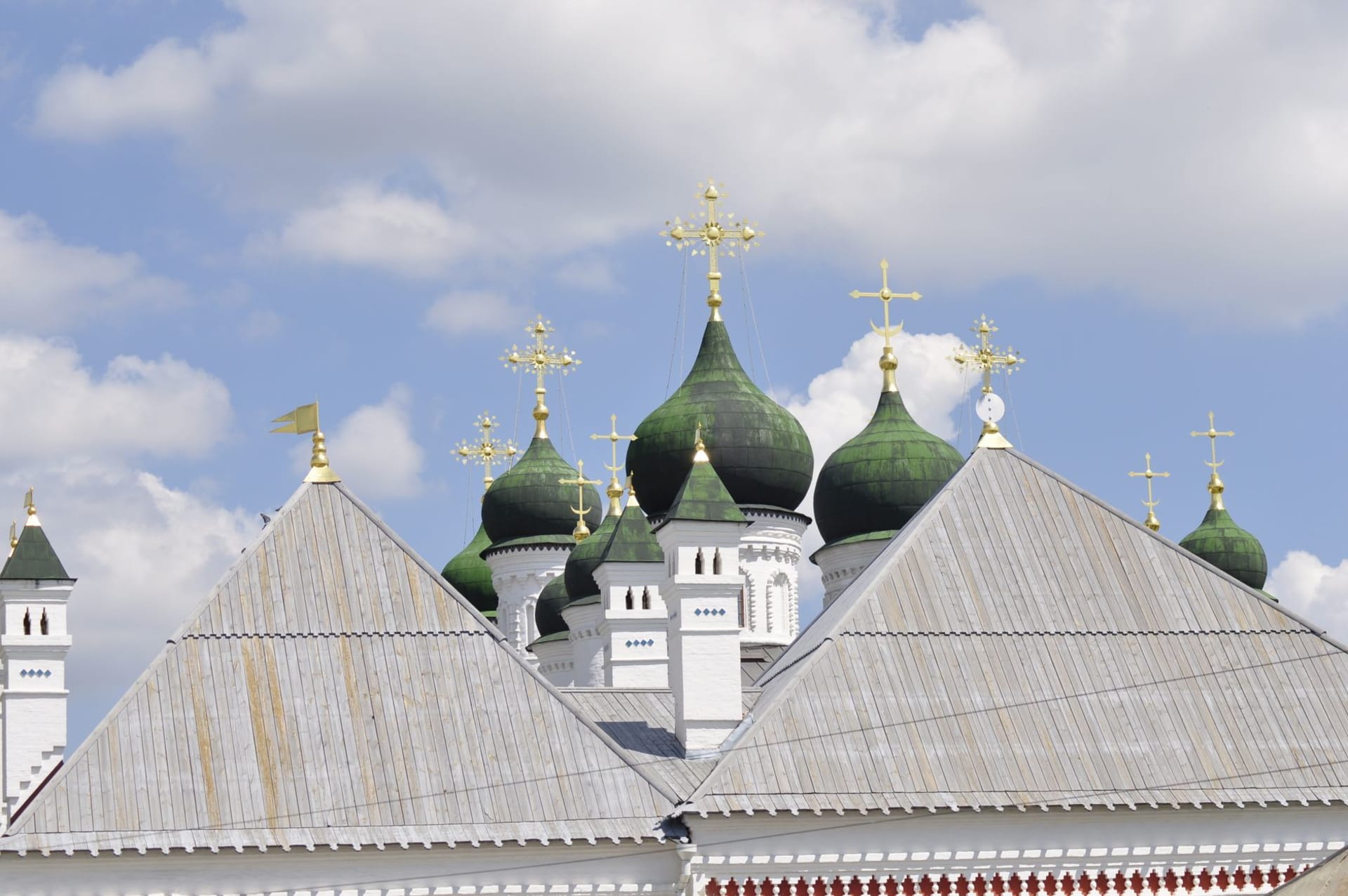
Yaroslavl
"I came for a night and stayed three — the Volga at dusk kept convincing me I wasn't finished."
Yaroslavl is the kind of place that surprises you by being better than its billing. I arrived expecting another frozen medieval tableau, and instead found a city of six hundred thousand with a working cultural scene, a Volga embankment designed for loitering, and a restaurant on a side street off the main square where a young chef was doing something interesting with fermented rye and local pike that I still think about when I’m somewhere disappointing. The churches are here too — magnificent, World Heritage-listed, painted in the jewel-bright colours that seventeenth-century Russian icon artists used when they wanted to make sure God could see them from a distance. But Yaroslavl has other things going on, and that multiplicity is the point.
The embankment is where the city comes to exhale. In the evenings, even in November when the temperature was sliding toward minus ten, locals walked the long promenade above the river — couples, old men with dogs, teenagers in North Face jackets eating sunflower seeds and dropping the shells into the current. The Volga here is very wide. Standing at the railing and looking east toward the opposite bank, which is low and forested and barely visible in the dusk, you understand for the first time why Russians write songs about this river. It does not look like a river. It looks like a decision the landscape made about itself.
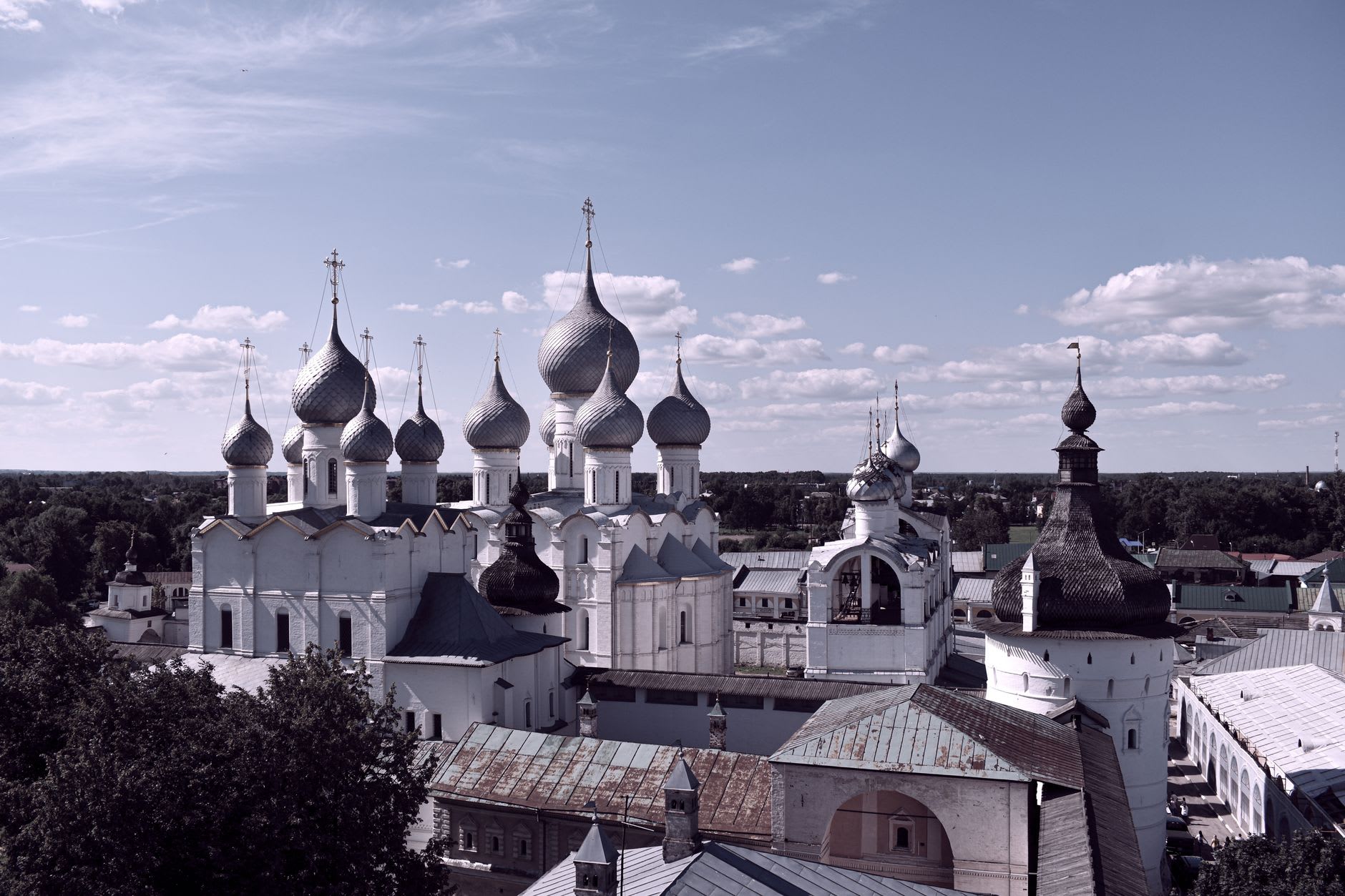
The Church of Elijah the Prophet stands in the central square with the confidence of something that has outlasted every political system that tried to ignore it. It is seventeenth century, its exterior studded with patterned ceramic tiles in green and terracotta, its interior covered floor-to-ceiling in frescoes painted by local masters between 1680 and 1681 — scenes from the life of Elijah and the prophets rendered in vivid, almost hallucinatory detail. The walls breathe colour. A guide was explaining the narrative to a group of Russian school children in the systematic, slightly manic way of someone who loves the material too much to be brief. The children were half-listening, half-staring at a scene depicting the chariot of fire. I understood their distraction completely.
Yaroslavl has a theatre tradition going back to 1750 — the first professional theatre in Russia opened here, and the city still takes this seriously. The Volkov Theatre on Sovetskaya Square hosts serious repertoire, its neoclassical facade slightly absurd in its grandeur for a provincial town, and entirely earned. I didn’t make it inside, but I ate dinner at a restaurant two blocks away where the menu was handwritten and changed daily and the lamb was braised in kvass and came apart under a spoon. The cook, it turned out, had trained in St. Petersburg before coming home. Home, in this case, being Yaroslavl.
The Bear Savely lives at the Yaroslavl city zoo, and he is, technically, the city’s mascot — a live Eurasian brown bear kept in a compound behind the embankment gardens. This felt deeply and perfectly Russian to me: a UNESCO World Heritage city with a live bear as its official mascot. I did not see the bear, but I saw his footprints in the snow near the fence, which seemed like enough.
When to go: Yaroslavl rewards almost any season. Winter gives you the Volga partly frozen and the churches without crowds. May and June turn the embankment gardens green and the evenings long and golden. September is brilliant — the river mist in the mornings, the birches going yellow along the banks, and just enough chill in the air to make a bowl of ukha fish soup feel earned.