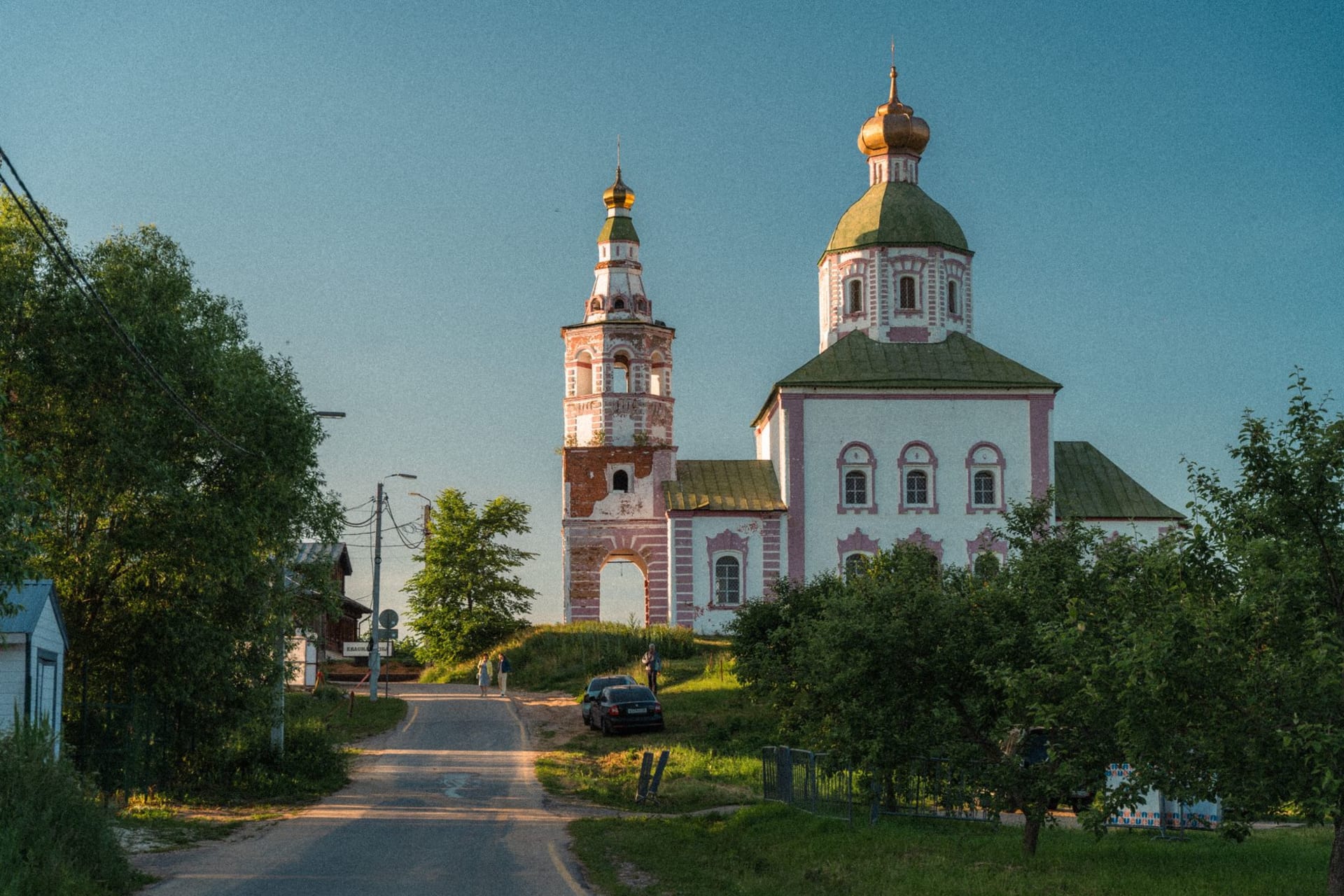
Kostroma
"Every Russian empire has to start somewhere — Kostroma just happens to be where the Romanovs found their nerve."
Kostroma sits where the Kostroma River meets the Volga, and in the seventeenth century this junction was important enough to produce a dynasty. The Ipatiev Monastery, on the western edge of town, is where sixteen-year-old Mikhail Romanov was persuaded in 1613 to accept the Russian throne — reluctantly, his mother reportedly weeping, the assembled nobles insisting that only he could end the Time of Troubles. Three hundred years of Romanov rule began in a monastery courtyard in Kostroma, which gives the city a claim on Russian history so significant that the Soviets spent decades somewhat uncomfortably not knowing what to do with it. They eventually turned the monastery into a museum, which is the most Soviet solution imaginable and also, accidentally, a very good outcome.
The monastery itself is imposing — thick yellow walls along the river, a cluster of sixteenth and seventeenth-century churches inside, the Trinity Cathedral with its spectacular sixteenth-century frescoes largely intact despite everything. The caretaker, a retired schoolteacher named Nikolai who had been showing people around the grounds for twenty-two years, found me studying a fresco of the Last Supper and offered, without being asked, a fifteen-minute explanation of the iconographic programme in serviceable English. He had, he told me, learned it specifically for foreign visitors. He seemed genuinely pleased that one had finally appeared.
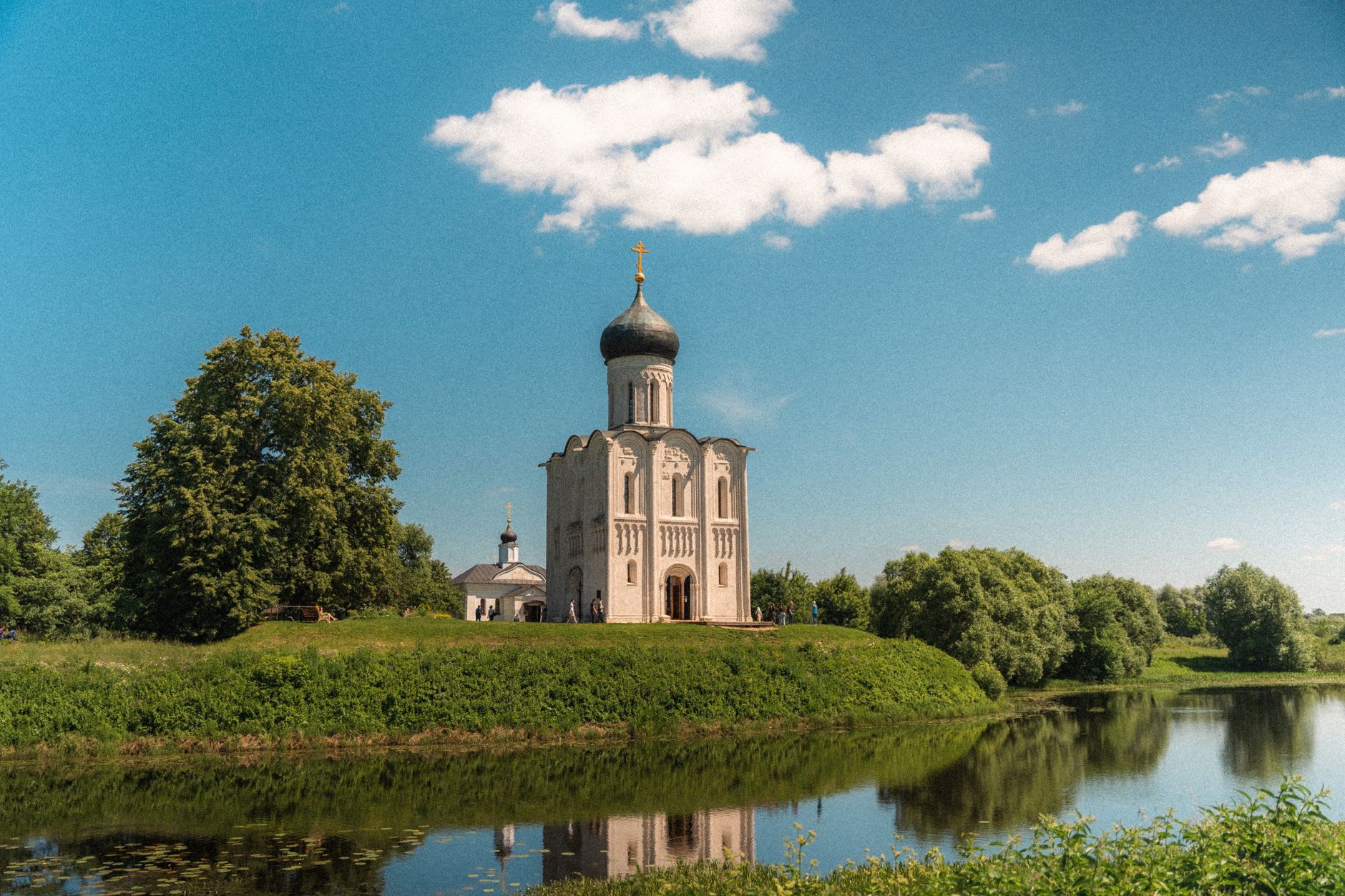
The centre of Kostroma is dominated by the Torgovye Ryady — the old Trading Arcades — a neoclassical ensemble of colonnaded galleries arranged around the main square in a pattern planned by Catherine the Great’s urban planners in the eighteenth century. They are still in use: tailors, hardware shops, a pharmacy, a shop selling Kostroma-made linen that is apparently famous throughout Russia, and a small café where the blini come with sour cream and the coffee is better than it has any right to be. The stone columns are worn at hand height from centuries of people running their palms along them. The scale of the arcade, the echo underfoot, the light falling through the gaps between the columns — it is one of the most accidentally atmospheric commercial spaces I’ve been in.
Kostroma is the linen capital of Russia. This might sound mundane but it is not, because the linen industry here goes back centuries and the fabric sold in the arcades is the real thing — woven locally, heavy in the hand, the colour of unbleached cream. I bought a tablecloth without really needing one, because the woman running the stall showed me the weave with such matter-of-fact pride that not buying something felt like bad manners. It is now the most used piece of fabric in my kitchen.
The snow bear figure of Snegurochka — the Snow Maiden of Russian folklore — has a particular connection to Kostroma: the playwright Ostrovsky, who set her story in the forests near here, lived in the region, and the city embraces the association with considerable enthusiasm. There is a Snow Maiden’s house, a Snow Maiden café, and in January a Snow Maiden festival. I arrived too early for the festival but too late to pretend I wasn’t charmed by the idea of an entire civic identity built around a folk character from a nineteenth-century play.
When to go: Kostroma in winter is quiet and self-contained, the arcades and monastery both more absorbing without summer crowds. Spring brings the rivers high and the birch forests around town into sharp green. The Snow Maiden festival in January is genuinely local and worth seeing if you can time it right.