West Africa's most vibrant capital — Nkrumah's legacy, Labadi Beach, and jollof rice debated on every corner.
There is a particular quality to the light in Accra at seven in the morning — thick and golden, already warm, pressing through the harmattan haze like something you could hold in your hands. I noticed it the first time I stepped out of Kotoka International Airport onto the pickup forecourt, the air smelling of warm asphalt and something frying nearby, and I stood there for a moment longer than was polite, just adjusting to the fact of the place.
Jamestown and the Weight of History
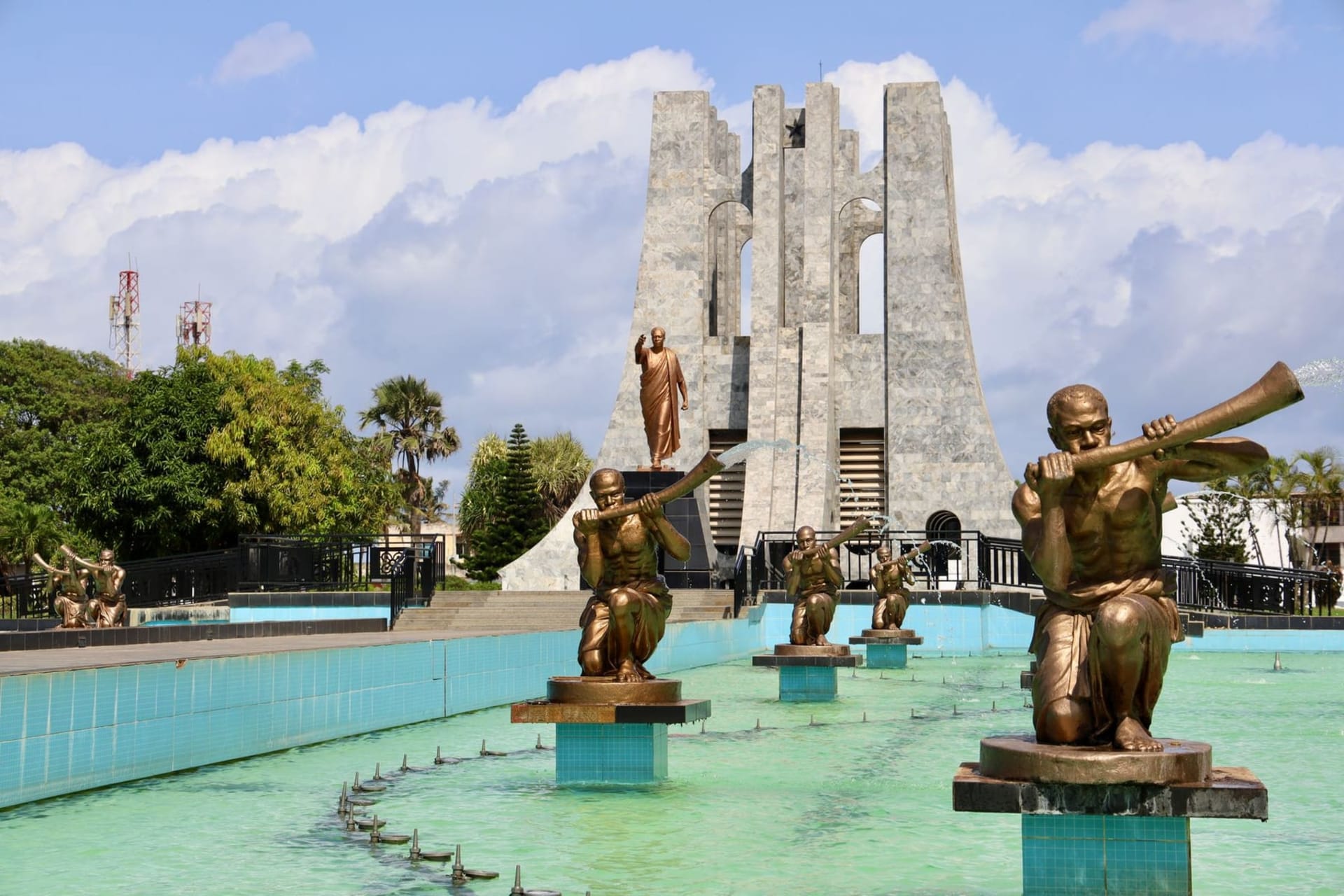
I spent my first full morning walking the old colonial quarter of Jamestown, where the fishing boats are pulled up onto the beach in bright reds and yellows and the lighthouse still stands, crumbling and imperishable at once. The alleyways between the compound houses smell of smoked fish and woodsmoke. Old men play draughts on upturned crates in the shade. It is the part of Accra that does not perform itself for visitors, and I was grateful for that. At Kwame Nkrumah Memorial Park, I stood in front of the mausoleum’s glass panels and felt the strange weight of postcolonial hope — all that ambition frozen in black marble and manicured gardens while the city heaved and hollered just beyond the fence.
Osu and the Question of Jollof
By afternoon, Lia had found us a table at a small spot on Oxford Street in Osu where the jollof rice came in a clay pot still bubbling at the edges. I have eaten jollof across West Africa and I will not pretend to settle the debate here, but I will say that this particular version — smoky, blood-orange, served with fried plantain and a chicken leg charred black at the wing tip — made the argument feel almost beside the point. Osu at dusk is a different animal from the sleepy morning streets: generators kick on, music leaks from every doorway, and the traffic on Ring Road Central turns into something closer to a communal experience than a commute.
Labadi Beach and the Unexpected Drumming
What I did not expect was to arrive at Labadi Beach on a Sunday afternoon and find a full percussion ensemble set up on the sand, completely informal, maybe thirty people watching and twice as many dancing. No stage, no tickets, no announcement. We stayed for two hours. Salt spray, the bass of the fontomfrom drums moving through the chest, the Atlantic doing what the Atlantic does. I had come expecting a beach. I found a lesson in how a city chooses to spend its free time.
When to go: November through March offers dry, manageable heat and clear skies before the heaviest humidity rolls in — the December festive season is particularly alive, with the Chale Wote Street Art Festival typically falling in August if cultural programming is the draw.