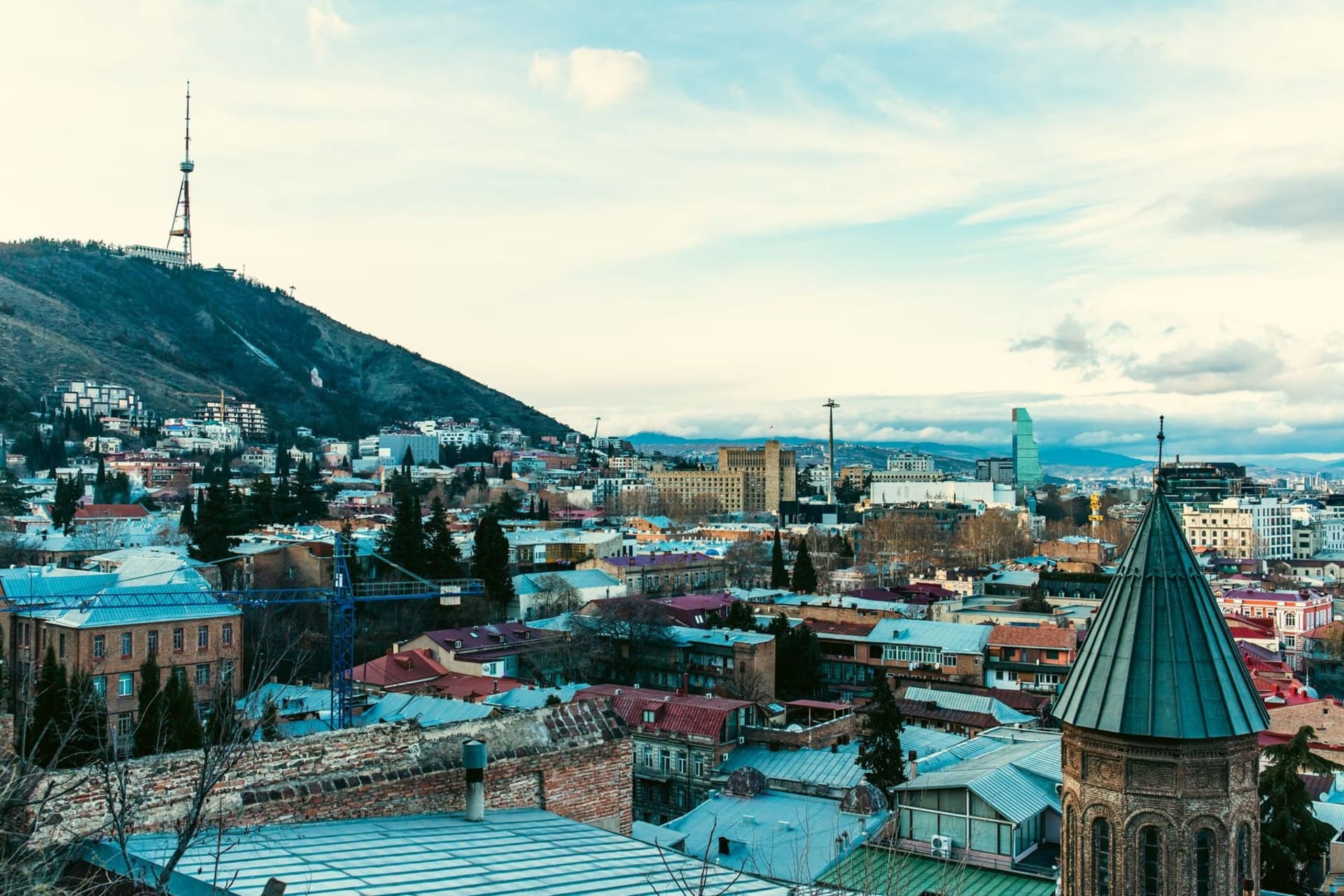
Tbilisi Old Town
"Tbilisi belongs to everyone who has ever loved a chaotic beautiful city."
Carved wooden balconies, sulfur bathhouses, and wine bars spilling into cobblestone alleys below the fortress.
I arrived in Tbilisi expecting something manageable. A small Caucasian capital, easy to read in a weekend. What I found instead was a city that refuses to resolve itself — layer over layer of Persian, Russian, Soviet, and something entirely Georgian, all held together by those impossible carved wooden balconies sagging beautifully over every alley in Abanotubani.
The Weight of the Old Quarter
The Old Town sits below Narikala fortress like something that slipped down the hill over centuries and just stayed. Lia and I spent our first morning simply walking Shardeni Street without destination, letting it dissolve into Kote Afkhazi, then down toward the Metekhi cliff. The light at nine in the morning comes in at a low angle that turns the balcony wood amber — the same rot-soft timber that looks like it might give way in the next rain but has apparently been giving that impression for two hundred years.
The smells layer in ways that don’t quite make sense together: fenugreek from an open spice sack, diesel from a passing marshrutka, and then suddenly, rounding a corner near the Abanotubani district, the unmistakable mineral exhale of sulfur. The bathhouses vent it into the street like a warning and an invitation at once.
The Baths and What Lives Beneath Them
We went to the Orbeliani baths, the blue-tiled domed one that every photo of Tbilisi eventually uses. What no photo captures is the inside — the private room we rented for an hour, the almost scalding water piped straight from the sulfur springs below the city, the particular weightlessness that follows. I didn’t expect to feel meditative in a place that smells like a boiled egg. That was the surprise.
Afterward, sitting in the courtyard of a wine bar on Erekle II with a glass of amber Rkatsiteli — unfiltered, cloudy, tasting of dried apricot and something almost tannic enough to chew — I understood why Georgians regard wine as something closer to theology than agriculture.
Evening at the Foot of the Fortress
Narikala is best at dusk, when the fortress walls go from grey stone to something between gold and rose, and the city below starts its noise. We ate khinkali at a place with no English menu on a side street off Leselidze, twisting the dough knots the way the woman at the next table demonstrated without us asking. Broth ran down our wrists. We ordered more.
When to go: Late April through early June brings warm days and the roses in full bloom without the summer crowds; September and October offer harvest light and the new wine season just beginning.