Wilderness
"The rivers don't rush here. They meander like they can't quite decide whether to stay."
I arrived in Wilderness on a Tuesday, which is the right day to arrive. The town was nearly empty — a bakery open, a woman walking a dog on the beach road, a petrol station attendant half-asleep in a plastic chair. I had been driving from George with the Outeniqua Mountains filling the rearview mirror, and then suddenly the landscape opened up and there was water everywhere: the Touw River sliding through reeds, the Serpentine shimmering through dune grasses, the Indian Ocean lying flat and enormous beyond. Three ecosystems meeting in a wet, green tangle, and not a tour bus in sight.

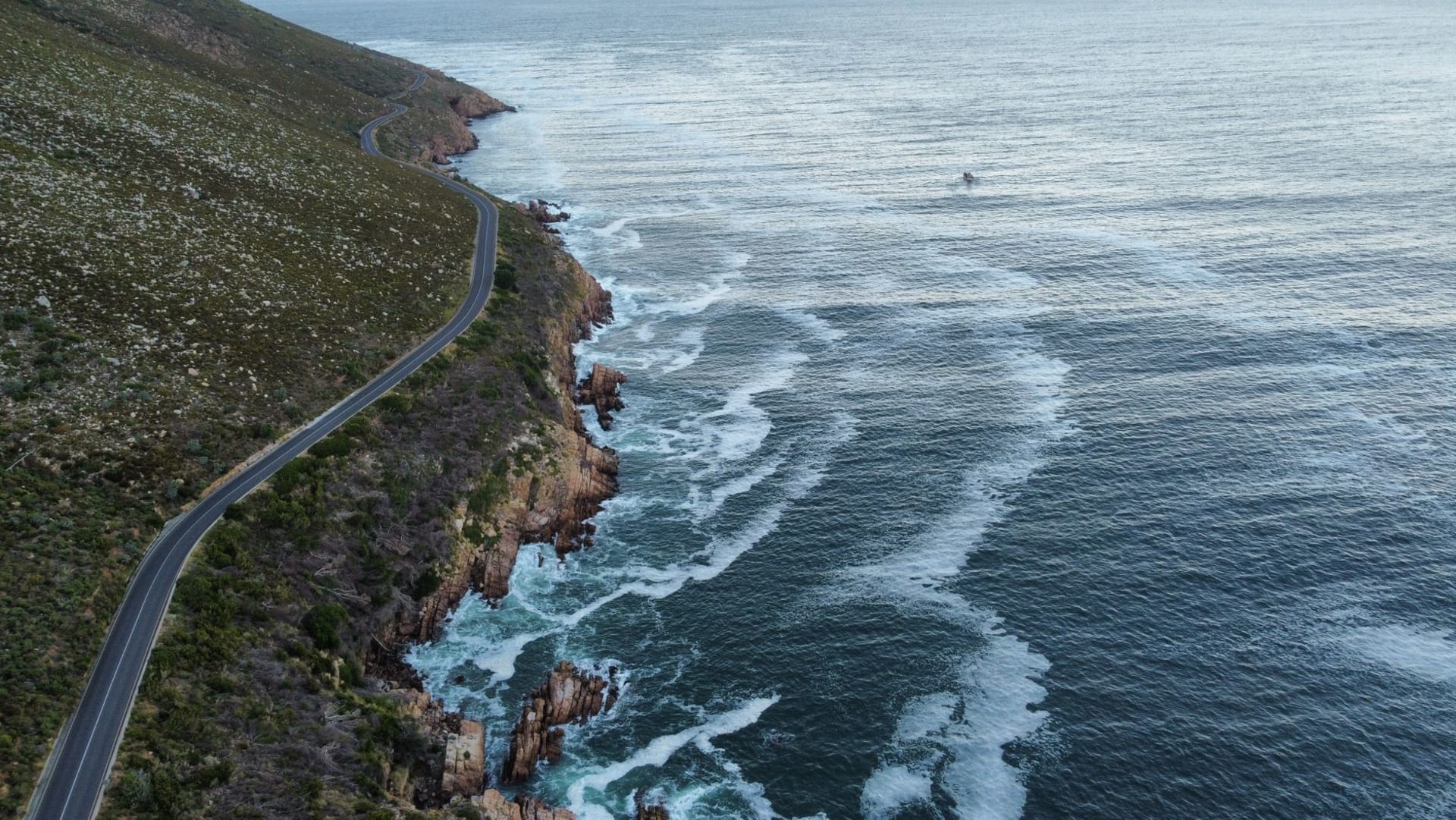
The dunes here are what stopped me first. Long, pale ridges of wind-blown sand covered in fynbos scrub, separating the river systems from the sea — you walk over one and find yourself suddenly on a wild, cliff-backed beach with Atlantic swells coming in hard and the berg winds warm on your face. The Wilderness National Park protects the whole complex: five estuaries, four lakes, a patchwork of indigenous forest on the inland side, and the coast stretching west toward Herold’s Bay. I kayaked the Touw River one morning, pushing upstream into sections where the yellow milkwood branches touched overhead and the water turned dark with tannins from the leaf litter. A kingfisher watched from a dead branch, orange and electric blue, absolutely still.

The town itself is small enough to walk in twenty minutes, and the eating runs toward honest simplicity: crayfish brought in daily at the harbour-side stalls, roadside pies that you should not judge by their packaging, filter coffee served in mugs that have seen better days and taste perfect anyway. There is a kind of restaurant in South African coastal towns that has checked tablecloths and photographs of fish on the wall and a daily chalkboard of whatever came in at dawn — Wilderness has three of these, each slightly better than you expect. I ate grilled kabeljou and sweet potato fritters at one of them while a hadeda ibis screamed improbably in the parking lot.
What I appreciated most about Wilderness was its resistance to spectacle. It does not give you a single obvious thing to photograph and move on from. The light shifts constantly — the lakes change colour as clouds cross the mountains, the lagoon goes silver and then green and then deep grey within an hour. If you stay more than a day, you start to find a rhythm, and the rhythm is largely about walking: down to the beach before breakfast while the mist burns off the water, upstream along the river in the afternoon when the birds get active, back to wherever you’re sleeping when the first stars come up behind the ridgeline.
When to go: Wilderness works in almost any season but reaches its most comfortable between October and April, when the days are long and the water temperature encourages swimming. August and September bring whale sightings just offshore — Southern rights rounding the headlands — and the bush is lush and green from the winter rains. Avoid the Christmas fortnight if you prefer to have the estuary to yourself.