Tendaba
"No signal, no traffic, just the river going past and a Pel's fishing owl somewhere in the dark."
The road to Tendaba deteriorates in a way that feels deliberate. By the time I’d been driving south from the main highway for twenty minutes the tarmac had become gravel, the gravel had become laterite, and the laterite had become a suggestion. The baobabs grew larger and more widely spaced. A family of warthogs crossed the track ahead of me at a trot, not remotely concerned. The bush camp appeared through the trees suddenly, a few thatched bandas on a bluff above the river, and the view from the bank stopped me mid-step.
The Gambia River at Tendaba is wide and still and extraordinarily alive. The south bank here borders Kiang West National Park, and the reed beds, mudflats, and mangrove channels that line the water hold one of the most concentrated assemblages of birds I have encountered. Before breakfast on my first morning — a breakfast of eggs and white bread and instant coffee, honest and perfectly adequate — I had counted forty-three species from the camp’s riverbank, including a saddle-billed stork standing in the shallows with the gravity of a senior civil servant.

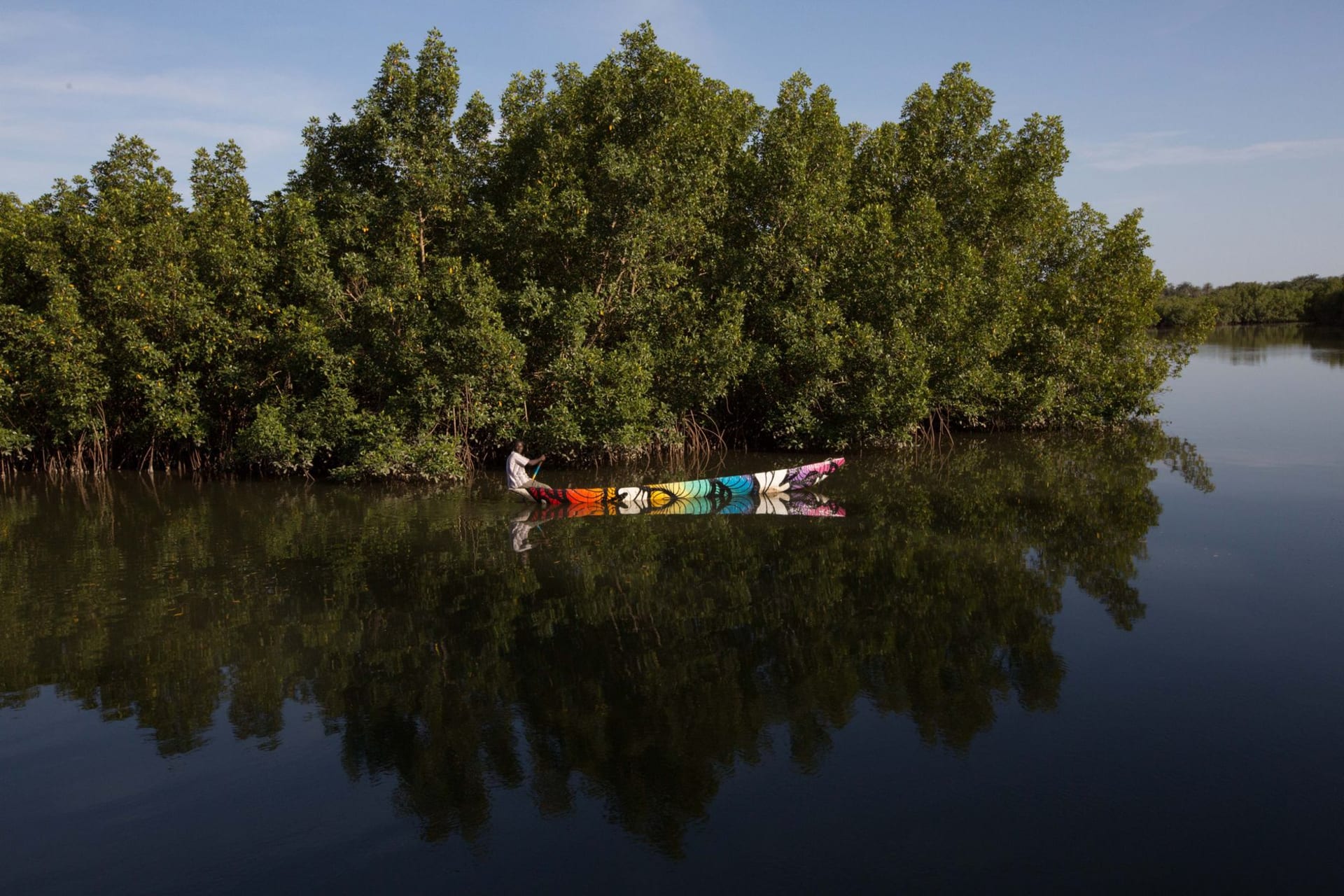
The pirogue trips are the point. Every morning the camp’s guide takes whoever is staying out onto the water before the heat arrives, moving through the mangrove channels in a narrow wooden boat that barely disturbs the surface. The mangroves close overhead in places, filtering light into thin columns. Roosting herons shift on their branches. African pygmy kingfishers — jewel-sized, improbably colored — appear on the lowest twigs above the waterline. We cut the engine and drifted through one channel for fifteen minutes in complete silence while a Goliath heron stood in the shallows ahead, absolutely motionless, waiting for a fish that was taking its time.
The evenings at Tendaba are for the hippos. After dark, when the camp’s generator comes on for its four-hour window and the single bulb in each banda glows, you can hear them in the river — the exhale, the low rumble, the splash of something large moving in darkness. I went down to the bank with a torch after dinner and stood very still for ten minutes until one surfaced about thirty meters out, the bulk of it rising from the water, blowing spray, then submerging again. The river smelled of clay and vegetation and something older than both.

The camp itself is simple in the way that is either charming or inconvenient depending on your relationship with intermittent electricity and bucket showers. I found it charming, partly because the staff had the quality of people who genuinely like where they live and who will tell you, if you ask, exactly where to stand at dawn to watch the bee-eaters come off their roost. That knowledge is worth more than consistent water pressure.
When to go: November through April, with December through February the peak window for both comfort and birdwatching. The dry season drops water levels and concentrates wildlife along the river. Advance booking is essential as the camp is small and fills with birding groups who plan months ahead. The drive from the coast takes approximately three hours on improving roads.