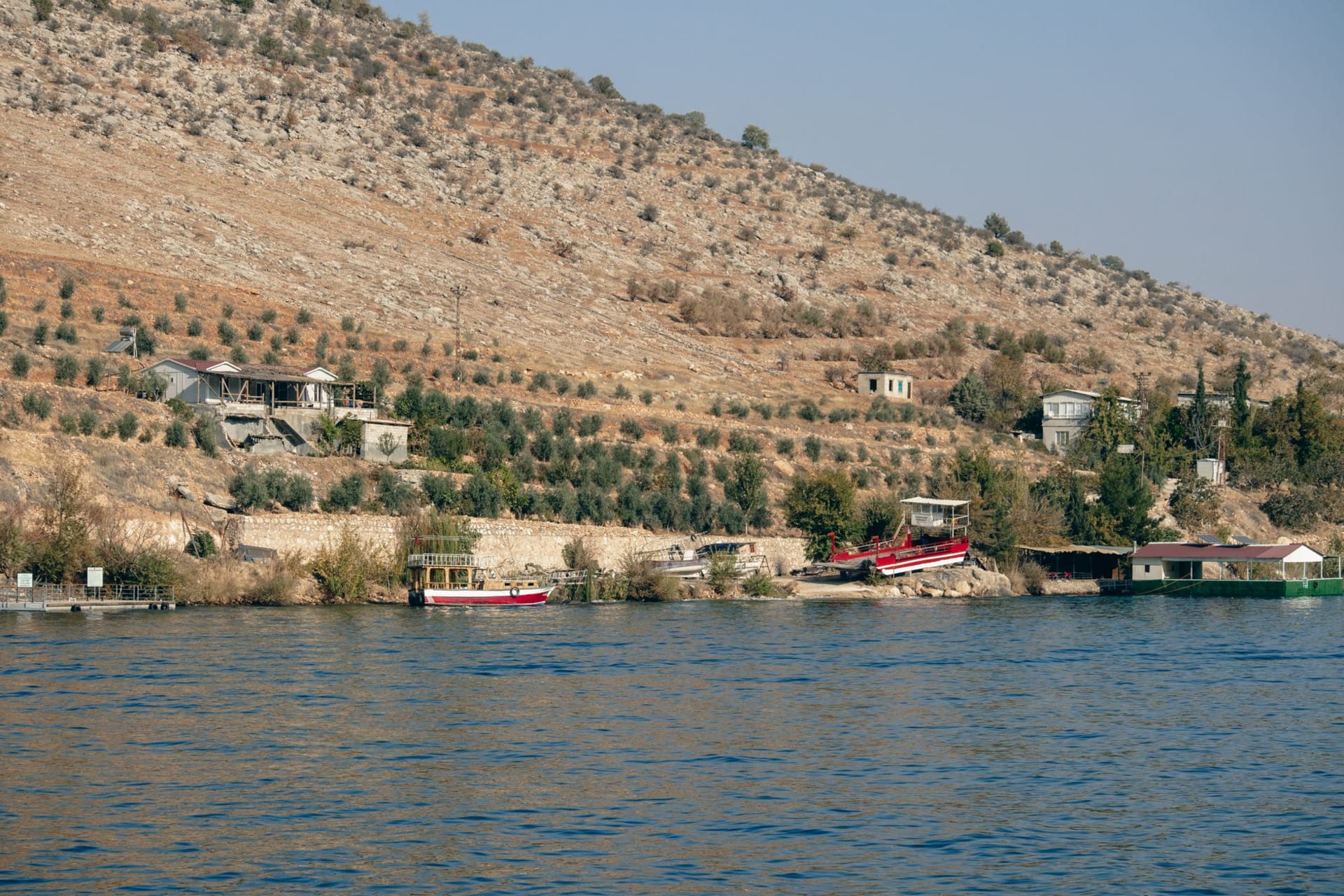
Tiberias
"Tiberias is where you sleep to wake up next to the water — the town is an excuse, the lake is the reason."
Everyone warns you about Tiberias. The guidebooks call it a gateway, a transit hub, a base of operations — the kind of language that says: don’t expect too much. And they are right in the way that damning with faint praise is technically accurate. The town itself, rebuilt after a catastrophic earthquake in 1837 and again remade in the twentieth century, does not have the architectural grace of Acre or the spiritual density of Safed. What it has is the lake, immediate and overwhelming, at the end of every street that runs east. I arrived in the late afternoon — the hour when the sun is low and the Sea of Galilee goes through its copper phase — and walked directly to the promenade without checking into my room, and stood there for fifteen minutes watching a pelican drift thirty meters offshore.
The old harbor is a ten-minute walk south of the main hotels, past fish restaurants that have been grilling Saint Peter’s fish over open flames since before tourism was an industry. The smell of charcoal and tilapia fills the air along this strip in a way that stops being intrusive after two minutes and starts being the smell of being somewhere specific. I ate at a small place where the menu was written on a chalkboard and contained essentially three options. The fish arrived whole, split and grilled, with a side of chips so thick they were almost rösti. I ate it with my hands and watched a fishing boat unload at the dock across the road.
Below the modern city, Hamat Tiberias holds something genuinely worth the detour: an ancient synagogue with a mosaic floor dating from the fourth century CE, remarkable not for its religious imagery but for its central panel, which depicts the zodiac wheel with the sun god Helios at its center — Greek mythology in the middle of a Jewish house of prayer, proof that late antique Judaism was more syncretic and less anxious about boundaries than later traditions suggest. The hot springs that bubble up near the synagogue have been drawing people since Roman times; there is a modern spa complex here that feels incongruous next to the ancient mosaics but makes a certain pragmatic sense in a town that has always existed to serve visitors.
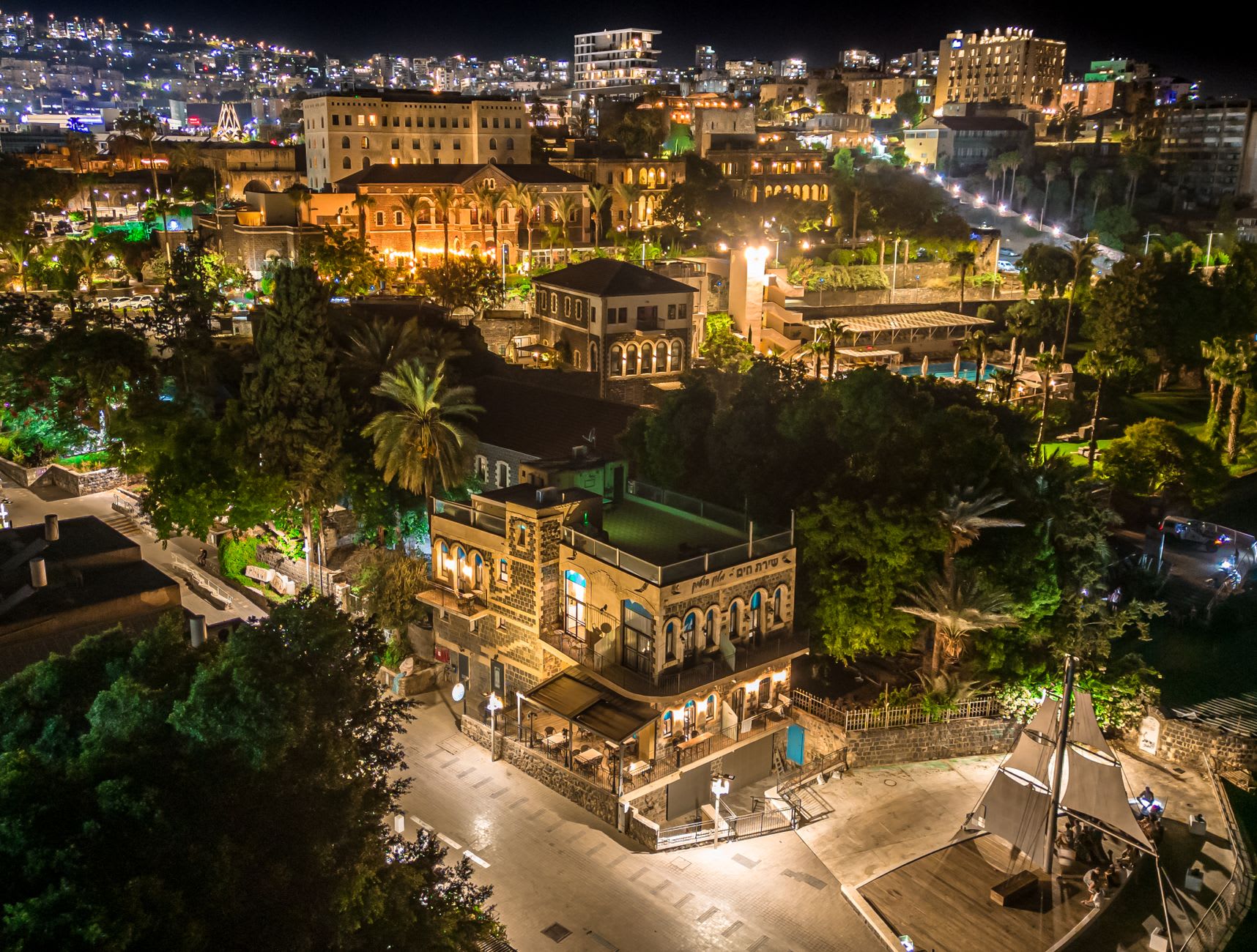
The real argument for Tiberias is the night and the morning. At night, the promenade empties of day-trippers and fills with the local Israeli families who eat dinner late, sitting on the benches facing the water with ice cream and arguments, children running in circles around their grandparents. By ten o’clock the lake is black and the lights from the Golan Heights on the eastern shore make a distant constellation. At five-thirty the next morning, when I walked down to the water before the heat built, a fisherman was pulling in a small net from a plastic boat and the lake was a sheet of hammered silver, and the Golan was purple with early shadow, and nothing had started yet.

The tomb of Rabbi Akiva, the second-century sage and martyr, is on a hillside above the town, reached by a steep staircase where old men stop to rest on every third landing. Ultra-Orthodox visitors come throughout the year to pray at the site. I went on a Thursday afternoon and shared the viewing platform with a group of Hasidic women who arrived by minibus from Jerusalem, prayed briefly, took photographs of each other, and left — the same combination of devotion and tourism that characterizes every sacred site I know, and which I find oddly reassuring.
When to go: October through April for comfortable temperatures. July and August are hot enough to feel punitive and the lakeside fills to capacity. Avoid weekends if you want the promenade to yourself at dawn. The best meal times are late: Israeli dinner culture runs to nine or ten at night.