Magdala
"The menorah stone from Magdala was carved while the Temple in Jerusalem was still standing. Some objects carry more time than you can hold."
I stumbled onto Magdala by accident, which is exactly how archaeological discoveries tend to happen, and which was also, appropriately, how the site itself was found: in 2009, a Catholic organization was breaking ground for a new pilgrimage center on the western shore of the Sea of Galilee when their construction workers hit ancient stone two meters down. Work stopped. Archaeologists were called. What emerged over the following years was a complete first-century fishing town — streets, houses, a fish-processing factory, a ritual bath, a marketplace — and, at its center, a synagogue so well-preserved that the mosaic on its floor was still intact.
I walked through the excavated streets on a warm November morning with a small group of other visitors following a guide who had worked on the site himself. The streets are narrow and paved with flat basalt slabs, wide enough for two donkeys to pass. The houses along them are small — single rooms mostly, some with a second — and their construction is the rough competence of people building for function rather than aesthetics. Fish bones and scales still turn up in the soil near the processing area, the archaeologist told us, even after two thousand years. The smell of the lake is fifty meters away, the same smell those streets would have held.

The synagogue is the thing. It is small — ten meters by seven — and its floor is a geometric mosaic in black, white, and orange, still almost entirely intact. In the center of the room, archaeologists found the Magdala Stone: a carved basalt block about the size of a small table, its sides engraved with a seven-branched menorah, an amphora, a rosette, and what appears to be a stylized representation of the Temple in Jerusalem. This stone was carved before 70 CE — before the Temple was destroyed by the Romans. It is one of the earliest representations of the menorah in stone anywhere in the world, made at a moment when the Temple was still a working institution, when the people of Magdala would have traveled to Jerusalem for the festivals and seen the actual menorah, the real object, not a symbol of something lost. The original stone is now in a Jerusalem museum; a replica sits in the synagogue. I stood over it for a long time.
Mary Magdalene — called the Migdalit, the tower-woman, from this same town — would have walked these streets. Whatever she was before the Gospel stories, she was a woman from a real fishing village on the western shore of the lake, and the village has been found. There is something quietly startling about that. The pilgrimage dimension of the new chapel built beside the excavation does not diminish the archaeological dimension; the two coexist with less friction than you might expect. Women pilgrims sit in the chapel’s “Women’s Atrium” — designed for the specific experience of being a woman encountering sacred history — while ten meters away a team of students from various countries picks through the soil of a first-century marketplace with small brushes.

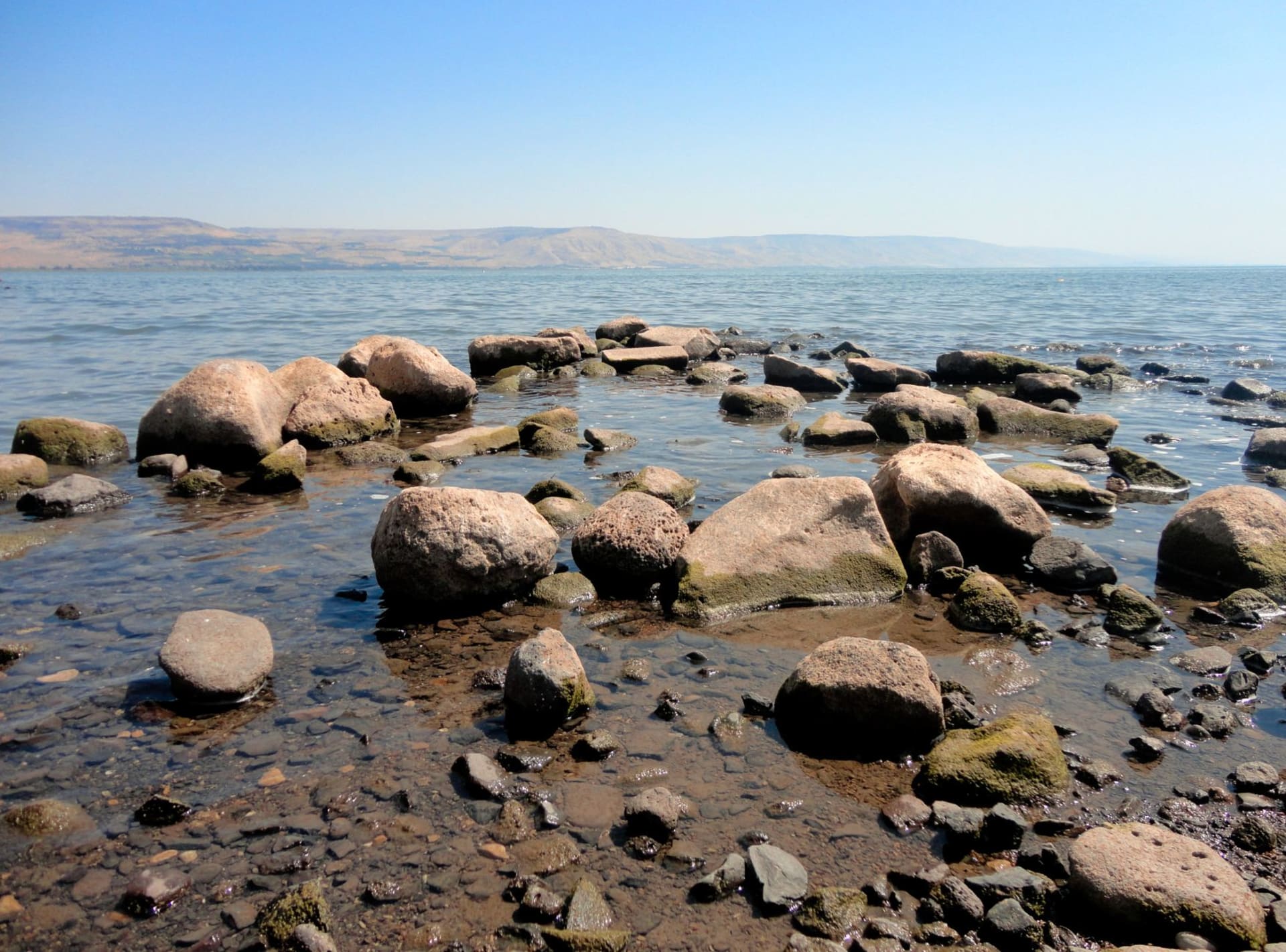
The site is best visited in the morning. The excavation is still active in certain sections — you may see archaeologists at work if you visit outside peak tourist season — and the guides who lead the tours have the particular excitement of people who are in the middle of something rather than describing something finished. The lake beyond the site is visible throughout, and the juxtaposition of very old stones and very immediate water and the boats still going out from Tiberias six kilometers south creates the kind of layered moment that Galilee keeps offering if you are paying attention.
When to go: Year-round, but avoid midday in summer. Morning visits are ideal. Check in advance whether the excavation archaeologists are active — the site is particularly interesting when work is underway. The shop and café run by the Legionaries of Christ who manage the site are open during visiting hours.