O Cebreiro
"At 1,300 metres and wrapped in cloud, O Cebreiro feels less like a destination than a threshold."
O Cebreiro sits at 1,300 metres on the border between Castile and Galicia, in a mountain pass that has been receiving pilgrims for over a thousand years, and in November it exists almost entirely inside a cloud. I drove up from the valley with visibility that dropped to about thirty metres and found the village in a state of profound quiet — the tourist cafés shuttered, the pilgrim hostel open with a single light on inside, and the ancient stone pallozas — the round thatched Celtic huts that predate the Roman period — standing in the fog with the absolute solidity of things that have survived far worse than a grey morning. The church bell rang the hour and the sound moved through the mist and then was absorbed by it.
The pallozas are the reason O Cebreiro matters beyond the Camino traffic. These round structures, with their low stone walls and steep conical thatched roofs, are direct descendants of the Iron Age dwellings that Celtic peoples across Atlantic Europe built from Ireland to Iberia. A handful have been preserved and now serve as a small ethnographic museum showing how mountain families lived here until the mid-twentieth century: communal living space with the cattle housed at one end, the fire in the middle, the sleeping area at the back, and no chimney — just the thatch to absorb the smoke. The logic of it, once explained, is completely sound. The smell of old thatch and cold stone is extraordinary.
The pre-Romanesque church of Santa María A Real is the spiritual heart of the village and one of the oldest churches on the Camino, built in the ninth century and containing a Romanesque statue of the Virgin that is among the most venerated in Galicia. On the morning I visited, a pilgrim woman from South Korea was sitting in a pew alone, and we both sat in the same silence without acknowledging each other in the way that churches sometimes permit. The chalice kept here — a simple ninth-century piece — is said to have inspired the legend of the Holy Grail as it travelled along the medieval pilgrimage network. I find that story either too convenient or too beautiful to verify.

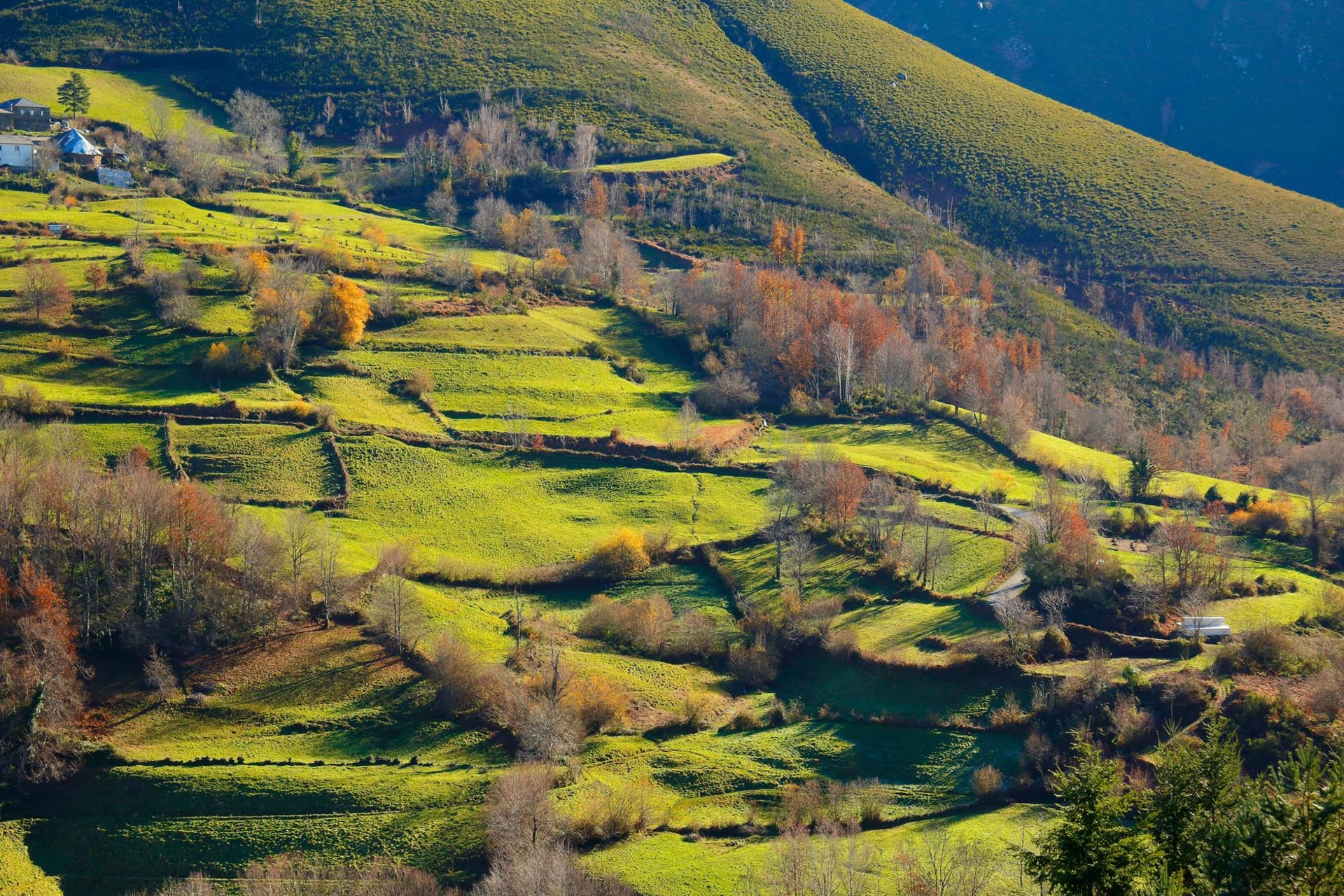
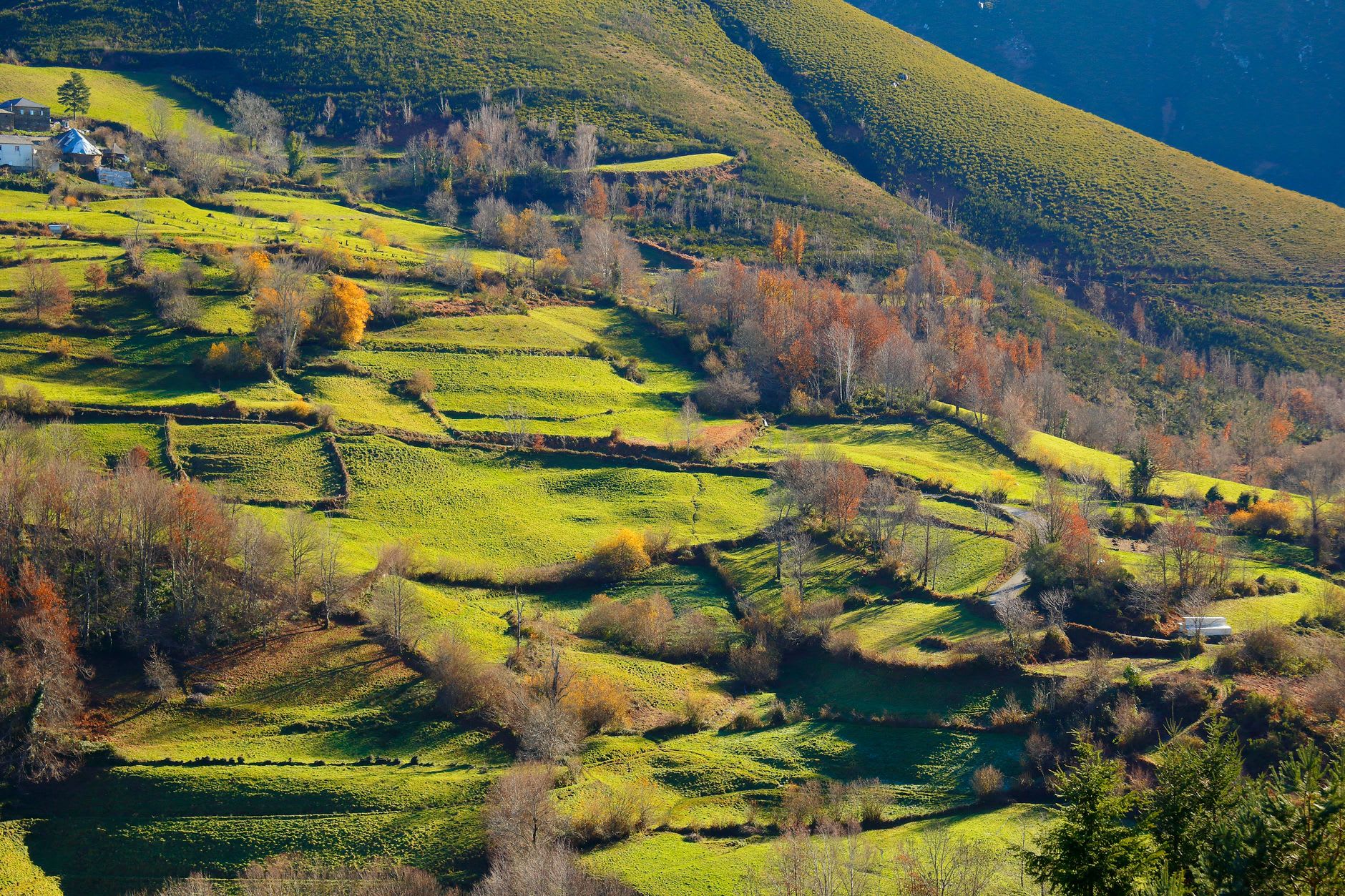
The descent from O Cebreiro into Galicia proper is one of the great road experiences in northwest Spain: a switchback down through chestnut forest, the fog lifting in patches to reveal deep green valleys, the first rías visible far below as you come out of the clouds. In autumn, when the chestnuts are dropping and the forest floor is rust and gold and the air carries a sweetness you don’t find at lower altitudes, the drive down takes considerably longer than the map suggests because you keep stopping to look.
When to go: May and June bring wildflowers at altitude and clear views on the good days. September and October have the most pilgrim activity and the chestnut harvest beginning. November through February is for people who want the village in its full, elemental state — fog, cold, the smell of wood smoke from the hostel kitchen, almost no other tourists. Avoid late July and August when pilgrim traffic peaks and the mountain road clogs.