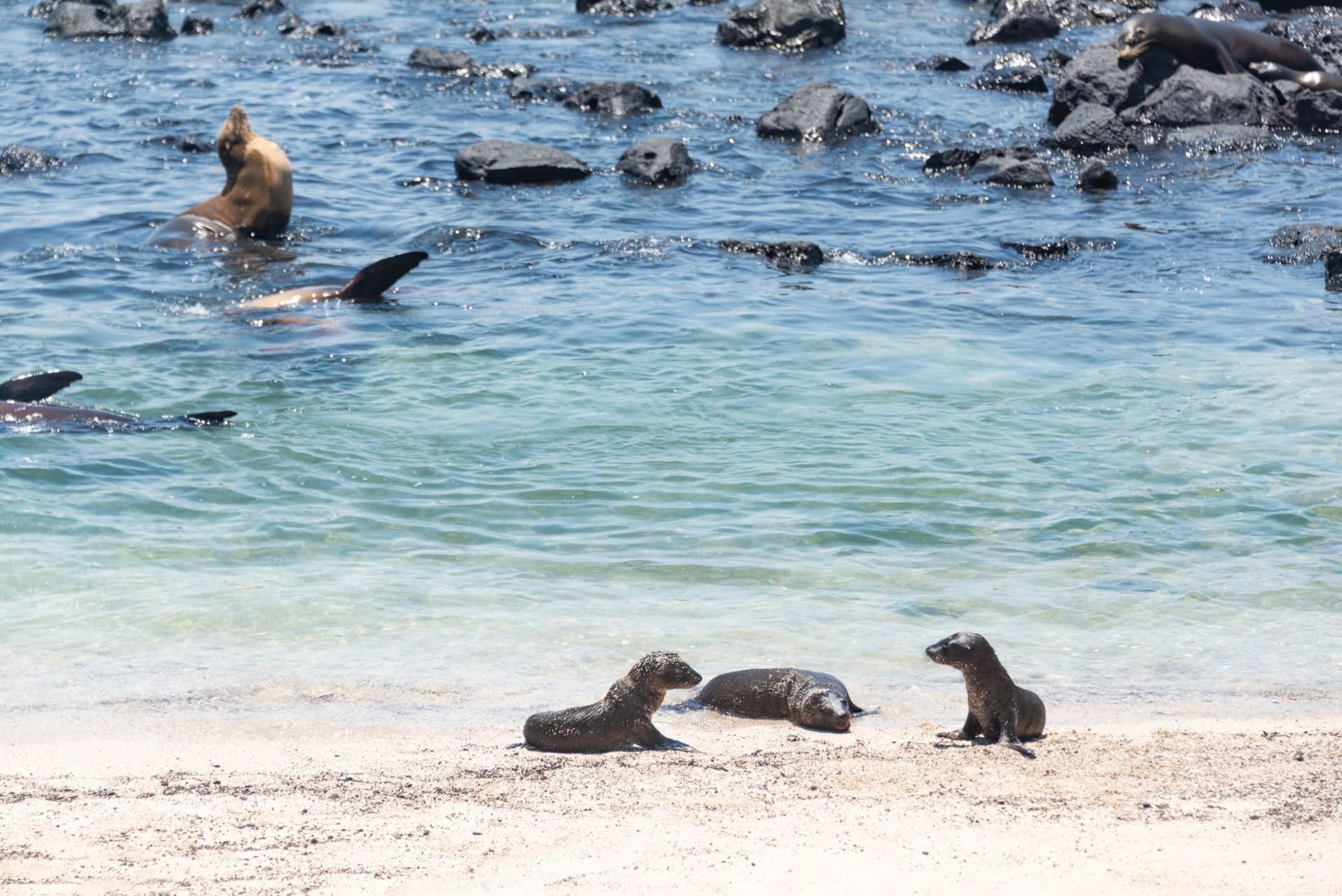
San Cristóbal Island
"Darwin stepped onto this island in 1835 and called it a shore fit only for reptiles. He was half right — the sea lions have since improved the neighbourhood considerably."
Puerto Baquerizo Moreno is the administrative capital of the Galápagos Province, which means it has a courthouse, a small hospital, government offices, and a police station — all of which it shares with a permanent sea lion colony that has claimed the main docking pier with the legal confidence of an entity whose paperwork would be very difficult to challenge. On a Tuesday morning I arrived from Santa Cruz and had to navigate around a sleeping juvenile male who had positioned himself across the gangway at the precise point of maximum inconvenience, and nobody on the dock treated this as anything other than the normal state of affairs. A sailor simply stepped over him. The sea lion did not open its eyes.
San Cristóbal has the distinction of being the easternmost island in the archipelago and the first to be reached by Charles Darwin aboard the Beagle in September 1835. He spent seven days here — not long enough, by his own account — and his notebooks from the visit are full of the bewilderment that would eventually organize itself into the theory of natural selection. There is a monument to Darwin near the port that no one seems to visit much, which feels appropriately Galápagian. The animals don’t perform for historical significance. They are simply here, doing what they do, as they have done since before there were islands beneath them.
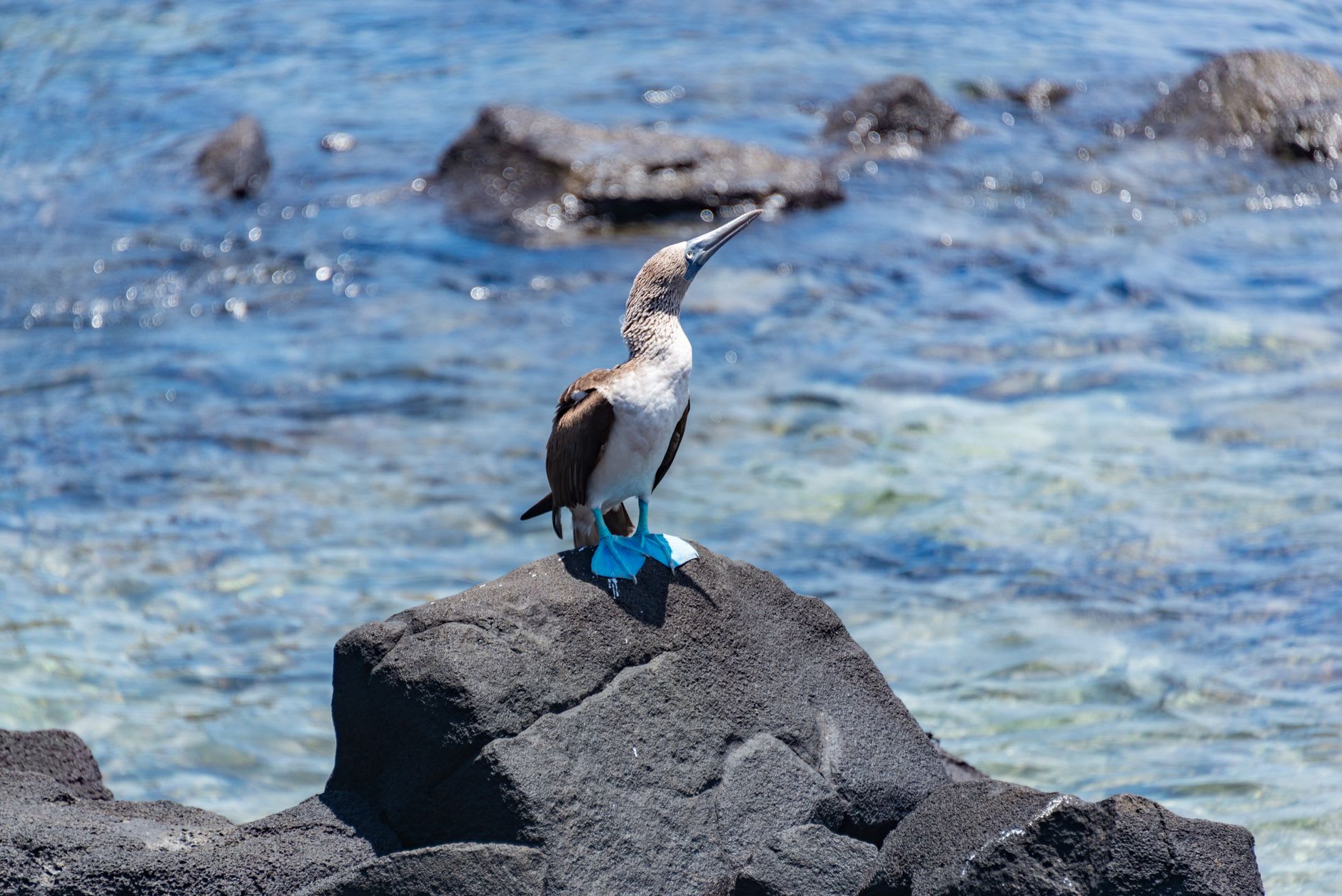
The highlands of San Cristóbal contain El Junco, the only permanent freshwater lake in the Galápagos. It sits in a volcanic crater at 700 metres, surrounded by fern forest that stays wet and cool even in the dry season, and the walk to the rim gives you views that open gradually over the eastern half of the island and, on clear days, west toward Santa Cruz. Frigate birds use the lake as a bathing spot — the only place in the archipelago they can wash the salt from their feathers — and you can stand at the rim and watch them spiral down, hit the surface, and pull themselves back into the air with a series of wing beats that look like they are working against physics and winning.
La Lobería, twenty minutes south of the port on a dirt road, is a different proposition. A beach of black basalt and coarse sand backed by low scrub, it holds a sea lion colony whose politics you can observe for hours without fully understanding. Bulls patrol sections of the beach with enormous seriousness. Females nurse pups in the shade of the rocks. Juveniles play and argue in the shallows with the specific chaos of creatures that have not yet figured out what their purpose is. A sally lightfoot crab, bright as a traffic cone, picks its way between sleeping bodies. Marine iguanas cluster at the rocks at the beach’s southern end, warming after their morning feeding dives.
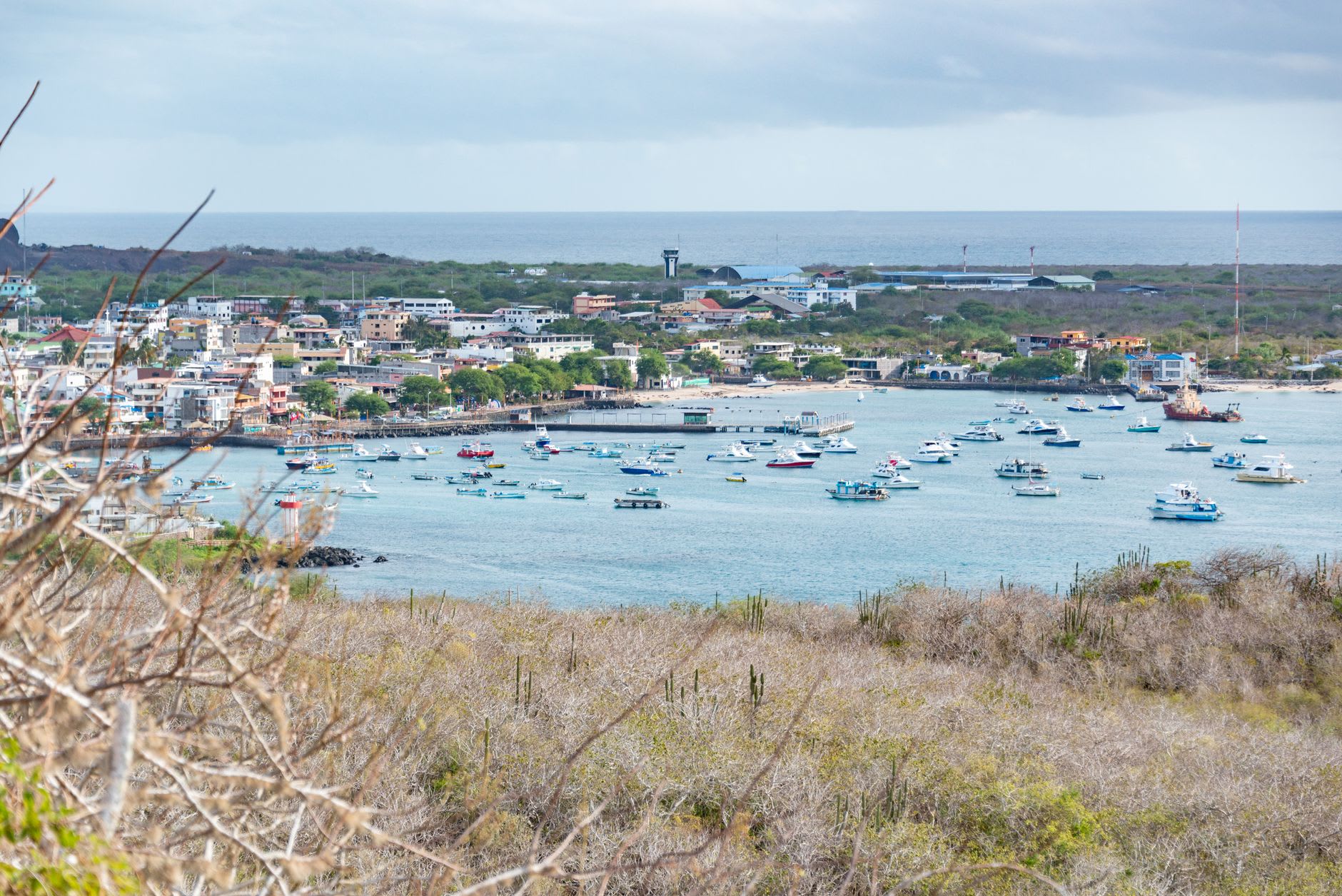
The town itself has a more lived-in quality than Puerto Ayora on Santa Cruz — fewer tour operators, more ordinary businesses, a covered market that sells produce from the island’s farms, and a pleasant malecón where people walk in the evenings while the sea lions perform unsolicited entertainment on the rocks below. There is a surf break on the north coast, at Playa Carola, that the local kids have been surfing since before anyone thought to tell them they should be getting in line for a liveaboard cruise instead.
When to go: San Cristóbal is an excellent base year-round. El Junco lake is accessible in all seasons but the fern forest is at its most atmospheric in the Garúa months of June through November. La Lobería sees the highest sea lion pup activity from October through March. The crossing from Santa Cruz or Isabela by ferry is rougher June through August but perfectly manageable.