Los Túneles
"A seahorse the size of my thumb held a piece of coral with one curled tail and looked at me with an eye like a tiny amber jewel."
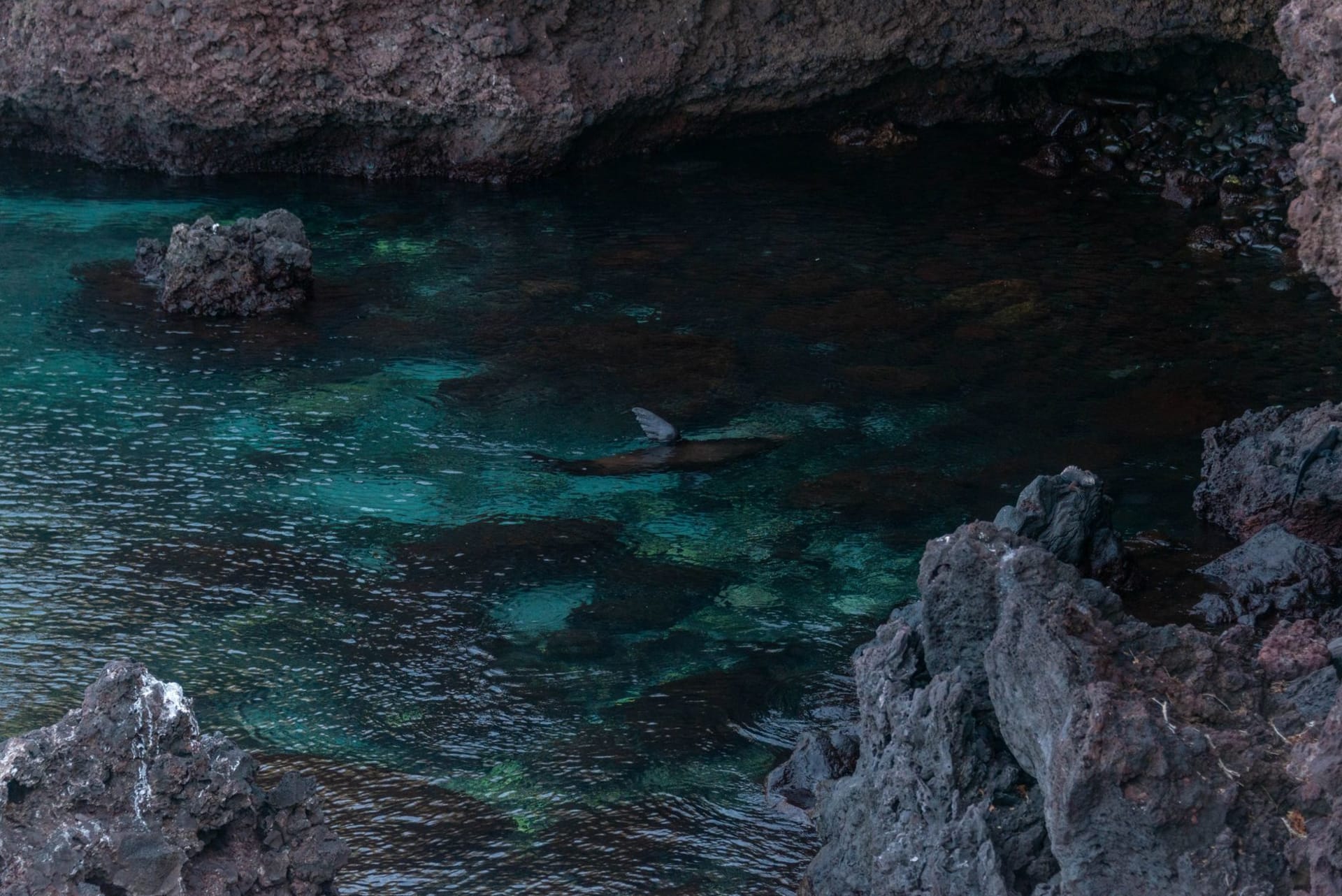
The boat from Puerto Villamil to Los Túneles takes about an hour through open water, and from a distance the formation looks like a pile of rubble — collapsed lava tubes and arches that have fallen into the sea and been reworked by the tide into something that barely makes architectural sense. Then you get close enough to understand what you are looking at. Lava flow fields that extended to the shoreline millions of years ago were undercut by the sea, their roofs collapsed, and what remained was a series of tidal pools, arched bridges, and open channels in black basalt that the ocean enters and exits with a sound like breathing.
The snorkel guide handed out equipment on the boat and offered a piece of advice I have taken with me since: go slow. Los Túneles rewards patience in a way that the more famous sites in the Galápagos do not entirely require. The marine iguana colonies and the sea lion torpedoes can be experienced at any pace and will find you eventually. Here, slowing down reveals layers of density in the water and on the rock that speed would miss entirely. The surface water is warm and clear — warmer than elsewhere in the Galápagos because the formation shelters it from the Humboldt Current — and the visibility can run to fifteen metres in the right conditions.
The seahorses are the thing people do not expect. In the sea fans and coral that colonise the vertical walls of the channels, yellow-bellied Pacific seahorses grip the branches with their curling tails and drift in the mild current, their eyes moving independently, miniature and perfect. I spent fifteen minutes with one that was perhaps five centimetres long, watching it be methodically eaten by the current and methodically resist it, gripping harder, drifting a few centimetres, gripping again. Whatever you imagine the Galápagos to be before you arrive — sharks, albatrosses, tortoises — it is unlikely to include this level of intricate stillness.
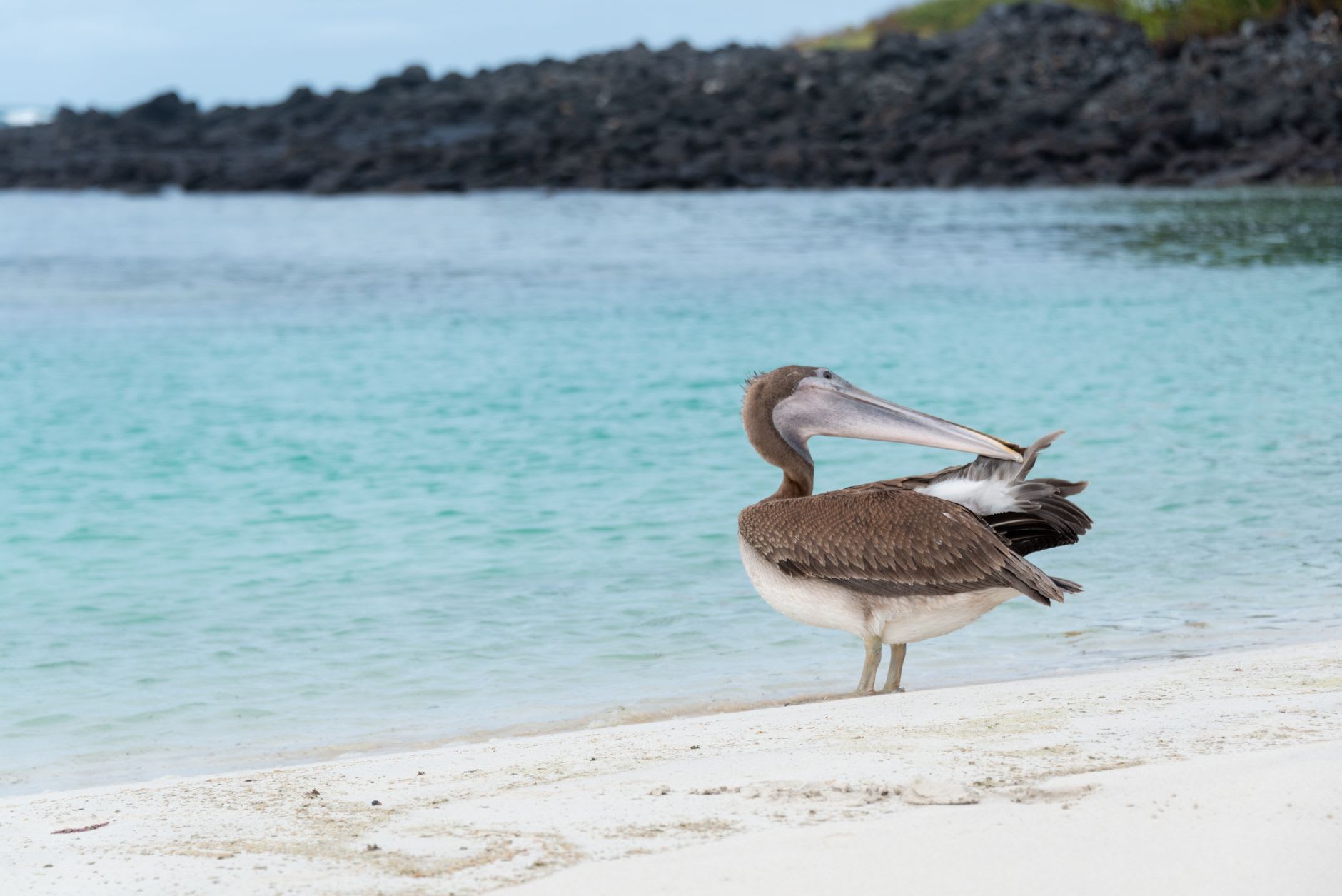
The manta rays arrive in the late morning, their wingspan sometimes reaching three metres, banking through the open channels with an unhurried elegance that suggests they are aware of their own improbability. White-tipped reef sharks rest on the sandy floor of the inner pools, sometimes in stacks of three or four, which is a sentence that sounds impossible until you see it. Blue-footed boobies nest on the arches above — landing, launching, calling to each other with their characteristic honk — and the guano-streaked lava beneath their nests is the most inhabited-feeling stretch of rock in the archipelago.
The whale shark sightings here are not guaranteed — nothing in the natural world is — but the channels off Los Túneles are among the more reliable spots in the Galápagos for encountering them outside the Darwin and Wolf Banks aggregations that require live-aboard access. The sharks cruise the outer channel at the edge of the formation, filtering the plankton-rich water, and if one appears you will see it from above — a shadow the length of a school bus, moving without apparent effort, entirely indifferent to your presence in a way that feels like a gift.
When to go: Los Túneles is best visited year-round but the manta ray presence peaks from December through May when the warmer currents bring plankton blooms that concentrate their feeding. Whale shark sightings are most likely from June through November. The formation is accessible by a short boat ride from Puerto Villamil and most day tours from that port include it as the primary destination.