Kicker Rock
"The hammerheads moved through the blue below me in slow arcs, indifferent and ancient, while I tried to remember how to breathe."
The boat from Puerto Baquerizo Moreno takes about ninety minutes to reach Kicker Rock, and you spend most of that time watching the formation grow on the horizon from something that looks like a smudge to something that looks like a cathedral. León Dormido, the Sleeping Lion, is what locals call it — two basalt columns rising 150 metres straight out of the Pacific, split down the middle by a narrow channel perhaps fifteen metres wide, with walls that plunge vertically into water so clear you can see the bottom sixty feet down. I sat on the bow of the panga and stared at it as we approached and felt a very specific kind of dread that I eventually recognised as awe.
The channel drift is why you come. You slip into the water at one end and let the current carry you slowly through the gap while the walls close in on either side, barnacled and algae-streaked, and the fish traffic intensifies to something extraordinary. Schools of surgeonfish in their thousands move through the blue in formations that shift and ripple like smoke. Spotted eagle rays pass below, their wing tips barely moving. And then — if you are paying attention to what is happening in the water column beneath you rather than at the walls — the hammerhead sharks appear.

I counted eleven on my first pass through the channel. They moved in slow, deliberate circuits perhaps twenty metres below the surface, their strange wide heads giving them a silhouette unlike anything else in the ocean. There is something about seeing a large predator in its own element that recalibrates the nervous system in ways that are difficult to describe accurately. You feel simultaneously very small and very alert and very grateful to be there. The sharks are not interested in you. They are not dramatic about your presence. They simply continue doing what sharks have done in these waters for longer than the islands have existed.
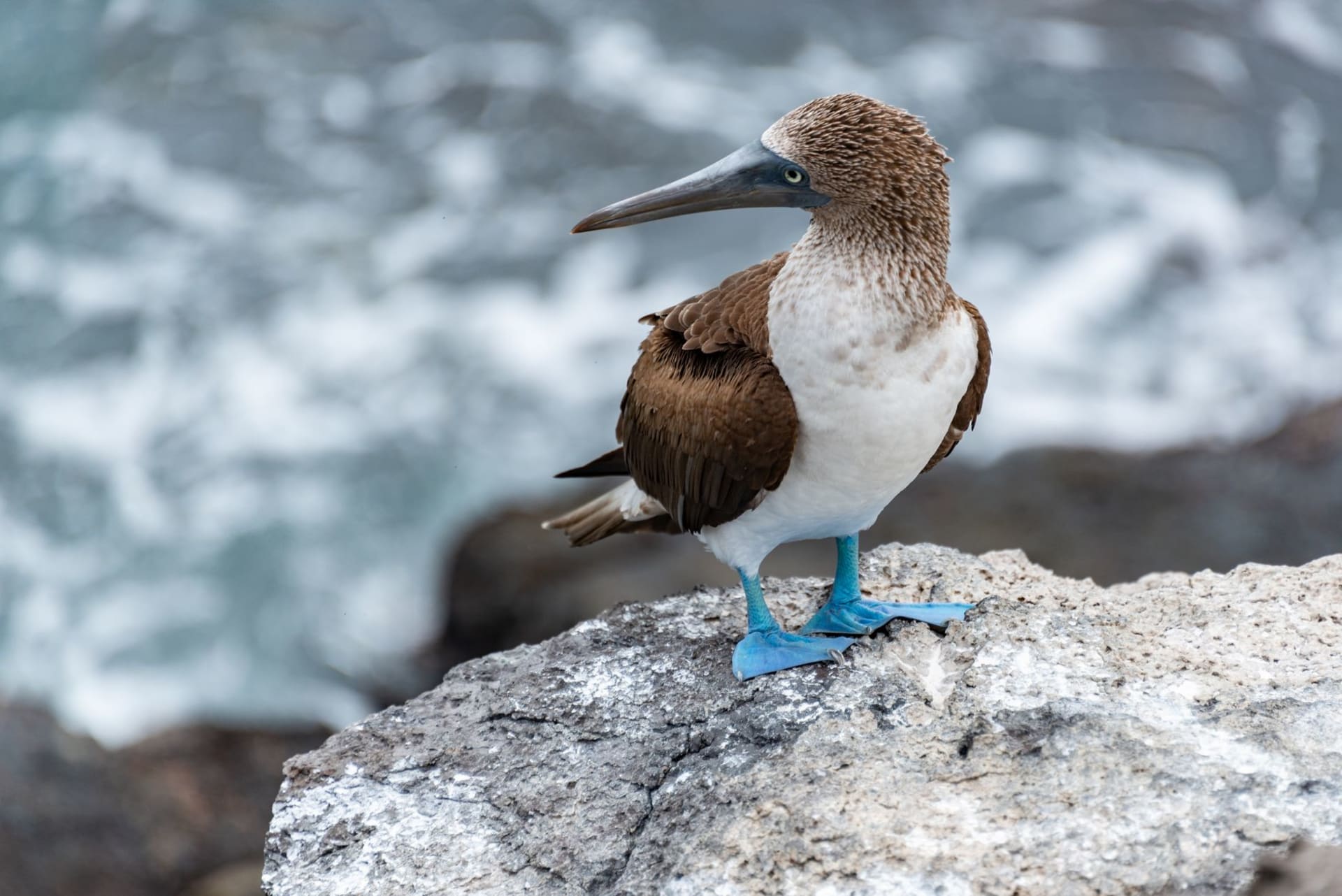
Above water, Kicker Rock has its own spectacle. Nazca boobies nest on the ledges high on the columns, their white against the black basalt stark and geometric. Frigate birds hang in the updrafts, not flapping, just watching. The light at midday falls in hard angles between the two towers, turning the channel into something that operates on different physics from the surrounding ocean — darker, cooler, with a current you feel as a pressure rather than a direction. By late afternoon the columns glow a deep amber and the shadows between them turn purple.

The snorkeling surface was extraordinary, but the scuba divers who descended to the base reported something else entirely — cleaning stations where hammerheads queue patiently while small fish work their gills and underside, the kind of cooperative arrangement that makes the whole concept of a food chain feel reductive. Even snorkeling I saw more wildlife in ninety minutes than I had managed in two weeks of reef diving elsewhere. The Galápagos has a way of making your previous reference points feel provincial.
When to go: June through November, during the Garúa season, brings the strongest upwelling currents that concentrate marine life around Kicker Rock. Hammerhead sightings are most reliable then, though visibility can be affected by plankton bloom. January through May offers warmer, clearer water with calmer conditions — better for nervous snorkelers, though the sharks may be less reliably present. Day trips from San Cristóbal run year-round.