Fernandina Island
"There is no trail here. You step where the iguanas aren't, which is to say you step very carefully and you don't go in a straight line."
Fernandina sits at the western edge of the Galápagos, the youngest of the main islands by geological reckoning and still actively volcanic — its shield volcano last erupted in 2020. To reach it requires a longer boat crossing from Isabela, and most visitors arrive on liveaboard expeditions that route west specifically for this. The commitment filters the experience in a way that feels earned. By the time you step onto Punta Espinoza — the only visitor site on the entire island — you have the sense of having arrived somewhere that has not adjusted itself for your convenience and does not intend to begin.
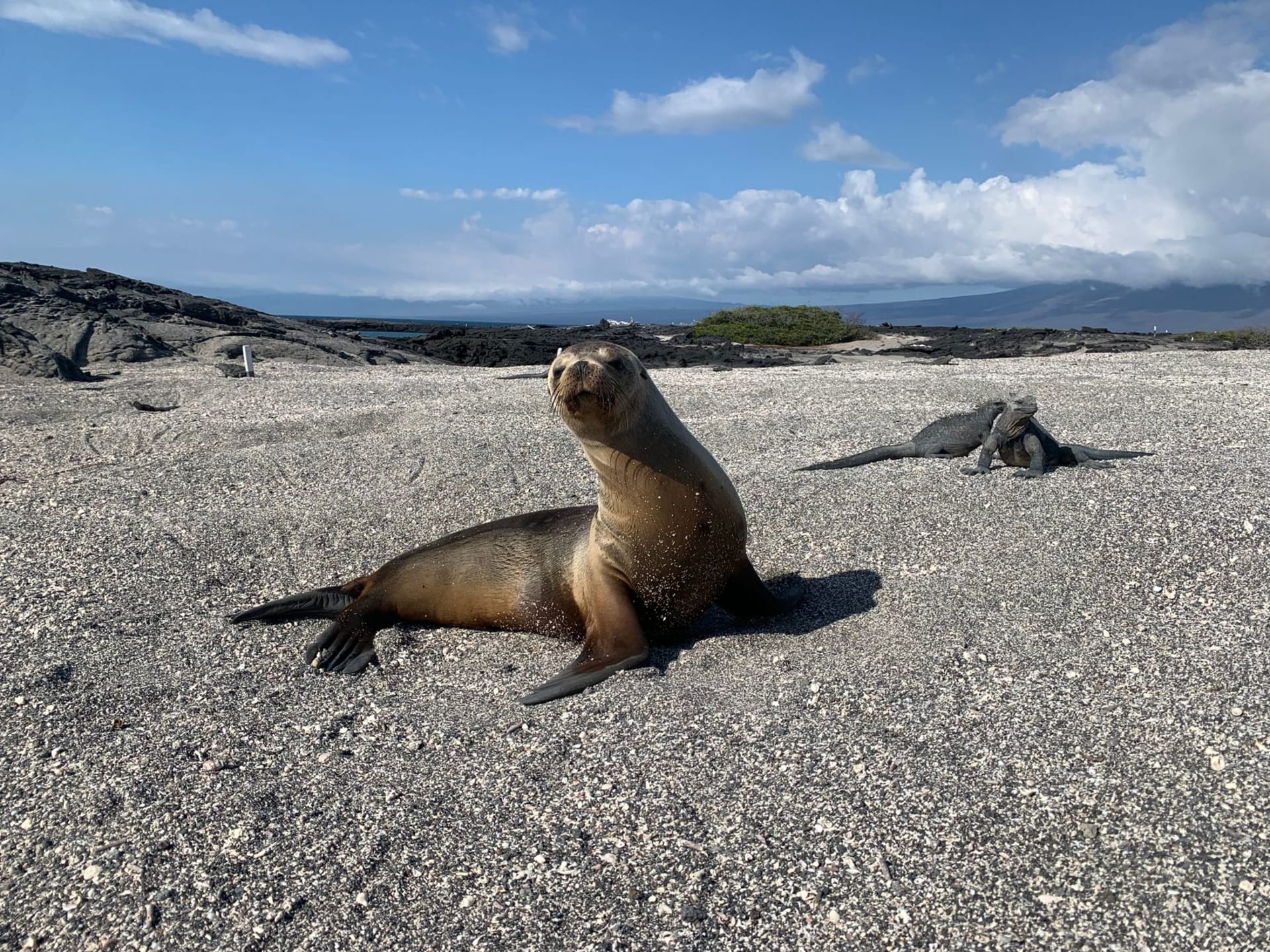
The marine iguana colony at Punta Espinoza is the largest concentration of marine iguanas in the Galápagos, which already has the largest concentration in the world. They are not merely present — they are abundant in a way that challenges your visual processing. Every surface of the black lava point is covered in them, sometimes three and four deep, a mass of spines and prehistoric profiles that shifts and rustles when you move too close. They smell like the ocean floor — salt, seaweed, and something mineral and old — and the sound of several thousand iguanas adjusting their position simultaneously is a dry, papery noise that I found deeply unsettling for reasons I couldn’t explain and then deeply fascinating for exactly the same reasons.
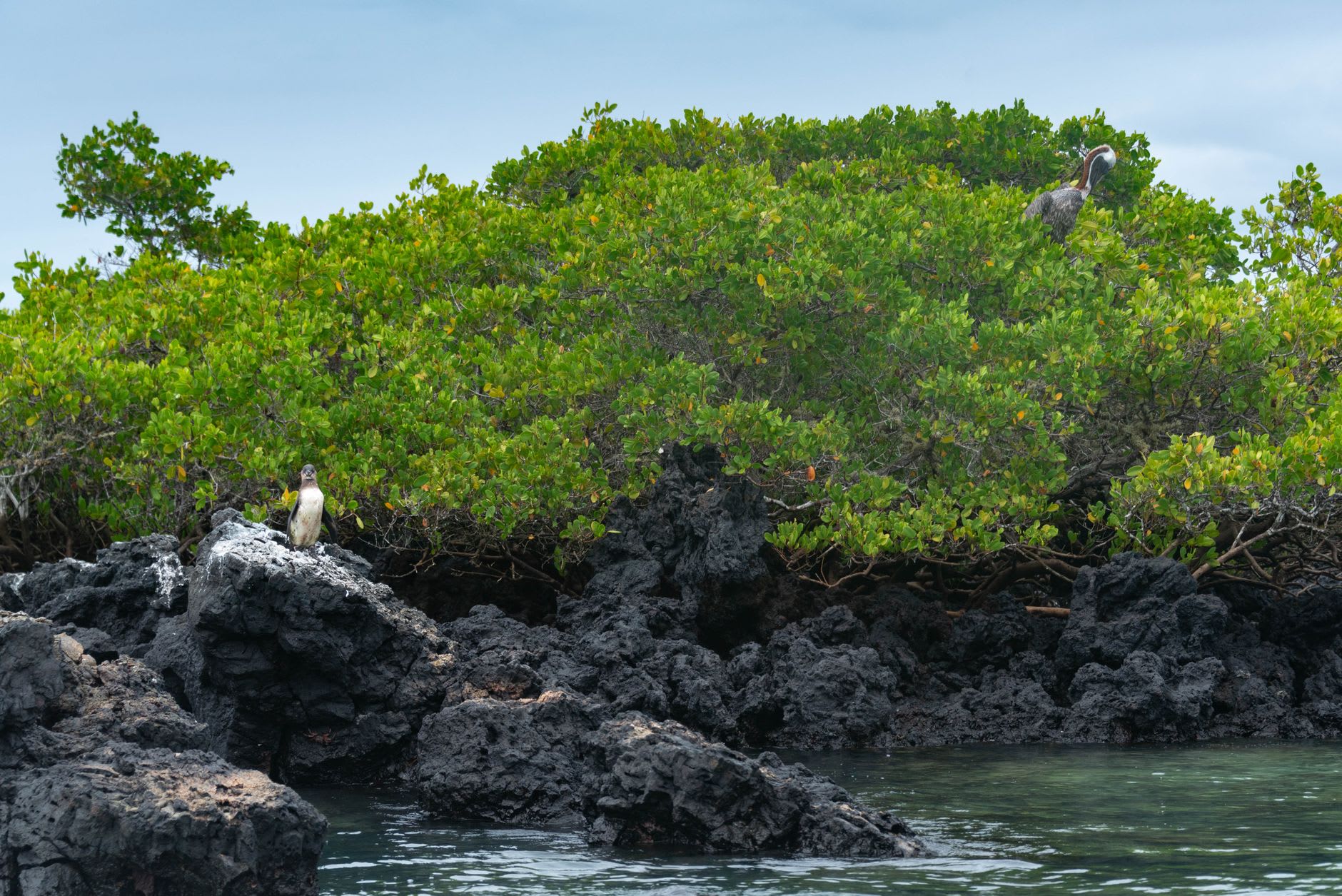
The flightless cormorants of Fernandina are found nowhere else on earth. They have been on this island so long, with no land predators to run from, that their wings have atrophied to small, vestigial fans — fleshy and useless for flight but used for display and balance. They stand on the rocks at the water’s edge and dry their wings in a posture that looks like a slow, deliberate unfurling, their turquoise eyes vivid against the black lava, and they seem entirely unbothered by the concept of having given up flight in exchange for being the best underwater hunter on this particular stretch of coast. Watching them fish — their wings pressed against their bodies, their movement through the water muscular and precise — the trade-off stops looking like a loss.
Galapagos penguins also nest here, sharing the rocks with the cormorants in an arrangement that requires some navigational diplomacy between species. At Punta Espinoza on a cool Garúa morning, with the Cromwell Current pushing cold, nutrient-rich water up from the west, you can watch penguins torpedo through a school of small fish while a cormorant works the rocks above them and a sea lion loops in from offshore. It is the kind of scene that reminds you the word ecosystem is not a metaphor — it is a description of something actually happening in physical space, right now, in front of your mask.
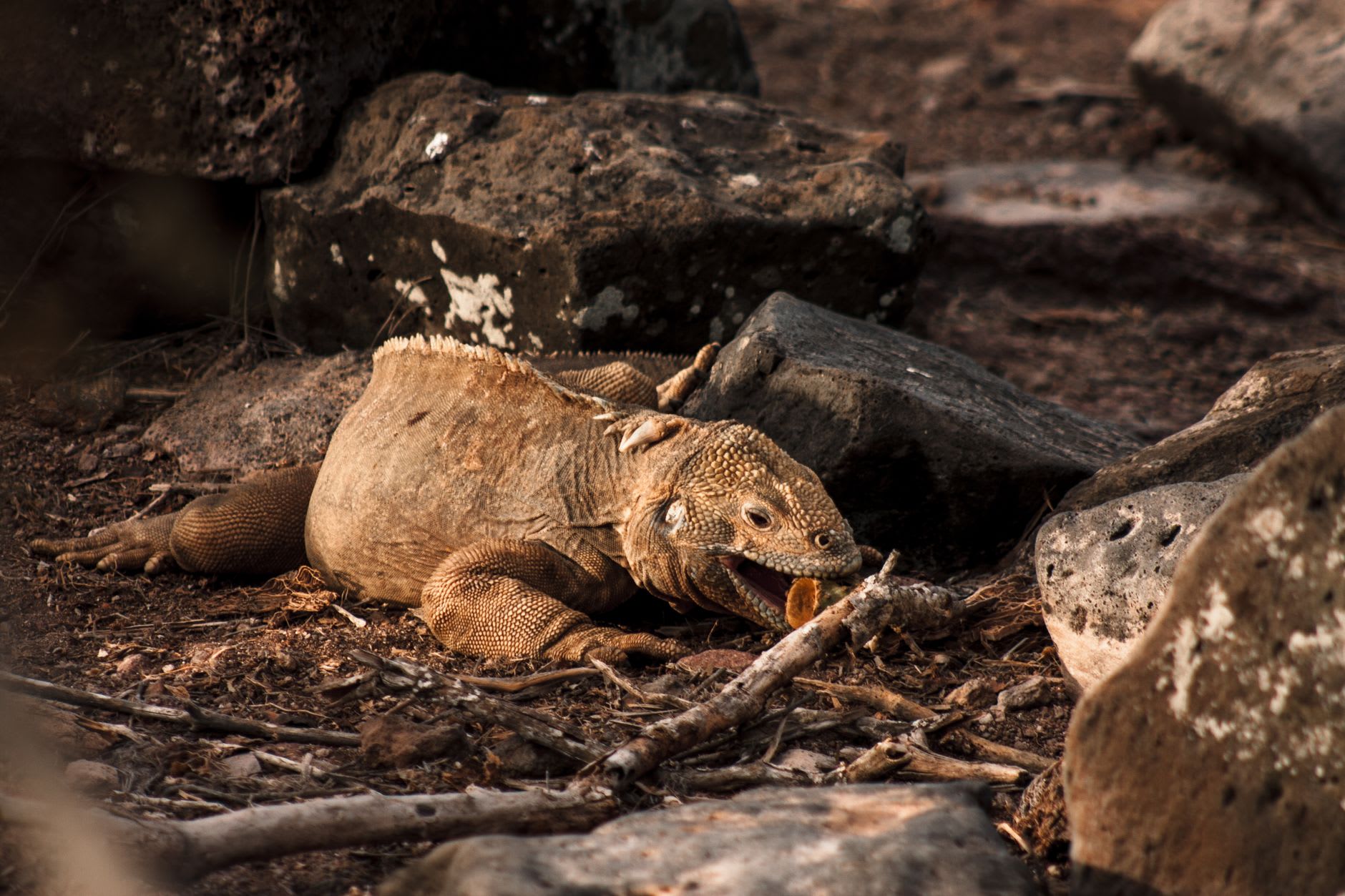
Because Fernandina has no introduced species — no rats, no goats, no cats, none of the animals that have devastated wildlife on the inhabited islands — it operates as a baseline for what the Galápagos looked like before humans arrived. Walking Punta Espinoza, you feel this as a subtle pressure, a sense that the island is not performing its wildness for you, it simply is wild, without mediation or management, in the way that most wild places on earth have not been for centuries.
When to go: Fernandina is only accessible by liveaboard cruise or occasional chartered day boats, and only at Punta Espinoza. The cold season of June through November brings the strongest Cromwell Current upwelling, concentrating fish life and making penguin and cormorant hunting activity most visible. Marine iguanas are present in enormous numbers year-round. Any time you can get here, come.