Española Island
"Two albatrosses stood facing each other and began clacking their beaks together like they were settling an argument from a previous life."
Española sits at the southernmost edge of the Galápagos archipelago, two hours by boat from most departure points, and it has the atmosphere of a place that exists entirely on its own terms. There are no human settlements, no research stations, no infrastructure beyond the two designated visitor sites — Punta Suárez and Gardner Bay. What there is, from roughly April through December, is the entire world population of waved albatrosses. Every single one of them. Around twelve thousand breeding pairs, all here on this one island, and they fill the cliff tops with a kind of sustained theatricality that makes the word magnificent feel inadequate.
I arrived at Punta Suárez in the morning fog, the panga bouncing through low swells, and within thirty seconds of stepping onto the landing rocks I was already navigating around albatrosses. The trail is narrow and the birds nest right on its edges, some within inches of your boots, regarding you with the mild contempt of someone interrupted during important business. Their eyes are an unusual golden brown, their beaks hooked and formidable, their body language entirely unimpressed. You learn to make yourself small and to move sideways when necessary. The birds do not move. You are the one doing the adjusting.
The courtship display is what people come for, and it delivers with a kind of cosmic absurdism that I was not prepared for. Two birds face each other and begin: beak-clacking in rapid succession, heads thrown back and weaving, wings spread then folded, the whole sequence accompanied by sounds — honks, whistle-like calls, the deep rhythmic clicking of ivory beaks — that carry across the cliff in a chorus. It goes on for minutes at a time and then stops abruptly, the two birds standing very close together with what I can only describe as mutual contentment. Then it starts again. Darwin came here and reportedly spent days at Punta Suárez. I began to understand why.
At the western tip of the trail, the blowhole. A crack in the lava shelf at sea level channels incoming swells into a vertical shaft, and when a wave hits it right — which happens every few minutes — a column of white water fires forty metres into the air with a sound like a cannon shot. The spray catches the light and rainbows appear and disappear in seconds. Marine iguanas cluster nearby on the hot black lava, their red-and-green colouring more vivid on Española than anywhere else in the archipelago, the males during breeding season looking almost painted. Nazca boobies nest in the open on bare rock, eggs visible between the parents’ feet.
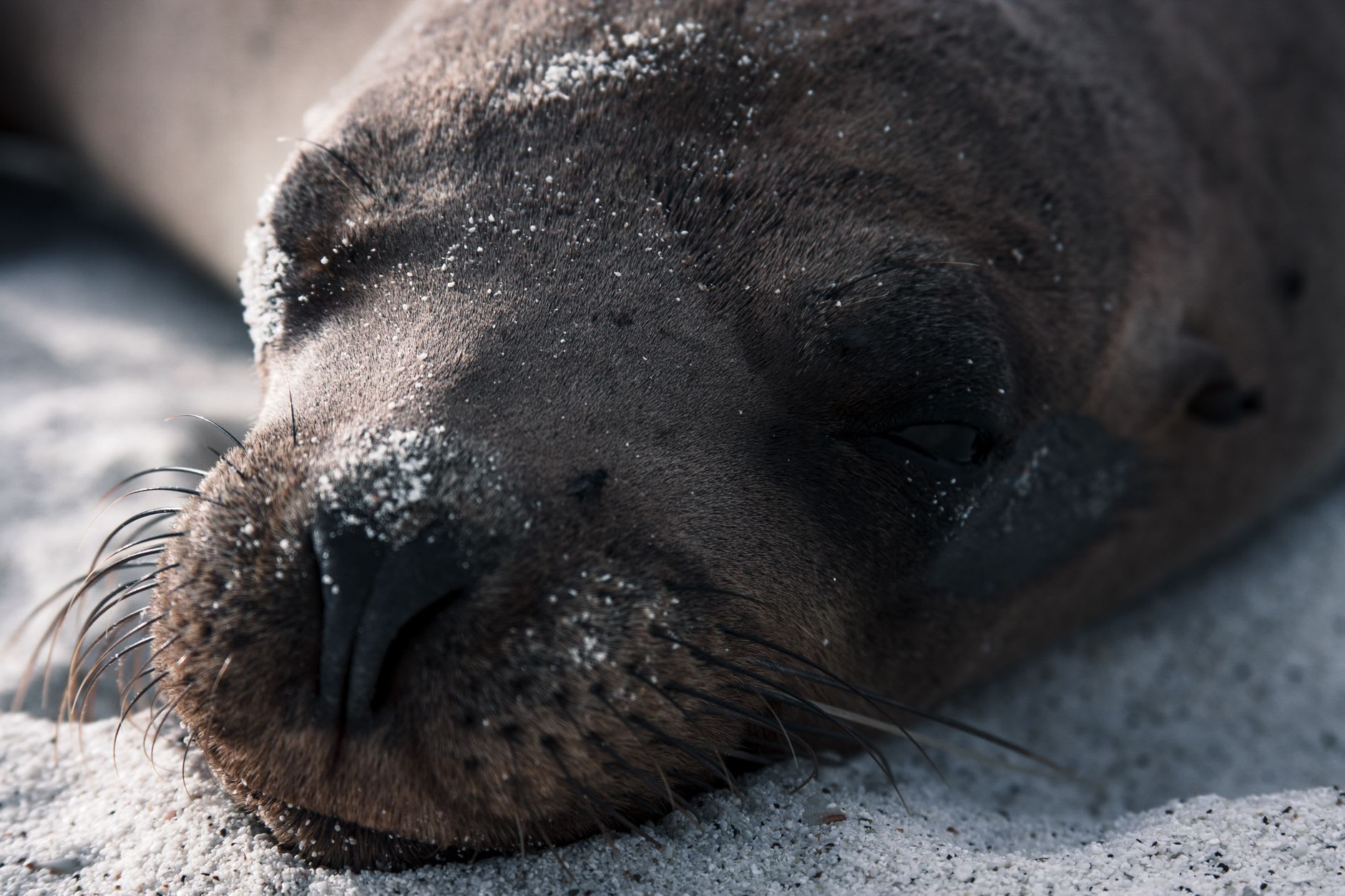
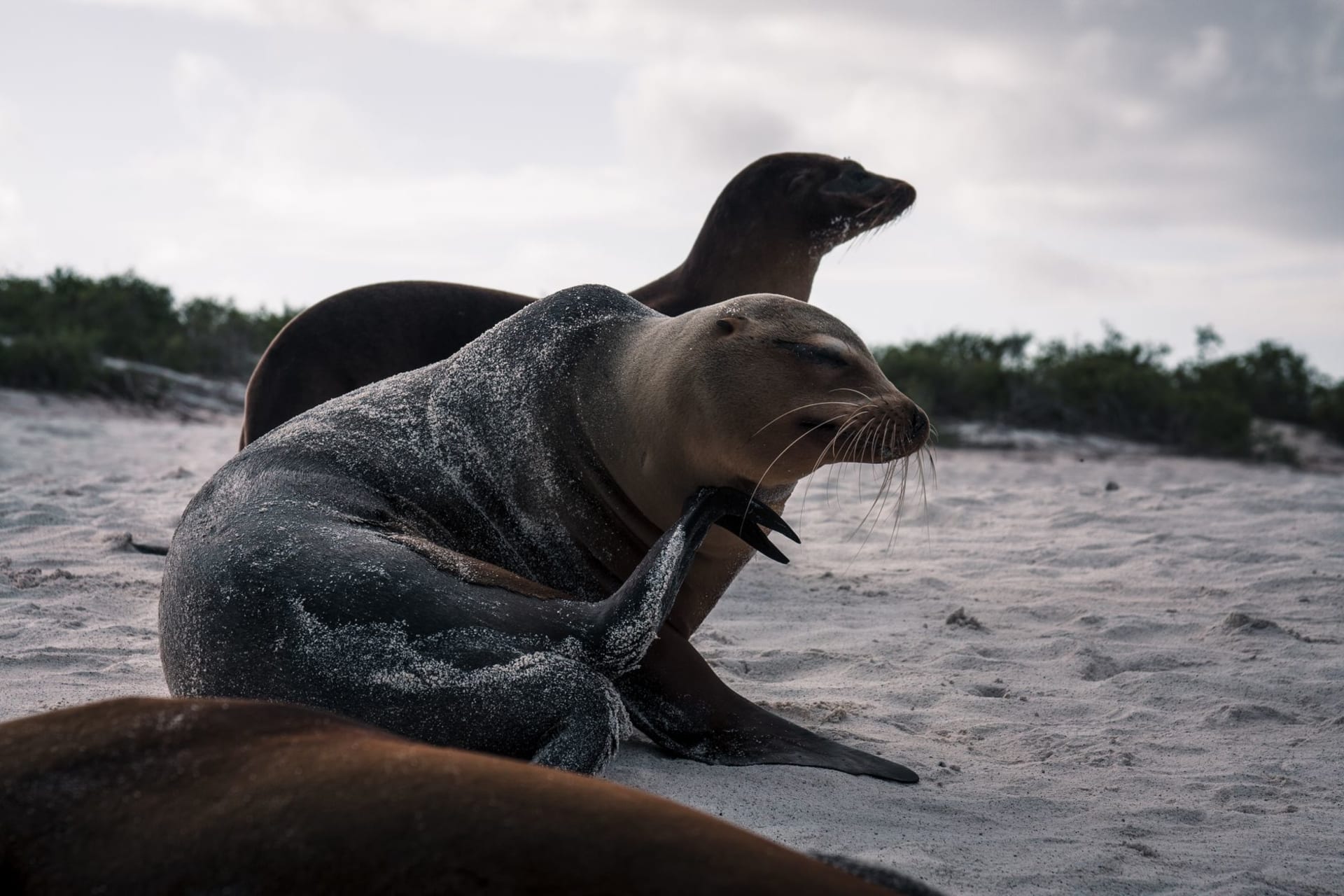
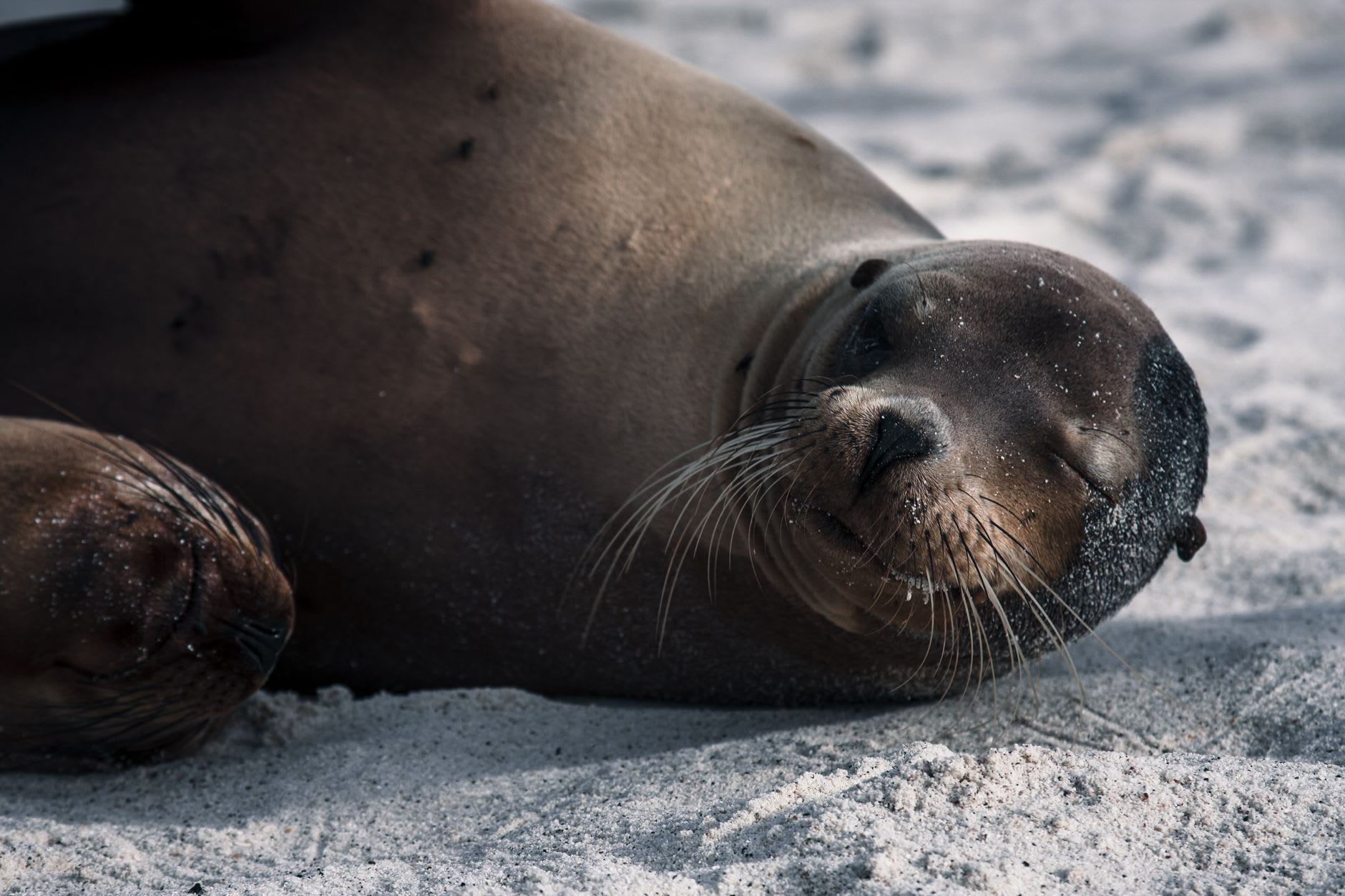
Gardner Bay, on the eastern side, is a different kind of place entirely — a long beach of white sand where a permanent colony of sea lions conducts its perpetual dramas. Pups chased each other through the shallows while a bull moved along the beach marking territory with the lumbering authority of a creature that has never once doubted its own importance. The snorkeling just offshore is remarkable: white-tipped reef sharks rest on the sand in clusters, sea turtles graze on underwater grass, and the sea lions shoot past you like they are testing the physics of what a body can do in water.
When to go: April through December is albatross season — the birds arrive in April to begin courtship, chicks hatch in October and November, and the colony departs by January. Outside this window the island still offers excellent wildlife but without the spectacle. Rough seas in the crossing from San Cristóbal or Santa Cruz can make the journey uncomfortable from June through August, but the wildlife rewards on Española in that period are unmatched.