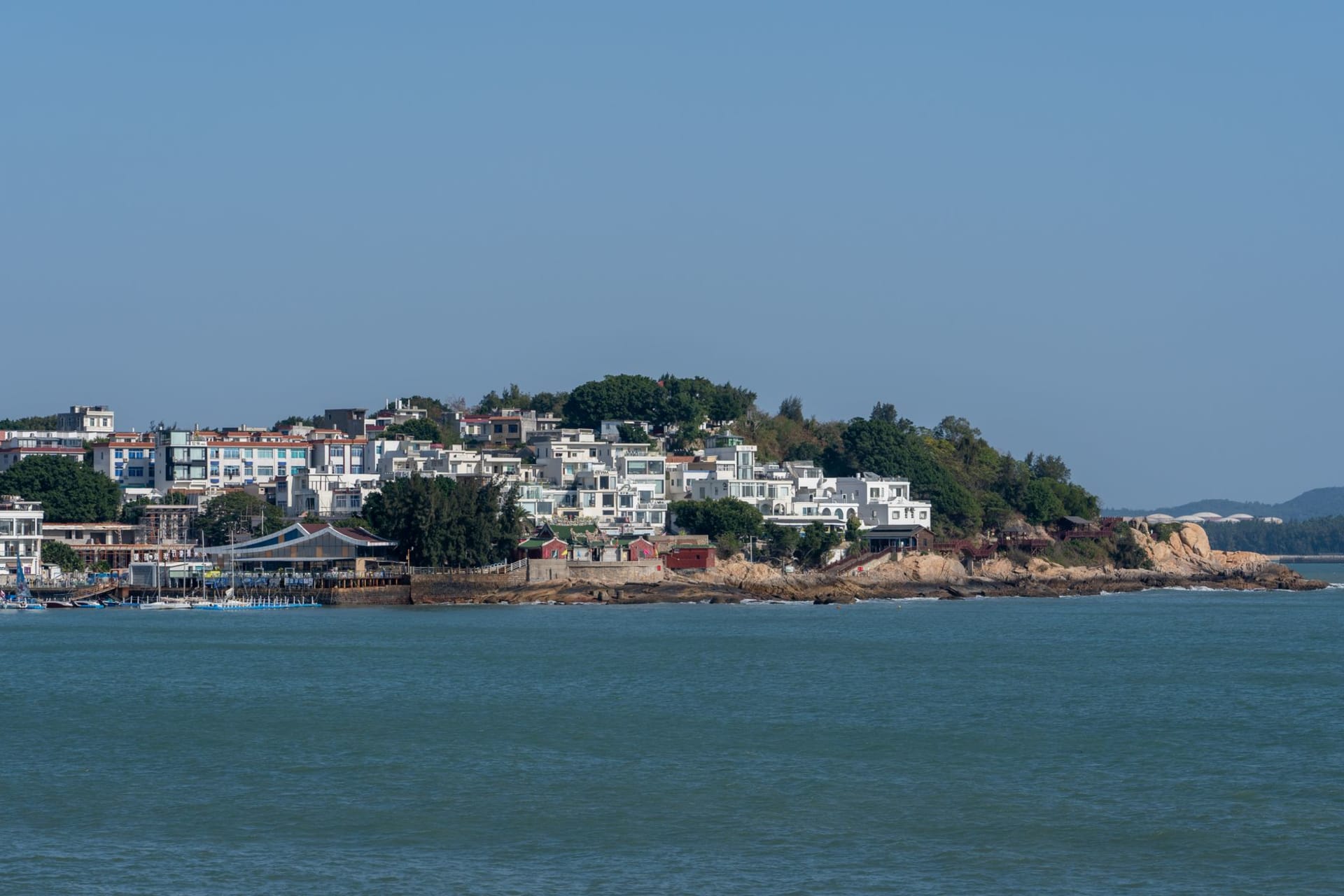
Zhangzhou
"The city nobody puts on their Fujian list is the one with the best noodles I ate the entire trip."
Zhangzhou entered my Fujian trip as a logistical waypoint — a place to sleep between the tulou and the coast, the kind of city you pass through and don’t remember. I gave it two nights because my bus connections forced it, and then spent three months after returning to Mexico trying to reconstruct the name of the noodle shop where I ate on the second evening. This is how Zhangzhou works on you: the city doesn’t announce its qualities loudly, and you find yourself having absorbed them only from a distance.
The old town around Ximen Street and the canal district operates at a pace and scale that feels genuinely different from the tourist-managed old quarters in Xiamen or Quanzhou. The lanes are narrower and messier, the shop fronts less coordinated, the population older and less interested in being photographed. What the streets do have, in quantities that seemed almost excessive even by Fujian standards, are flowers. Zhangzhou calls itself the Flower City — it exports cut flowers and potted plants to the rest of China in volumes that require a functioning regional agricultural infrastructure — and in the areas near the wholesale market and along the main avenue approaches to the old town, the flowers overflow from the shops onto the pavement in arrangements that have more to do with commerce than with aesthetics and that are, perhaps for this reason, more beautiful than if someone had designed them.
The Minnan culture here is slightly different in inflection from what you find in Xiamen — older, less filtered through Xiamen’s cosmopolitan overlay, closer to what I understand the Taiwanese Tainan dialect atmosphere to be like, though I haven’t been to Tainan to check. The satay tradition in Zhangzhou is particularly strong. Sha cha mian — noodles served with a sauce built from dried shrimp, dried fish, coconut, and a roster of spices that trace their lineage back to Southeast Asian traders via Fujian’s maritime history — is available at stalls that open before six in the morning and sell out by nine. I found one particular stall behind the main vegetable market whose sauce had a fermented depth and a sweetness that I could not account for rationally, only empirically, which is the only way to account for the best versions of traditional foods.
The Nanchang Road area, where the old Ming and Qing dynasty street pattern survives as a partially pedestrianized strip, contains enough material for an entire afternoon of undirected walking. Ancestral halls with carved roof beams have become shops without bothering to remove the original ceiling decoration. A Taoist temple functions simultaneously as a neighbourhood community centre, with elderly residents using the courtyard for morning exercise while the ritual space behind them operates on its own devotional schedule. The canal that runs along the old town’s southern edge reflects the buildings badly because it’s not particularly clean, but it reflects them, and the reflections in the green water have a quality that a cleaner canal might not.
The night market near the sports stadium runs until midnight and encompasses a range of Minnan street food that I found more interesting than any of the curated food streets I’d visited in Xiamen. Oyster vermicelli cooked to order in a clay pot, sweetened with bone broth. Taro paste wrapped in a thin pastry and fried, served in a paper bag too hot to hold properly. Fried rice with dried radish that a stall owner insisted on serving with a separate bowl of soup she hadn’t charged for, explaining through a complete pantomime that the rice was salty and the soup would balance it. She was right. She was clearly always right.
When to go: October through April for comfortable temperatures. The spring flower festival (usually March) brings the wholesale flower district to its most spectacular, with orchid and narcissus displays throughout the city. Zhangzhou works as a base for day trips to both the Nanjing tulou clusters and the Dongshan Island coast — its location between those two attractions makes it more strategically useful than it tends to get credit for.