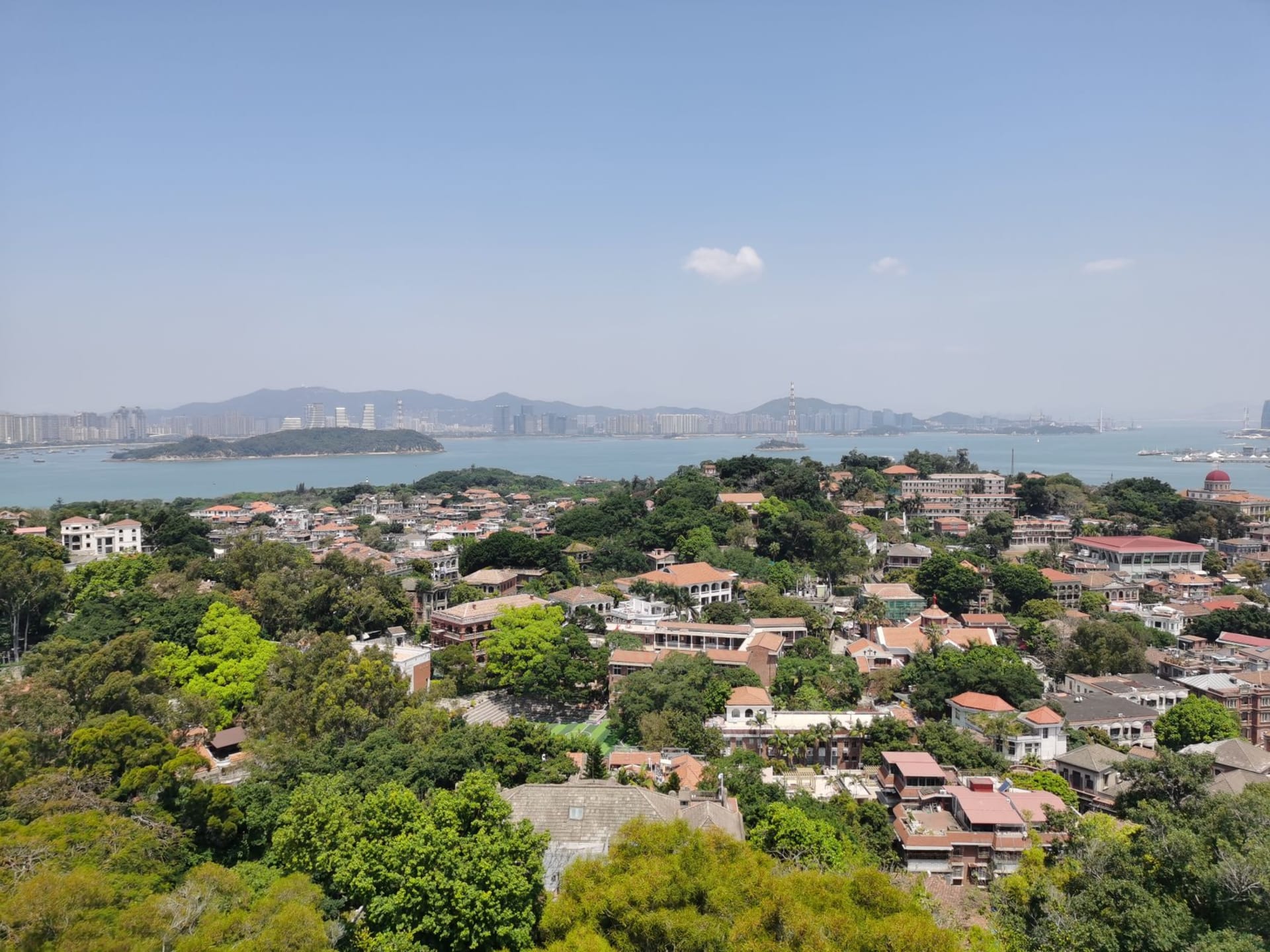
Pingtan Island
"The wind here doesn't visit — it lives here. The whole island has learned to lean into it."
I arrived on Pingtan Island in November and the wind greeted me at the ferry terminal with the kind of handshake that reminds you a handshake is an assertion of force. The Haitan Strait, the narrow channel between Pingtan and the Fujian mainland, is one of the windiest maritime passages in the world at this latitude, and the island — about two hundred square kilometres of granite rising barely above sea level — receives the full uninterrupted force of whatever the strait is doing. The people here have built accordingly. Houses are low and heavy and face away from the prevailing wind. Stone walls of stacked granite, called windbreak walls, subdivide the fields into sheltered rectangles. Even the trees, where they exist, lean.
The beaches are the discovery. Tannan Bay on the island’s southeastern shore runs for several kilometres of pale sand so fine it squeaks underfoot, backed by dunes covered in sea grass and fronted by water that shifts through shades of green and turquoise and deep blue depending on depth and angle and the particular mood of the sky. The granite that forms the island’s bones surfaces at the beach’s edges as formations that the wind and salt water have sculpted into shapes that look deliberate — a mushroom rock, a set of stacked slabs that resemble a natural staircase, a curved boulder that has been hollowed from beneath into something like a shallow cave. I spent an afternoon walking the length of the beach and back and found different things in each direction.
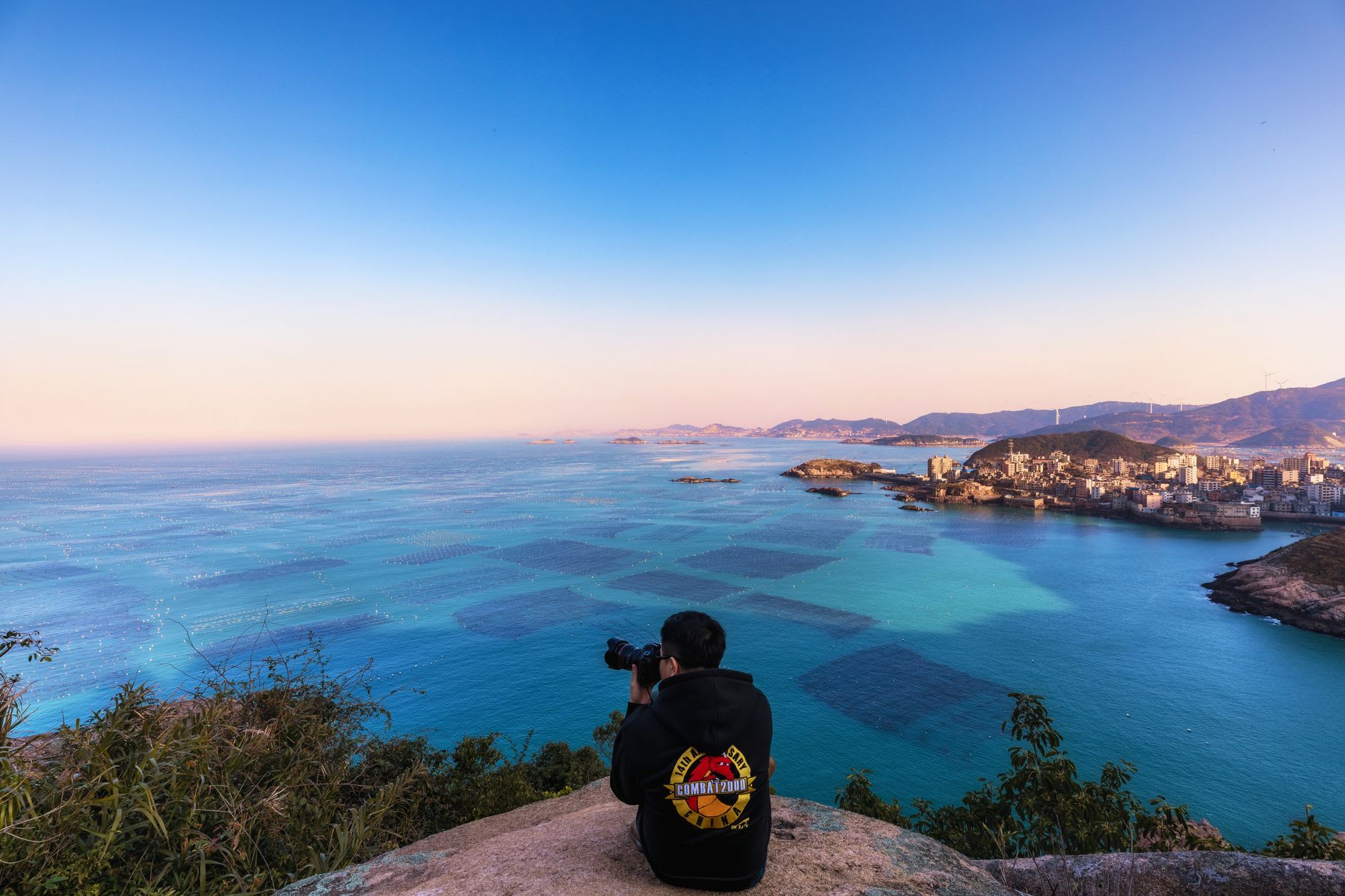
The stone village at Qingjiao — a fishing settlement on the island’s eastern coast — is Pingtan’s least-visited and most quietly remarkable place. The houses are built entirely from the grey-pink granite that underlies everything on the island, dry-stacked in a construction technique that has been used here for hundreds of years because it is the only material that holds against the wind without mortar. The effect is a village that appears to have grown from the rock rather than been built on it, the walls the same colour and texture as the surrounding landscape, the lanes so narrow that two people pass each other sideways. Fishing nets and floats hang in the gaps between buildings. Somewhere in the middle of the village, reached by several wrong turns, a grandmother was sitting in a doorway doing something with wire that I couldn’t quite identify, and she looked at me with the equanimity of someone who has seen tourists wandering through her village making notes for the past several years and decided to find it neither flattering nor intrusive, just a fact of the current era.
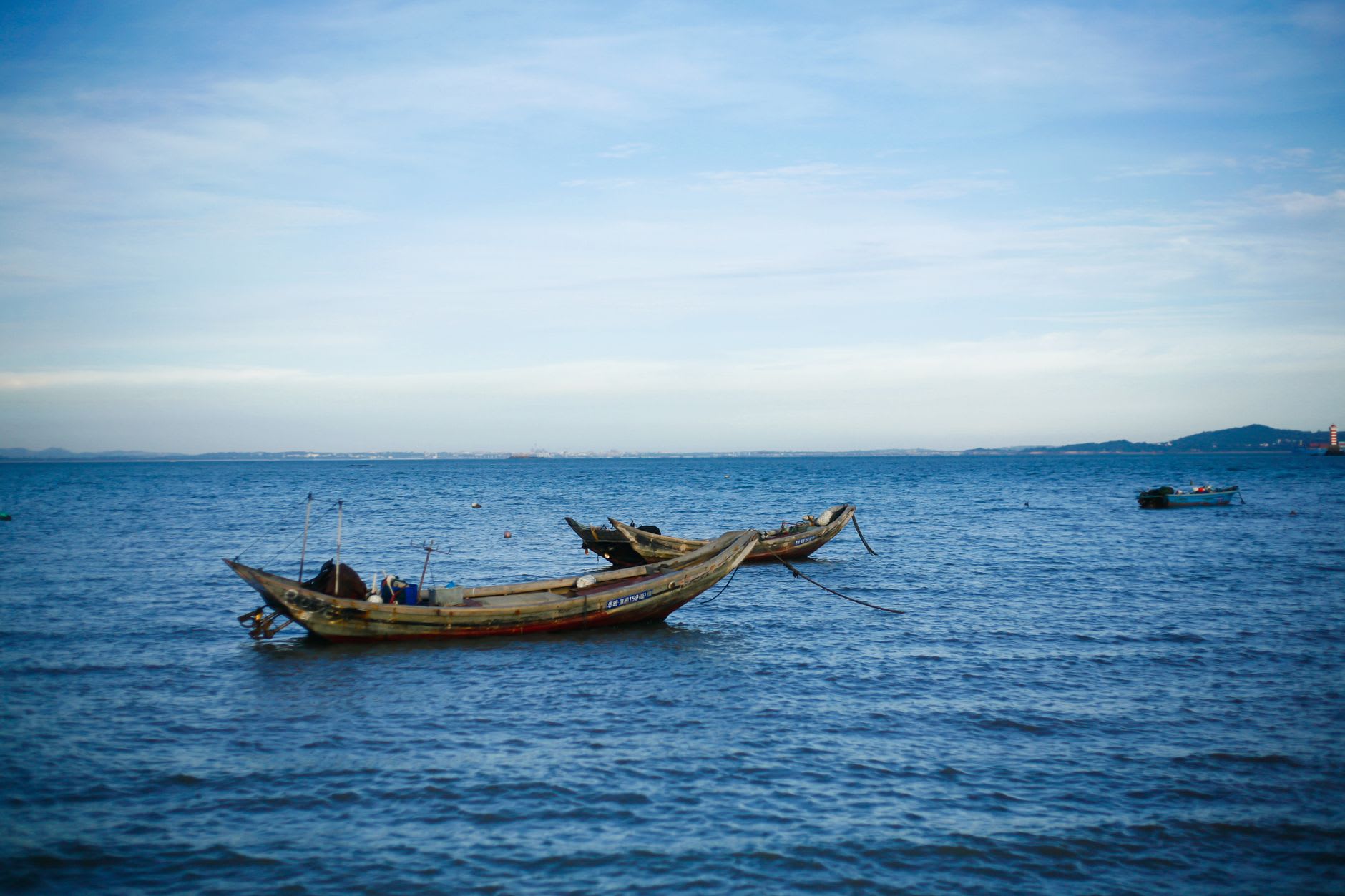
On very clear days, from the island’s eastern coast, the mountains of Taiwan are visible on the horizon — the closest point of the two landmasses is about one hundred and twenty-eight kilometres, which is enough distance to make the sighting feel like an atmospheric event, something the conditions have to cooperate in producing. I watched a fishing boat heading east until it disappeared into the haze in that direction and thought about the fact that people have been crossing this particular channel in both directions for as long as there have been people on either shore.
The seafood economy here, as everywhere on the Fujian coast, is centred on oysters — but Pingtan’s oysters are grown on lines strung between bamboo poles driven into the sandy shallows just offshore, and the operation is visible from the road in extensive networks of floats and poles that cover the inshore waters like an industrial garden. The oysters themselves, bought at the morning market and eaten at small restaurants near the harbour that will cook whatever you bring them, taste of the cold deep water of the strait — cleaner and sharper than the warmer-water varieties I’d eaten further south.
When to go: April through June for warmer, clearer weather and calmer winds — spring is when the island is most liveable for those not accustomed to the wind. October and November for emptier beaches. Avoid July and August: typhoon season brings both dangerous weather and the domestic tourist peak that fills every guesthouse on the island. The wind never entirely stops, which is not a deterrent but a feature.