
Chongwu
"I have seen a lot of old walls. Few of them still have a town living inside that does not seem to notice them."
Chongwu is a walled town on a granite headland south of Quanzhou, and the thing that surprised me most is that the wall is not the point. It should be — it is one of the best-preserved stone city walls in China, built in 1387 to keep Japanese pirates off the Fujian coast, two and a half kilometers of grey granite blocks fitted without mortar and still standing after six hundred years. But the town inside it is alive in a way that walled towns usually are not. People hang their laundry off the ramparts. Cats sleep in the gun emplacements. Nobody is performing heritage for you; they are just living in a fort because it happens to be where their house is.
The wall, and the women who built around it
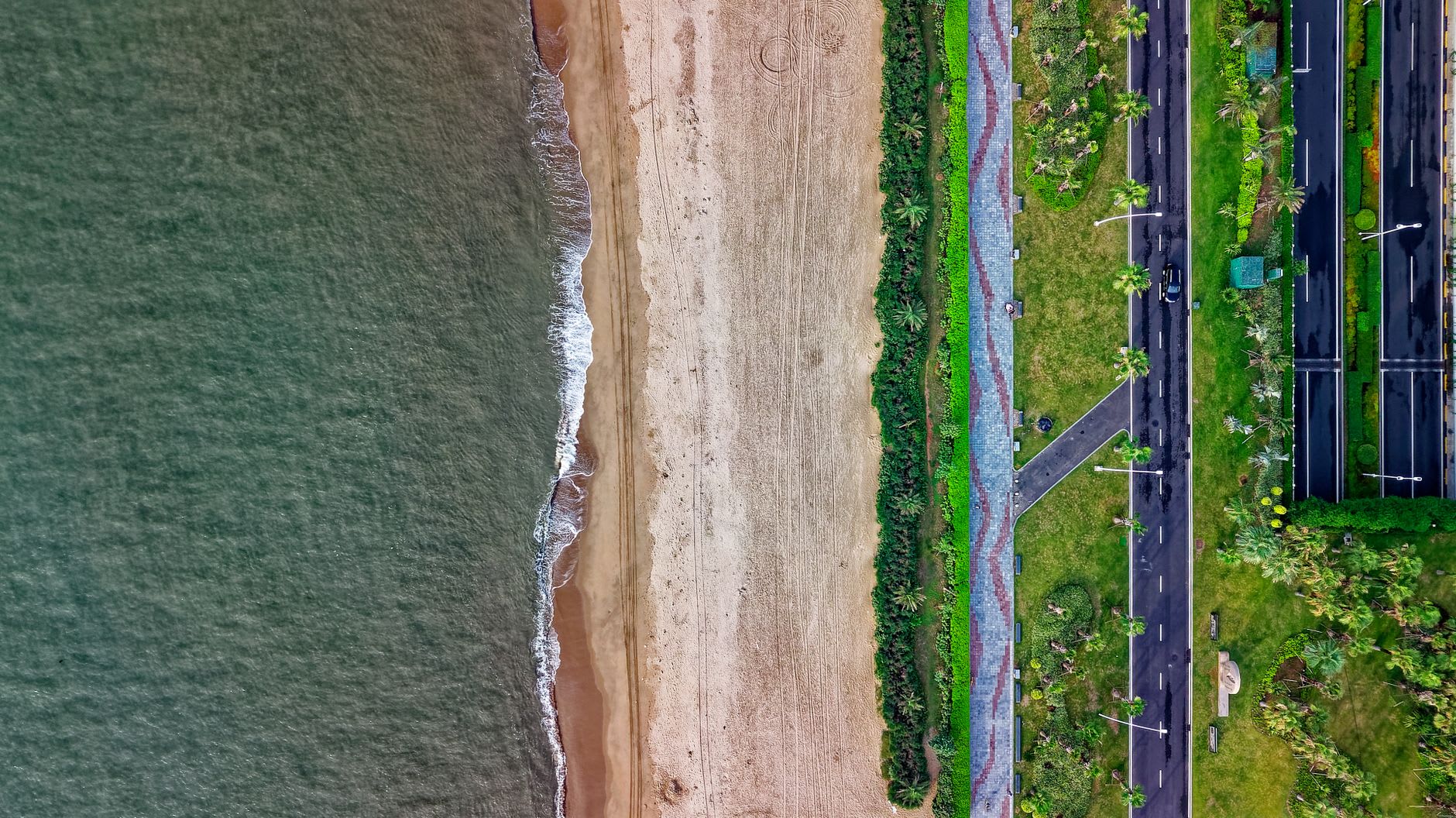
We walked the full circuit of the wall in the late afternoon, which took about an hour with stops. From the top you get the sea on one side — the South China Sea, grey-green and restless, breaking on a coast of enormous weather-rounded granite boulders — and the tiled roofs of the old town on the other, smoke rising from kitchens, a temple courtyard, a basketball hoop nailed to an ancient gate tower. At the southern corner the wall runs right down to the rocks, and you can climb off it onto a shore strewn with boulders the size of cars, polished smooth and warm to the touch.
What you notice fastest, though, are the Hui’an women. Chongwu is the heart of the Hui’an district, and the older women here still wear the traditional dress that has made them faintly famous across China: bright flowered headscarves pulled low, conical bamboo hats, short jackets that leave the midriff bare, and a heavy silver belt. The outfit has a saying attached to it — “feudal head, democratic belly, thrifty shirt, wasteful trousers” — that pokes fun at every part of it. I watched a group of them, none under sixty, hauling a fishing net up the beach hand over hand, headscarves snapping in the wind. The Hui’an women have a reputation as the workers of this coast, and on the evidence of that beach the reputation is earned.

Stone, and more stone
Hui’an is also China’s stone-carving capital, and Chongwu wears it. Just outside the old town there is a sprawling stone-sculpture park crowded with carved figures — Buddhas, generals, dragons, an entire menagerie of granite animals — that ranges from the genuinely beautiful to the gloriously kitsch. I have a low tolerance for sculpture parks, but Lia loves them, and I will admit the craftsmanship was real: this region has been carving the local granite for a thousand years, and the workshops along the road still ring with the sound of chisels from dawn.
We ate, of course, seafood. A small place near the harbor served us oysters the size of a thumbnail, fried into a crisp omelette the way they do all along this coast, plus a plate of razor clams stir-fried with garlic and a fish so fresh it had been swimming an hour before. The owner’s mother, in full Hui’an dress, sat in the corner shelling peanuts and watching a soap opera at considerable volume. I have a weakness for towns that are exactly themselves and entirely uninterested in whether I approve. Chongwu is one of them.
It is an easy day trip from Quanzhou, an hour or so by bus, and most people treat it as exactly that. But I would argue for staying a night if you can — the day-trippers leave by four, the light on the wall goes gold, and the town settles back into being a fishing town with a very old fence around it.
When to go: Autumn, from October to early December, is the sweet spot — warm, dry, and clear, with the summer typhoon season safely past. Spring is fine too but wetter. Avoid the July–September typhoon months, when the sea turns violent and the boulder shore is genuinely dangerous.